New Commanders Stadium Renderings
Washington Commanders Reveal Renderings For New Four Billion Dollar Stadium Opening In 2030
Anonymous
Key Points
1
The Commanders’ push to recreate RFK’s atmosphere is tied to the team’s historical success there: Washington made five Super Bowl appearances and won three titles while playing at RFK, with 18 winning seasons from 1971 to 1992. By comparison, the team has had eight winning seasons and reached one NFC Championship Game since moving to Landover.
2
The stadium’s exterior design is expected to include a glass facade offering views of the U.S. Capitol, in addition to the cantilevered translucent roof.
3
The financing plan includes approximately $1.1 billion in taxpayer funding. The city has also sold the Commanders seat rights for up to $975 million, with personal seat licenses expected to help cover construction costs.
4
A raised lower level is intended to provide clearer sideline sightlines by reducing the obstruction often caused by benches and field-level premium seating areas.
5
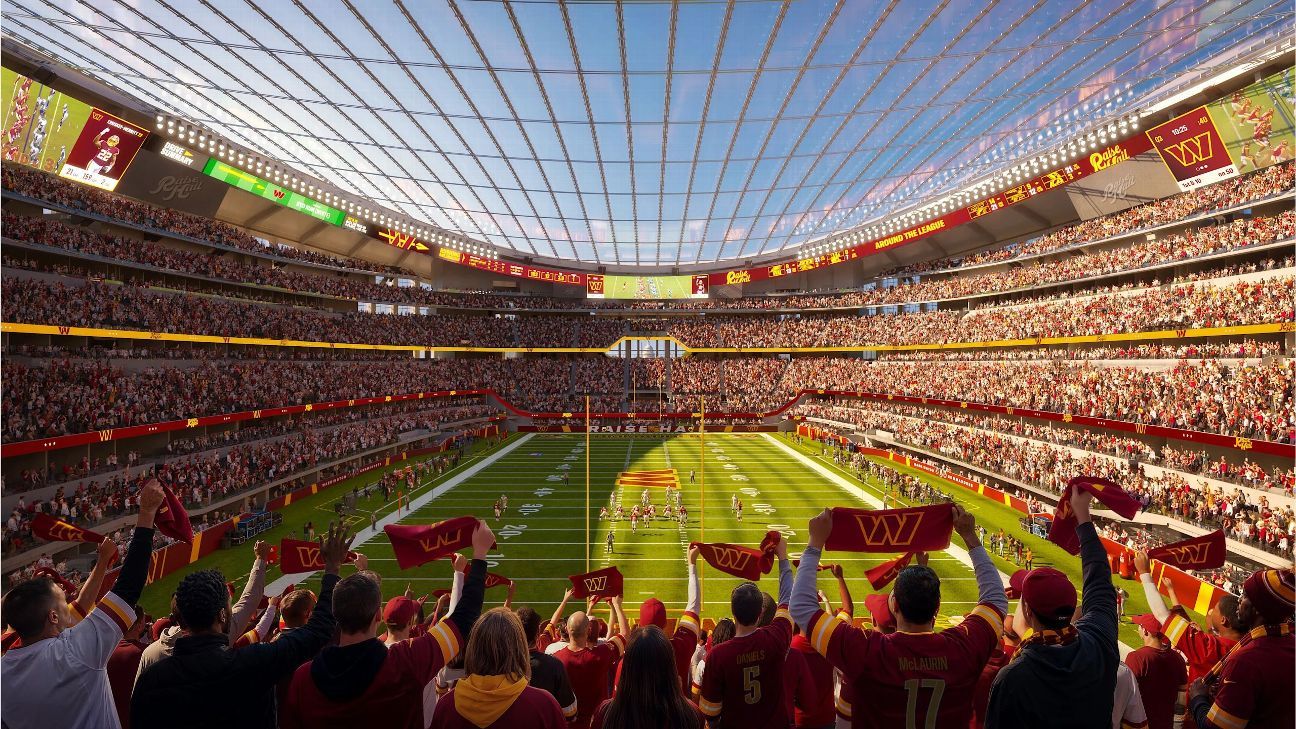
The venue’s video system is planned to include two end-zone boards, sideline boards and a connecting halo that wraps around the interior of the seating bowl. Commanders president Mark Clouse said the design aims to create an “immersive shared viewing experience” and bring fans closer to the action.
The Washington Commanders revealed their first interior renderings for a new $4 billion stadium planned to open in 2030 at the former RFK Stadium site ESPN. The design features a steep, unified seating bowl that wraps around the field with an elevated first row and minimal overhangs to recreate the loud, intimate atmosphere of RFK, where Washington won three Super Bowls and made five total appearances TSN. A translucent roof and acoustic engineering will direct crowd noise back toward the field, while video boards and a dedicated affordable "Wall of Fans" section aim to keep the in-stadium experience immersive for all 65,000 to 70,000 fans Yahoo Sports.
The Commanders will fund at least $2.7 billion of the project with taxpayers contributing roughly $1.1 billion NFL.com. The city has also sold the team seat rights for up to $975 million, with personal seat licenses helping cover construction costs NFL.com. The stadium will anchor a 180-acre mixed-use development featuring housing, commercial space and parks, though transportation access remains a planning challenge.
Why RFK's Success Matters for the New Design
Washington's football legacy is rooted in RFK Stadium. From 1971 to 1992, the team posted 18 winning seasons, made five Super Bowl appearances and won three championships ESPN. Since moving to Landover in 1997, the Commanders have managed only eight winning seasons and one NFC Championship Game appearance ESPN. The design team believes recreating RFK's atmosphere—its close seating, steep angles and crowd noise—can restore that winning edge.
Translucent Roof and Acoustic Design Direct Fan Energy
The stadium's most distinctive feature is its translucent roof paired with acoustic engineering that bounces crowd noise back onto the field TSN. Commanders president Mark Clouse said the design aims to create an "immersive shared viewing experience" and bring fans closer to the action TSN. A raised lower level reduces sightline obstruction from benches and premium seating, while video boards—two end-zone screens, sideline boards and a halo wrapping the seating bowl—will enhance every viewer's perspective ESPN.
Capitol Views and Mixed-Use Development Reshape the Site
Beyond the stadium itself, the 180-acre development will transform the historic RFK location into a neighborhood hub NFL.com. A glass facade on the stadium exterior will frame views of the U.S. Capitol, creating a visual anchor for the district NFL.com. The site will include new housing, retail, restaurants and parks, though city officials remain focused on solving transportation challenges to ensure fans can reach the venue easily.
65,000-Seat Capacity Balances Intimacy and Revenue
The new stadium will seat roughly 65,000 to 70,000 fans—smaller than many NFL venues but intentionally designed to maintain the closeness fans felt at RFK ESPN. Ticket revenue and personal seat licenses are key to the Commanders' financing strategy, with the team pledging at least $2.7 billion of the $4 billion total cost NFL.com. A dedicated affordable seating section called the "Wall of Fans" ensures long-time supporters can attend games without premium pricing.
Sentiment
Mostly PositiveNEGATIVENEUTRALPOSITIVE
Publishers
21
Articles
24
Reach
45
A
AnonymousAuthor


