US Troops Confirmed Inside Iran After 46 Years
US Troops Confirmed Inside Iran After 46 Years
Anonymous
Key Points
1
The downed F-15E was conducting a strike on facilities south of Isfahan that were believed to be linked to Iran’s missile and drone programs. The aircraft was valued at about $30 million, while the shoulder-fired missile that brought it down was estimated to cost roughly $100,000.
2
During the initial recovery effort, the United States sent 21 aircraft into Iranian airspace. Helicopters came under small-arms fire, wounding crew members, while an A-10 attack aircraft involved in the search was hit and its pilot ejected only after reaching Iranian airspace’s edge.
3
Bravo said the moment he looked up and realized his parachute had failed was “the most terrifying thing I’ve ever seen.” He suffered broken back, arm and shoulder injuries but still climbed a 7,000-foot ridgeline while attempting to evade Iranian forces.
4
The United States used deception through the CIA to help locate Bravo after he had spent roughly 50 hours behind Iranian lines, adding an intelligence component to the rescue effort beyond the military search and extraction operations.
5
The misinformation video circulated amid a broader escalation that began on Feb. 28, when the United States and Israel launched strikes on Iranian targets; Iran subsequently moved to close the Strait of Hormuz, contributing to disruption in global energy markets. Technical investigators traced copies of the video to Google’s Gemini tool and found a SynthID-generated-content signature.
The United States deployed more than 90 personnel into Iran in April 2026 to rescue two F-15E crew members shot down during a strike mission, marking the first publicly acknowledged American ground operation inside Iran in 46 years. CBS News obtained newly declassified footage and military accounts showing how one airman was rescued within hours, while the other survived roughly two days behind enemy lines despite severe injuries — a broken back, arm, and shoulder — before being extracted by special-operations helicopters.
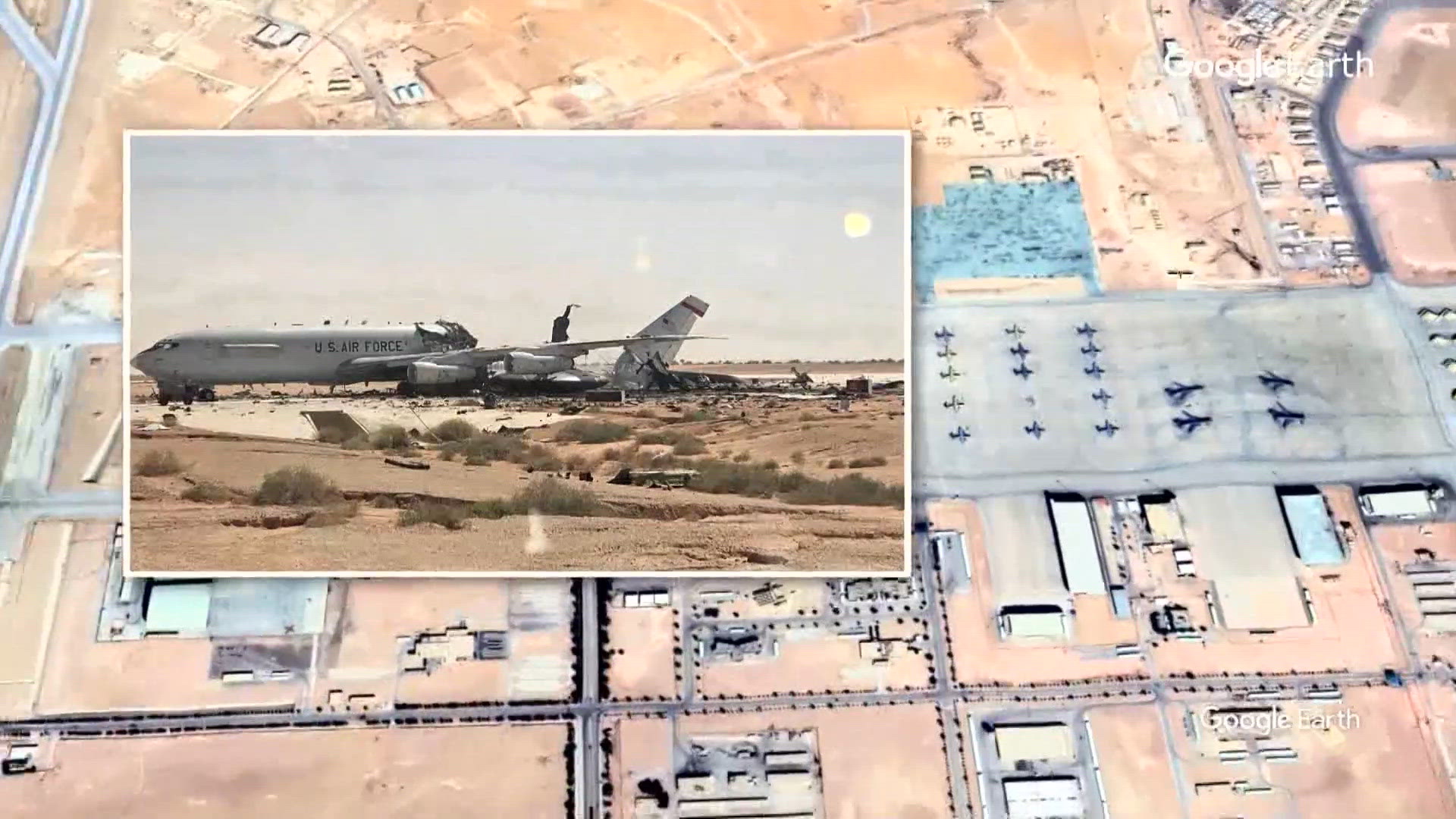
The rescue involved 21 aircraft entering Iranian airspace, helicopter crews taking small-arms fire, and an A-10 pilot ejecting over enemy territory. BBC and CBS News also released leaked photographs showing extensive damage to U.S. military bases across the Middle East from Iranian missile and drone strikes, damage critics say was not fully disclosed to the public.
F-15E Shot Down Over Iranian Missile Complex
The downed F-15E was conducting a strike on facilities south of Isfahan believed linked to Iran's missile and drone programs when it was hit by a shoulder-fired missile estimated to cost roughly $100,000. The aircraft itself was valued at about $30 million. The strike mission was part of a broader escalation that began February 28, when the United States and Israel launched coordinated attacks on Iranian targets.
The initial recovery effort deployed 21 aircraft into Iranian airspace within hours. Helicopters came under small-arms fire, wounding crew members. An A-10 attack aircraft searching for the downed pilots was itself hit; its pilot ejected only after reaching the edge of Iranian airspace. The chaotic mission reflected the extreme risk of any ground operation deep inside hostile territory.
Survivor Evades Iranian Forces for Two Days
One pilot, identified in accounts as "Bravo," survived roughly 50 hours on the ground despite crippling injuries. He suffered a broken back, arm, and shoulder but still climbed a 7,000-foot ridgeline while trying to escape Iranian forces searching for him. "The most terrifying thing I've ever seen," Bravo said of the moment he realized his parachute had failed. His injuries made every step agonizing as he moved through mountainous terrain.
The United States employed CIA deception operations to help locate Bravo after 50 hours behind enemy lines, adding intelligence work to the military search-and-extraction mission. Special-operations helicopters eventually landed on a makeshift runway to pull him out. The first pilot was rescued far more quickly, within hours of ejection, but Bravo's extended survival against odds made his extraction a remarkable feat of evasion and willpower.
Leaked Photos Show Widespread Damage to U.S. Bases
BBC and CBS News released photographs showing extensive damage at U.S. military sites across the Middle East from Iranian missile and drone strikes. The images were obtained by a military member and show damage to aircraft, buildings, and infrastructure at multiple bases. A Pentagon inspector general's report confirmed the extent of the destruction, but service members and critics said the damage was not fully disclosed to the American public.
The Iranian attacks were retaliation for U.S. and Israeli strikes that began February 28. Iran also moved to close the Strait of Hormuz, a critical shipping chokepoint, in response to the escalation. The combination of military strikes and energy-market disruption signaled a major escalation in regional tensions that extended far beyond the rescue operation itself.
AI-Generated Misinformation Debunked Amid Escalation
False social-media claims spread showing Iranian forces allegedly camouflaged on Gulf islands, but technical investigators determined the video was generated by artificial intelligence. BBC and CBS News traced copies of the footage to Google's Gemini tool and found it carried a SynthID signature marking it as AI-generated content. The misinformation circulated as tensions were already at a peak.
Sentiment
Mostly NegativeNEGATIVENEUTRALPOSITIVE
Publishers
34
Articles
47
Reach
81
A
AnonymousAuthor


