Mixed Rom-Com Reviews
Prime Video Adaptation of The Love Hypothesis Earns Mixed Reviews From Critics
Anonymous
Key Points
1
Olive’s fake-boyfriend scheme begins when she tries to encourage her friend Anh to pursue Jeremy, despite Olive also having feelings for him; Anh’s hesitation prompts Olive to pretend she is already dating someone.
2
A major practical obstacle for Olive is securing funding for her pancreatic-cancer research after arriving at Stanford, adding professional stakes beyond the central romance.
3
The film gives Olive a close friendship with Anh, played by Rachel Marsh, whose relationship with Olive is presented as an important emotional thread alongside the romance with Adam.
4
The adaptation substantially reworks Adam from the fan-fiction version, including changing his accent and personality; one review says the resulting dynamic can feel more like a teacher-student relationship than convincing romantic tension.
5
One review describes Olive as having little family support and being somewhat introverted, framing her connection with Anh as especially significant as she adjusts to the later stages of her academic career.
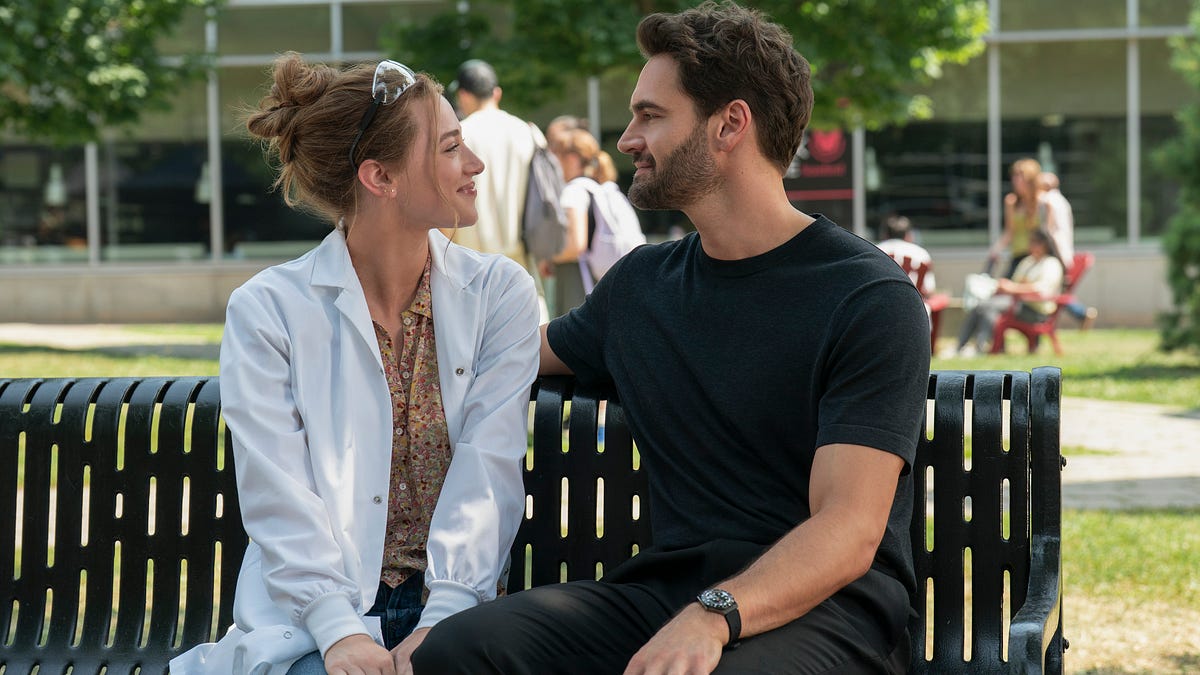
Prime Video's "The Love Hypothesis" adaptation of Ali Hazelwood's bestselling novel lands as a charming but uneven romantic comedy. The film follows Olive Smith, a Stanford Ph.D. candidate researching pancreatic-cancer detection, who fakes a relationship with professor Adam Carlsen—only to develop real feelings. Geek Vibes Nation calls it "a smart rom-com with great chemistry," while other critics note the central pairing lacks convincing romantic tension and the third act feels rushed.
From Star Wars Fan Fiction to Streaming Release
The story began as a "Reylo" alternate-universe fan fiction before author Ali Hazelwood published it as a novel in 2021. The adaptation premiered on Prime Video on September 23, 2026, reaching more than 240 countries and territories. Filmmakers playfully nod to its origins by dressing Tom Bateman in black throughout the film. The real-world joke lands harder because Bateman is married to actress Daisy Ridley from the Star Wars franchise.
Olive's Dual Struggle With Love and Career
Olive's fake-dating scheme starts innocently. She wants her close friend Anh to pursue Jeremy without guilt, so Olive pretends she's already dating someone. The twist: Olive herself has feelings for Jeremy. Beyond romance, Olive faces real pressure. She needs funding for her pancreatic-cancer research at Stanford—a project born from losing her mother. This professional stakes frame the story beyond typical rom-com territory.
Marie Claire reports that Lili Reinhart plays Olive as somewhat introverted with limited family support. Her friendship with Anh, played by Rachel Marsh, becomes her emotional anchor as she navigates both academic pressure and unexpected romance with Adam.
Chemistry Questions and Character Reworking Challenges
The adaptation significantly changed Adam from the original fan-fiction version. His accent and personality shifted to create a softer, more accessible character. Geek Vibes Nation suggests this reworking sometimes creates a teacher-student dynamic rather than genuine romantic tension. Girl Culture notes that while Reinhart brings charm to Olive, the central pairing doesn't always ignite convincingly on screen. Heavy scientific dialogue about pancreatic-cancer research also slows emotional beats.
Marie Claire reveals that Bateman felt "bright and happy" on set despite these chemistry concerns. Reinhart described the production as collaborative, with both actors attending movies and sharing pastries together between takes. Their off-set rapport didn't always translate into palpable on-screen romance for every viewer.
Praise for Supporting Cast and Rom-Com Execution
Despite mixed reactions to the lead couple, critics consistently praise the supporting cast and the film's handling of the fake-dating trope. Geek Vibes Nation calls the movie "a smart rom-com" with satisfying comedic timing from supporting actors. The ensemble—including Rachel Marsh as Anh, Nicholas Duvernay as Jeremy, and Jaboukie Young-White as Malcolm—elevates lighter moments and grounds Olive's emotional journey with genuine friendship dynamics.
Marie Claire highlights that Reinhart's performance brings warmth and accessibility to the genre. Reviewers note the film captures fan-favorite scenes from the novel, making it a faithful adaptation that respects source material while delivering heartfelt humor. The third act, however, feels incomplete—certain plot threads remain underdeveloped, leaving emotional payoffs slightly hollow for some viewers.
Sentiment
Mostly NegativeNEGATIVENEUTRALPOSITIVE
Publishers
47
Articles
41
Reach
88
Topics
A
AnonymousAuthor


