London Travel Disruption
Multiple Fires Disrupt Flights at Heathrow and Rail Services Across London
Anonymous
Key Points
1
The Heathrow grass fire destroyed approximately one hectare of grassland. London Fire Brigade received the first report at 5:37 p.m., and firefighters brought the blaze under control by 6:07 p.m., with crews from Heathrow, Hayes and Feltham stations, alongside Heathrow’s airport fire service, responding.
2
Heathrow was not fully closed during the runway incident: flights continued to arrive and depart using the unaffected runway while the southern runway was unavailable.
3
Reported diversions included a San Francisco-to-Heathrow flight redirected to Manchester and a San Diego-to-Heathrow flight sent to Birmingham.
4
The Paddington-area fire broke out near Scrubs Lane in North Kensington shortly after 4:10 p.m., according to the London Fire Brigade report cited by the Mirror.
5
National Rail said disruption from the Paddington fire could continue until about 9 p.m., later than the initial estimates of 7 p.m. to 7:15 p.m.
Two fires disrupted London's transport hub on September 5, creating chaos for thousands of travelers. A grass fire near Heathrow's southern runway forced at least 18 flights to divert to other airports, while a separate blaze near Paddington knocked out rail power, suspending Heathrow Express and Elizabeth line services The Traveler. Both incidents occurred within hours, trapping passengers between a reduced-capacity airport and blocked rail access routes.
The Heathrow grass fire destroyed about one hectare of grassland. London Fire Brigade received the first report at 5:37 p.m. and contained the blaze by 6:07 p.m. using six engines and 40 firefighters Reading Chronicle. The Paddington fire, which started near Scrubs Lane in North Kensington shortly after 4:10 p.m., caused an electricity-supply failure that blocked all rail lines between Paddington and Heathrow The Traveler.
Runway Fire Cuts Heathrow Capacity by Half
The grass fire near Heathrow's southern runway forced temporary closure of that landing strip while the airport's northern runway remained open. This reduced Heathrow's capacity sharply. At least 18 inbound flights were diverted elsewhere, including a San Francisco-bound aircraft sent to Manchester and a San Diego flight routed to Birmingham The Traveler. The airport was not fully closed; planes continued using the working runway, though delays mounted.
Fire crews from Heathrow, Hayes, and Feltham stations, together with the airport's own fire service, responded quickly. They contained the fire in 30 minutes, allowing safety checks to begin. Once inspectors cleared both runways, normal operations resumed. The speed of firefighting limited the disruption window, though it was long enough to disrupt hundreds of passengers' plans.
Electricity Failure Blocks All Rail Lines to Heathrow
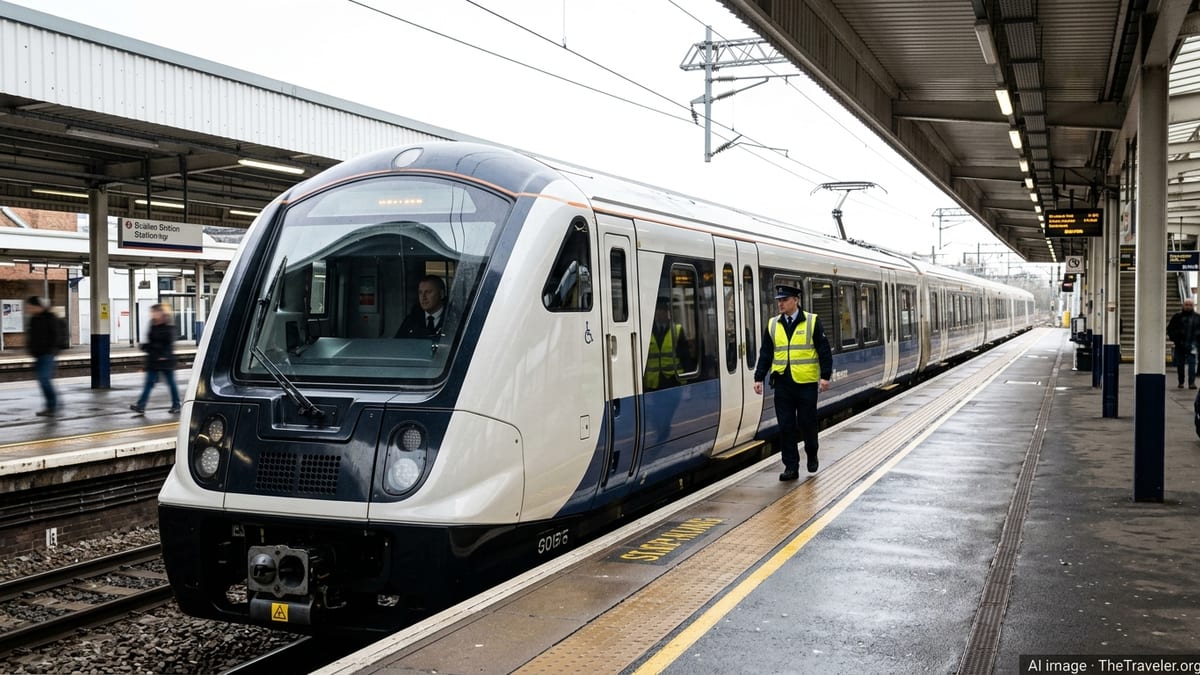
The Paddington fire proved more disruptive to ground transport than the runway incident. Starting near Scrubs Lane in North Kensington around 4:10 p.m., the blaze destroyed electrical infrastructure Reading Chronicle. This caused a complete power loss on all rail lines linking central London to Heathrow, halting The Traveler: Heathrow Express service, Elizabeth line service, and Great Western Railway services between the capital and the airport.
The Piccadilly line underground also experienced severe delays. About 40 firefighters responded to the Paddington fire. National Rail initially estimated disruption would last until 7:00–7:15 p.m., but later extended that estimate to around 9 p.m. as crews worked to restore power. Passengers were told to allow extra travel time through the evening.
Why Two Fires Created a Perfect Storm
Heathrow's vulnerability lay in overlapping disruptions. A single runway fire alone would have been manageable—the airport kept operating with reduced capacity. But the simultaneous Paddington fire knocked out rail links, eliminating the main alternative route into London. Passengers heading to the airport faced a double bind: fewer flights were leaving because of the runway closure, and they could not easily reach the airport by train The Traveler.
The incident revealed how interconnected modern transport systems are. Recovery required restoring not just the runways, but also rail power, rail track safety, and underground service. Firefighters worked quickly, but the broad scope of the disruption meant chaos persisted for hours despite relatively fast containment. Heathrow's two-runway system and reliance on rail access left little room for simultaneous failures in both areas.
Sentiment
Mostly NegativeNEGATIVENEUTRALPOSITIVE
Publishers
18
Articles
21
Reach
39
Topics
A
AnonymousAuthor


