Turkey Detains More Than 200 in LGBTQ Crackdown
Turkey Detains More Than 200 in LGBTQ Crackdown
Anonymous
Key Points
1
The reported arrest warrant covered 162 individuals, nine organizations and 13 companies across 15 provinces, indicating that the operation was structured to target institutions and businesses as well as individual activists.
2
Among those ordered held in Ankara were seven members of Kaos GL, five transgender people and a journalist; the Turkish Journalists’ Union said two journalists covering the protests were detained.
3
The European Union’s muted response has been criticized because Turkey is due to receive €290 million in pre-accession funding from 2025 to 2027, in addition to roughly €1 billion annually to help host Syrian refugees—resources that could give Brussels leverage over Ankara.
4
Spanish MEP Nacho Sánchez Amor said the European Commission’s approach was damaging the EU’s credibility and warned that its “soft tone” toward President Recep Tayyip Erdoğan was costing the bloc influence among Turkish civil-society groups.
5
Human Rights Watch’s Emma Sinclair-Webb described the arrests as “a dramatic escalation in Turkey’s campaign against L.G.B.T. rights and civil society,” while some critics said LGBTQ+ people were also being targeted because of their role in the political opposition to Erdoğan.
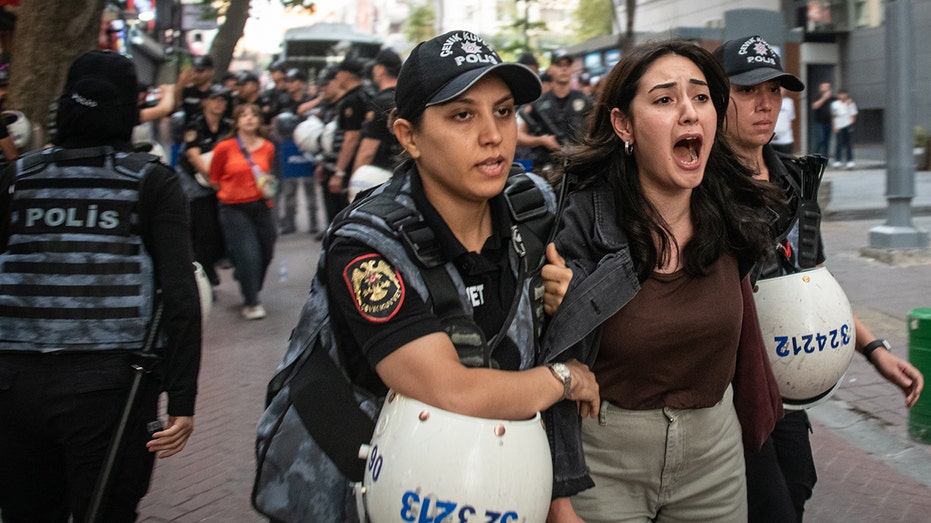
Turkey has detained more than 200 people in a nationwide crackdown targeting LGBTQ+ activists, journalists, and organizations across 15 provinces, according to Human Rights Watch and multiple news outlets. Courts have ordered 62 detainees held in custody. The operation, called "My Family is Safe," began September 12 with website blocks and raids on homes, bars, and offices, followed by protests and tear gas dispersals in Istanbul, Ankara, and İzmir.
Turkish authorities say they are protecting families and public order, citing obscenity and prostitution charges. But rights groups call it "a dramatic escalation" in hostility toward LGBTQ+ communities. The Guardian reported that Emma Sinclair-Webb from Human Rights Watch said authorities are trying to "smear and criminalise LGBTQ+ advocacy." International officials from six European nations have condemned the actions, while critics say the European Commission has responded too cautiously.
The Scale of the Operation Targets Institutions and Individuals
Police launched simultaneous raids on September 13 across 15 provinces including Istanbul, Ankara, and Izmir. The operation targeted 162 individuals, 9 organizations, and 13 companies. Turkish Justice Minister Akın Gürlek announced the sweep on social media as part of President Erdoğan's "Decade of the Family" policy. Courts ordered at least 62 people held in pre-trial detention by September 16.
Among those detained in Ankara were seven members of Kaos GL, a prominent LGBTQ+ advocacy group, plus five transgender people and a journalist. The Turkish Journalists' Union reported that two journalists covering the protests were detained. Journalist Tuğba Tekerek was arrested September 15 for writing an article for Kaos GL. More than 150 people were arrested during street demonstrations outside an Istanbul courthouse.
Turkey Extends Crackdown to Social Media and Blocking Access
On September 12, Istanbul courts issued orders blocking websites and social media accounts of eight major LGBTQ+ organizations. The targets included Kaos GL, 17 May, ÜniKuir, Pink Life, SPoD, Genç LGBTİ+, Lambda Istanbul, and Muamma LGBTİ+. According to news reports, authorities shut down hundreds of social media accounts belonging to activists and supporters. The blocks aimed to prevent organizing and information sharing during the crackdown.
Authorities also restricted online speech beyond LGBTQ+ accounts. The timing of website blocks before physical raids suggests coordinated planning to isolate targeted groups. This expansion of digital censorship marks a significant shift from previous years, when Pride events were simply banned—now the government is actively shutting down the digital infrastructure LGBTQ+ communities rely on to communicate and organize.
Europe Criticizes Turkey's Response but Offers Limited Leverage
Officials from Germany, Sweden, Finland, France, Iceland, and the Netherlands condemned the crackdown. But European Parliament critics say the European Commission responded too cautiously. Spanish MEP Nacho Sánchez Amor warned that Brussels' "soft tone" toward President Erdoğan damages EU credibility and costs the bloc influence with Turkish civil society groups. The EU's muted stance surprises observers given its financial leverage over Ankara.
Turkey is scheduled to receive €290 million in EU pre-accession funding from 2025 to 2027 and roughly €1 billion annually for hosting Syrian refugees. That €1.3 billion yearly commitment gives Brussels substantial leverage to demand human rights improvements. But the European Commission has not tied these funds to stopping the crackdown, prompting criticism that Europe is sacrificing its influence to protect financial relationships with Turkey.
Pride Bans Expand to Broader Suppression of Civil Society
Turkey has banned Istanbul Pride since 2015. Now authorities are moving beyond festival bans. Dissolution proceedings have begun against two LGBTQ+ organizations in Mersin province. Human Rights Watch warns these steps signal potential legal closures of civil society groups across the country. Last month, 11 leaders of Genç LGBTI+ went on trial facing up to three years in prison under constitutional provisions protecting "family values," even though homosexuality itself is not illegal in Turkey.
Prosecutors allege obscenity, prostitution, and financial irregularities against targeted organizations. But rights analysts say these are manufactured charges designed to dismantle independent groups. Some observers note that LGBTQ+ organizations face extra scrutiny because they are prominent in Turkey's broader political opposition to President Erdoğan. The crackdown thus serves dual purposes: silencing LGBTQ+ advocacy while weakening civil society more broadly.
Sentiment
Mostly NegativeNEGATIVENEUTRALPOSITIVE
Publishers
26
Articles
30
Reach
56
A
AnonymousAuthor


