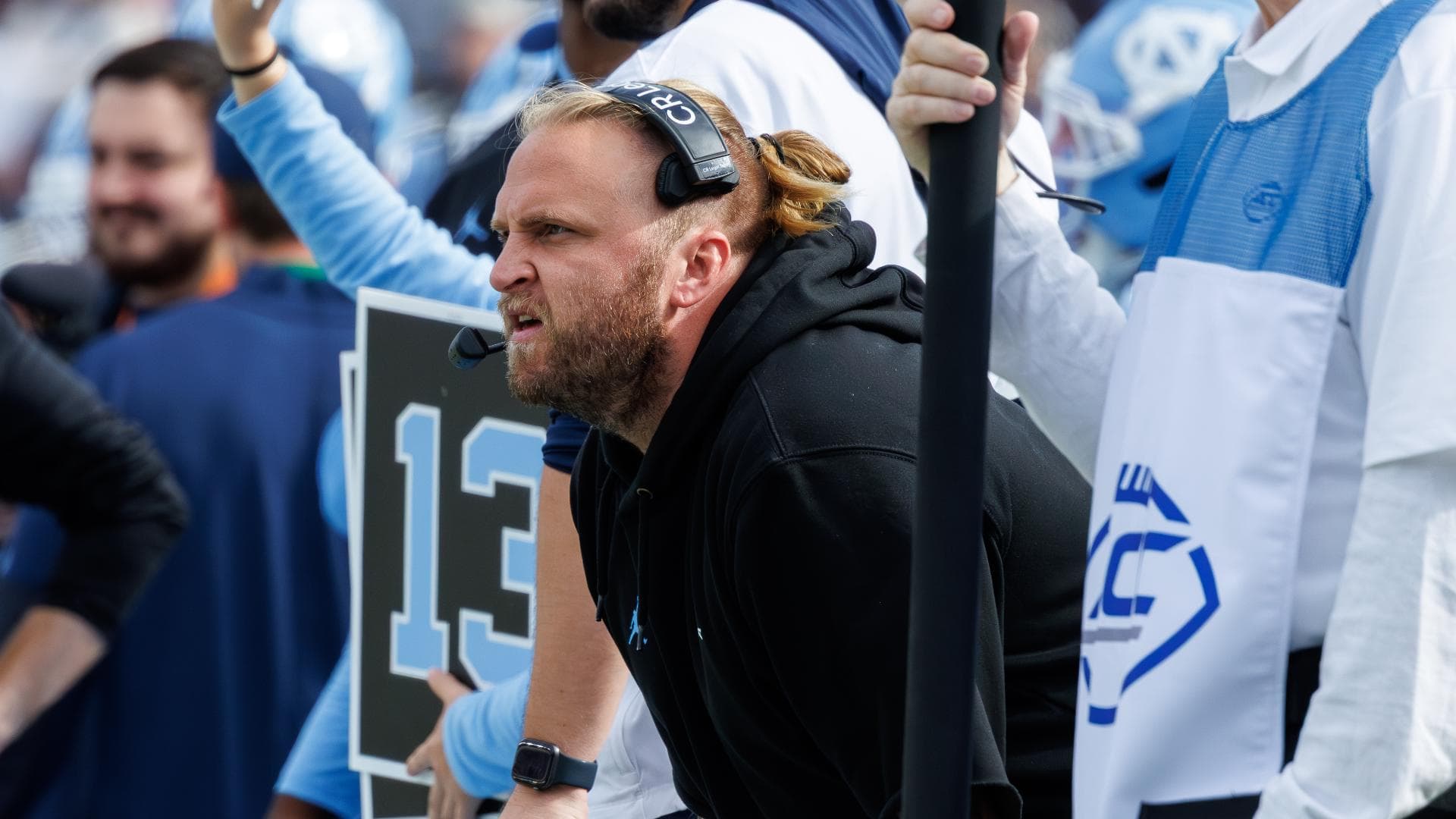
Clemson narrows UNC lead.
Clemson cuts North Carolina's lead to 17-15 following a bizarre lineman fumble.
Anonymous
Key Points
1
Clemson’s 51-10 loss to LSU was statistically severe: the Tigers produced only 145 total yards, converted 7.7% of their third downs and allowed 309 rushing yards.
2
North Carolina was seeking to reverse last season’s result, when Clemson defeated the Tar Heels 38-10 in Chapel Hill.
3
Betting-market sentiment shifted sharply after Clemson’s loss to LSU: Clemson opened as a 90% favorite on Kalshi, while North Carolina later became the favorite and reached a 56% implied chance to win.
4
A preview focused on Clemson’s need to let freshman quarterback Tait Reynolds play to his athletic strengths and get the ball to the Tigers’ best playmakers against North Carolina.
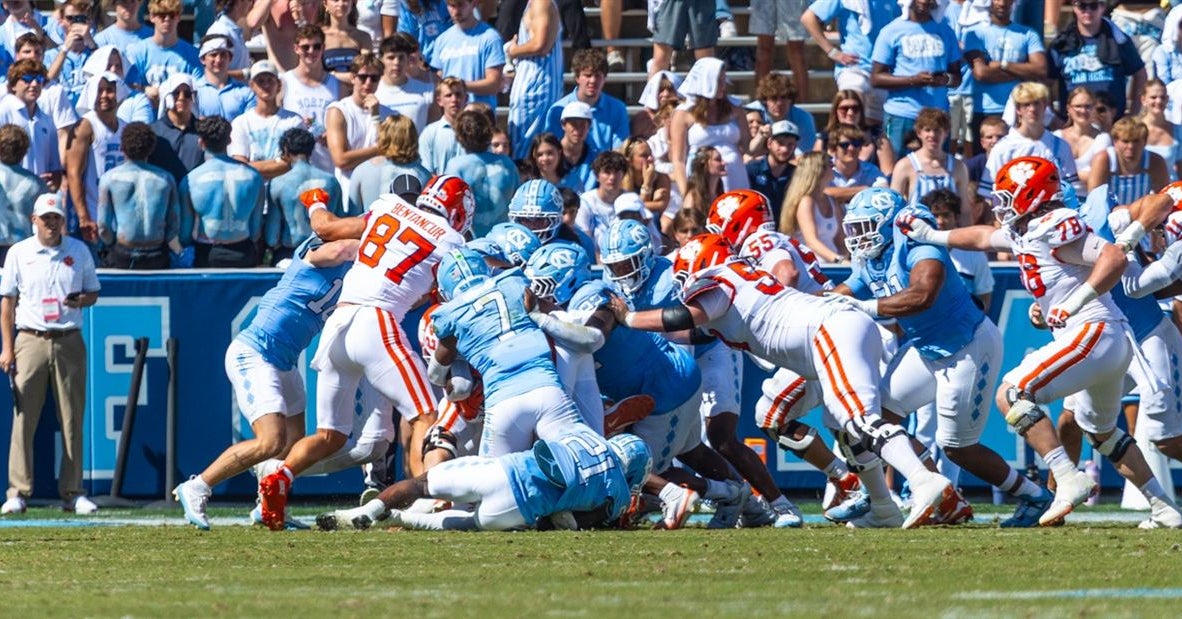
North Carolina held a 17-15 lead over Clemson late in their ACC opener at Death Valley after a bizarre fumble that echoed the NFL's infamous "Butt Fumble." The play—caused by a ball-carrier colliding with his own lineman—gave the Tigers a chance to claw back into a game that looked like it could slip away after Clemson's brutal 51-10 loss to LSU the week before Kentucky. Freshman quarterback Tait Reynolds made his first career start for the injured Christopher Vizzina, while undefeated North Carolina sought its first win at Death Valley since 2001.
Clemson's Collapse Against LSU Set a Low Bar
Clemson entered the season as a top program but collapsed spectacularly in Week 1, losing 51-10 to LSU in Baton Rouge TheState. The Tigers managed just 145 total yards of offense and converted only 7.7% of their third downs. Even worse, Clemson's defense allowed 309 rushing yards, a sign the front seven couldn't stop the run—a weakness North Carolina aimed to exploit TheState.
Reynolds Steps In With Clemson's Best Player Out
Clemson's starting QB Christopher Vizzina suffered an elbow injury in Week 2 against Georgia Southern and sat out the UNC game. True freshman Tait Reynolds took over and faced an enormous task: leading an offense that scored just 16 points per game, worst in the ACC Kentucky. Coach Dabo Swinney's game plan centered on using Reynolds' athleticism and quick plays to move the ball, avoiding the kind of stagnant football that plagued Clemson against LSU Kentucky.
North Carolina Came in Undefeated and Hungry
North Carolina arrived at 2-0 and seeking to snap a 25-year drought at Death Valley—the Tar Heels hadn't won in Clemson since 2001. UNC coach Bill Belichick's team featured a powerful rushing attack and physical offensive line that looked like natural matchups against Clemson's vulnerable run defense Kentucky. The game mattered for both teams: a loss would be deeply concerning for Clemson at 1-2, while UNC's victory could legitimize its undefeated start Kentucky.
Betting Markets Swung Wildly Before Kickoff
Clemson opened as a 90% favorite on Kalshi before LSU's dismantling. But confidence collapsed. By mid-week, North Carolina had flipped to become the favorite, reaching 56% implied odds to win. The swings reflected analyst concerns about Clemson's offense and Vizzina's absence—though odds eventually settled near 62% Clemson, 39% UNC, showing Vegas still gave the Tigers the edge at home Kentucky.
Sentiment
Mostly PositiveNEGATIVENEUTRALPOSITIVE
Publishers
45
Articles
68
Reach
113
A
AnonymousAuthor