China's Gigawatt AI Ambition
DeepSeek Plans Megascale 1GW AI Data Center in Inner Mongolia Amid China's Tech Push
Anonymous
Key Points
1
Industry estimates value DeepSeek's planned 1GW data center at around $35 billion, indicating the scale of investment China is willing to commit to domestic AI infrastructure.
2
Z.ai, another Chinese AI champion, is reportedly partially operating a 1GW data center using Chinese-made chips, underscoring a push toward domestic semiconductor options.
3
DeepSeek's plan sits within China's broader Eastern Data, Western Compute initiative to place large-scale compute infrastructure in western regions, linking the project to a national strategy.
4
Bloomberg-coverage has suggested DeepSeek is eyeing a roughly $50 billion IPO for its data-center ambitions, highlighting the financial scale of the project beyond the compute hardware.
5
Ulanqab's climate and existing datacenter ecosystem are cited as a draw for the project: the region offers cooler temperatures and lower electricity costs, with more than a dozen data-center projects already being pursued there.
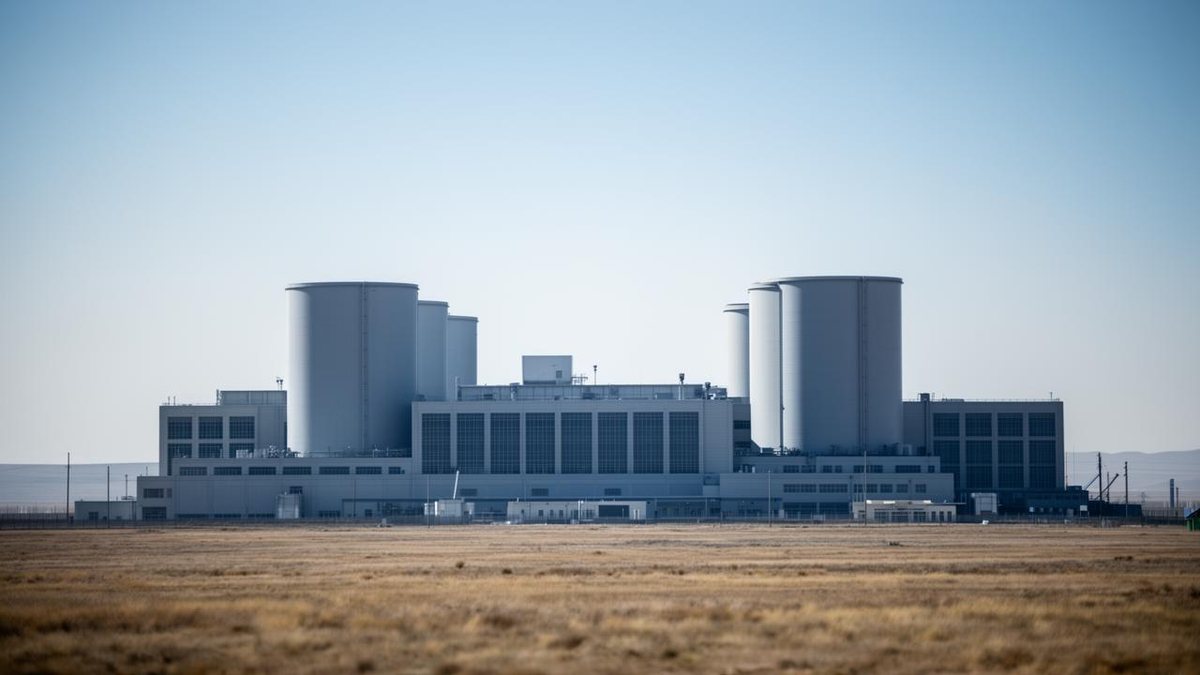
DeepSeek is planning to build a 1-gigawatt AI data center in Ulanqab, Inner Mongolia — a project that could rank as the largest AI-focused facility ever built, according to Data Center Dynamics. Industry estimates put the price tag at around $35 billion, signaling how much China is willing to spend to build its own AI muscle.
The Chinese AI startup, best known for its low-cost language models, aims to have the facility partially running by late 2027 or early 2028, according to BigGo Finance. The move shifts DeepSeek's strategy from relying on rented compute power to owning its own infrastructure.
Why Inner Mongolia Won the Site Competition
Ulanqab sits in a cooler climate than most of China's tech hubs. That matters because cooling is one of the biggest costs in running a data center. Lower outdoor temperatures mean less energy spent keeping servers from overheating, according to Briefs.co.
The region already hosts more than a dozen data center projects, giving it a proven power grid and local expertise. Lower electricity costs add to the appeal. Inner Mongolia also fits neatly into China's national 'Eastern Data, Western Compute' initiative, which pushes large-scale computing away from crowded eastern cities and into cheaper western regions, according to Data Center Dynamics.
Chips, Hardware, and the Push for Domestic Tech
DeepSeek has not locked in a chip supplier. Reports say the company is weighing Nvidia GPUs against Huawei-made processors, according to GuruFocus. The choice is politically loaded: U.S. export controls limit DeepSeek's access to Nvidia's most powerful chips, pushing it toward Chinese alternatives.
The pressure to go domestic is real across the industry. Rival Chinese AI firm Z.ai is reportedly already running a 1GW data center built almost entirely on Chinese-made chips. That example shows Beijing that homegrown silicon can power a facility at this scale, according to HokaNews.
IPO Plans Add a $50 Billion Financial Twist
DeepSeek is not just building servers — it is also raising money. Bloomberg has reported the company is eyeing an IPO valued at roughly $50 billion, according to GruFocus. That would make it one of the largest tech listings tied directly to AI infrastructure ambitions.
The company is also on an aggressive hiring push to staff the new facility. DeepSeek may blend owned hardware with leased equipment to get the center running faster, according to BigGo Finance. The hybrid approach lets it scale quickly without waiting for every server rack to be installed.
A New Front in the U.S.–China AI Race
For most of 2024, the U.S.–China AI rivalry focused on model performance — who could build the smartest AI. DeepSeek's data center plan opens a second front: physical compute infrastructure, according to HokaNews. Owning a 1GW facility would let DeepSeek train and run models far faster than it can today.
The scale is striking. For comparison, most large hyperscale data centers today run between 100 and 300 megawatts. A 1GW facility is three to ten times bigger. If DeepSeek pulls it off, it would not just challenge Silicon Valley on software — it would match American giants on raw computing power too, according to Data Center Dynamics.
Sentiment
Mostly NegativeNEGATIVENEUTRALPOSITIVE
Publishers
16
Articles
15
Reach
31
A
AnonymousAuthor


