Energy shock hits markets
Stocks fall and oil tops $100 as U.S.-Iran conflict disrupts global markets
Anonymous
Key Points
1
The declines were broad: Amazon fell 1.9% and Starbucks 1.5%, while Exxon Mobil gained 2.5% and Chevron rose 2.3% as investors favored oil producers.
2
The energy shock is already affecting U.S. consumers: gasoline prices reached about $4.22 a gallon, up 32% from a year earlier, while diesel hit $5.94 a gallon—an all-time high reported the previous Friday—and continued rising.
3
Software shares faced an additional AI-related selling trigger after OpenAI launched its GPT-6 Astra model; Salesforce, ServiceNow and Intuit declined, while Intel and Qualcomm rose after agreeing with Amazon to develop custom AI chips.
4
The market’s decline was quantified at the close: the Dow dropped 405.41 points, or 0.77%, to 52,380.66; the S&P 500 fell 37.16 points, or 0.48%, to 7,636.36; and the Nasdaq lost 168.07 points, or 0.64%, to 26,253.34.
5
The disruption is affecting other commodities and trade policy: the World Platinum Investment Council expects platinum to move into surplus this year, while orders signed by President Trump to ban some Canadian products could be particularly damaging to affected companies if implemented in three weeks.
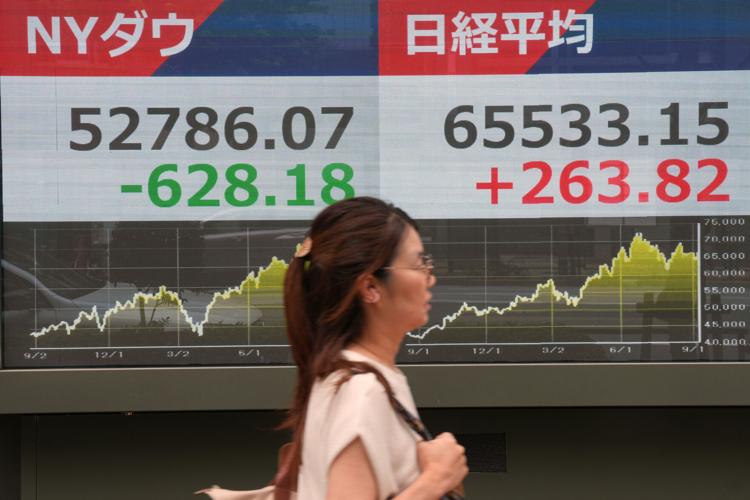
U.S. stocks fell across the board as escalating conflict between the United States and Iran pushed Brent crude above $100 a barrel and disrupted shipping through the Strait of Hormuz. MarketScreener reported that the Dow dropped 405.41 points, or 0.77%, to close at 52,380.66, while the S&P 500 fell 37.16 points, or 0.48%, to 7,636.36, and the Nasdaq lost 168.07 points, or 0.64%, to 26,253.34. The energy shock is already hitting American wallets: gasoline prices climbed to about $4.22 a gallon, up 32% from a year earlier.
Investors rotated heavily into oil producers and companies building AI infrastructure while ditching retailers and software makers. Morningstar noted that Exxon Mobil gained 2.5% and Chevron rose 2.3%, but Amazon fell 1.9% and Starbucks dropped 1.5%. The turmoil highlights a brutal trade-off: higher energy costs squeeze consumer spending and corporate profits, even as they raise inflation fears and threaten to keep interest rates elevated.
Energy Shock Spreads Beyond Oil Markets
Higher crude and fuel costs are cascading through the global economy. Diesel prices hit an all-time high of $5.94 a gallon and continued rising. MarketScreener reported that Treasury yields extended multiyear highs as the market grappled with the inflation risk. European natural gas prices surged as traders braced for tighter supplies heading into winter, with concerns growing about competition for liquefied-natural-gas cargoes from Asia.
The Strait of Hormuz disruption is particularly dangerous because it historically carried roughly one-fifth of global oil supply. Even partial traffic delays can rapidly tighten international energy markets. Europe faces the worst of it: the continent entered this period with storage sufficient for only a mild winter and has limited flexibility to switch fuel sources or reroute shipments.
Retailers and Tech Take the Biggest Hit
Broad market weakness punished consumer-facing companies and software makers. Amazon, Starbucks, Salesforce, ServiceNow and Intuit all declined as higher transportation costs squeeze margins and consumer wallets. The selloff reflects a simple economic truth: when energy gets expensive, households spend less on discretionary purchases and businesses invest carefully in new software.
One bright spot: Intel and Qualcomm rose after announcing a deal with Amazon to develop custom artificial-intelligence chips. Morningstar reported that OpenAI's launch of its GPT-6 Astra model triggered additional AI-related selling, as investors rotated between winners and losers in the race to capture AI gains while managing near-term profitability risks.
The Fed Faces an Impossible Choice
Higher oil and fuel prices add persistent inflation pressure just as growth risks mount. MarketScreener noted that Treasury Secretary Scott Bessent's repurchase program failed to reassure investors about the path forward. Central banks must now choose between cutting rates to support slower growth or keeping them steady to fight inflation—a bind that leaves markets nervous about stagflation, the feared combination of slow growth and persistent price pressures.
Sentiment
Mostly NegativeNEGATIVENEUTRALPOSITIVE
Publishers
23
Articles
46
Reach
69
A
AnonymousAuthor


