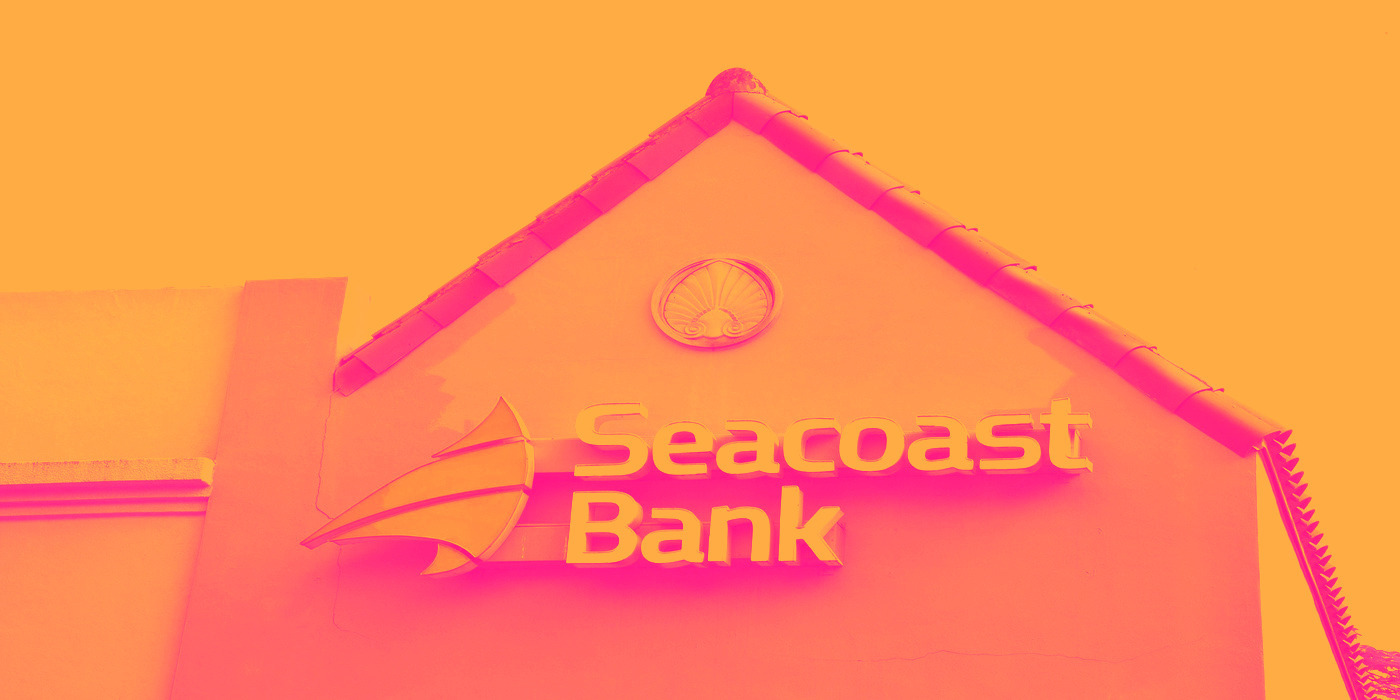
Seacoast Q2 Earnings Beat
Seacoast Banking Posts Solid Q2, Exceeds EPS on Robust Loan Growth and Acquisitions
Anonymous
Key Points
1
Seacoast reported adjusted earnings per share of $0.61 for the quarter, beating the consensus by 1.67%, while revenue of about $208.17 million missed estimates by roughly 0.78% (YoY revenue up about 37.5%).
2
Net interest income surged 42% year over year and 2% quarter over quarter, helped by acquisition gains; the bank’s NIM was 3.83% and, excluding accretion on acquired loans, was 3.65%.
3
The company posted 16% annualized organic loan growth and 4% annualized deposit growth, with deposit costs falling to about 1.53%, contributing to margin expansion in the period.
4
Adjusted pre-tax pre-provision earnings rose 52% year over year, and were up 4% from the prior quarter, underscoring stronger operating leverage amid cost discipline.
5
Seacoast repurchased 751,680 shares in the quarter and 1,072,443 shares year to date, signaling ongoing capital management alongside its earnings growth.
Seacoast Banking Corporation (NASDAQ: SBCF) posted adjusted earnings of $0.61 per share in the second quarter, beating analyst estimates by about 1.67%, according to Yahoo Finance. Revenue climbed 37.2% year over year to $208.2 million, though it fell slightly short of Wall Street's expectations.
The Florida-based bank pointed to strong loan growth, falling deposit costs, and a key acquisition integration as the drivers behind its improved results. The quarter showed the company building real operating momentum heading into the second half of the year.
Net Interest Income Jumps 42% Year Over Year
Net interest income — what the bank earns on loans minus what it pays on deposits — surged 42% compared to the same quarter last year. It also grew 2% from the prior quarter. The bank's net interest margin, a key measure of lending profitability, came in at 3.83%. Stripped of gains from acquired loans, the margin was 3.65%, up eight basis points from the prior quarter.
Deposit costs fell to about 1.53%, meaning the bank paid less to hold customer money. That drop helped widen the gap between what Seacoast earns and what it pays out — a direct boost to the bottom line. Lower funding costs paired with higher loan income are the clearest signs of improving financial health at the bank.
Organic Loan Growth Hits 16% Annualized Rate
Seacoast grew its loan book at a 16% annualized rate through organic activity — meaning new loans it originated itself, not those gained through acquisitions. Deposits grew at a 4% annualized rate. Adjusted pre-tax pre-provision earnings, a measure of core profitability before taxes and credit losses, rose 52% year over year and 4% from the prior quarter, according to Financial Content.
Management flagged a $1.3 billion commercial loan pipeline as the key to sustaining that growth. Converting those pending deals into funded loans will be critical to hitting full-year profit targets. If the pipeline delivers, the bank's earnings growth story stays intact through 2026.
Citizens First Bank Conversion Expands The Villages Footprint
A major milestone in the quarter was the conversion of Citizens First Bank customers onto Seacoast's platforms. Citizens First operated in The Villages, one of the fastest-growing retirement communities in the country. The integration added customers, deposits, and loans to Seacoast's books and helped drive the year-over-year revenue surge of 37.2%, reported by Yahoo Finance.
The conversion also improved the efficiency ratio, which measures how much the bank spends to generate each dollar of revenue. A lower number means the bank is running leaner. Seacoast said cost discipline and integration savings both contributed to better operating leverage this quarter.
Share Repurchases Signal Confidence in Capital Position
Seacoast bought back 751,680 shares during the quarter and 1,072,443 shares year to date. Repurchasing shares reduces the total count outstanding, which boosts earnings per share even if net income stays flat. It also signals that management believes the stock is a good value at current prices, according to Financial Content.
The buyback program runs alongside what the bank described as strong capital and liquidity positions. With the Citizens First integration largely complete and a large loan pipeline in place, Seacoast enters the back half of 2026 with the tools to keep earnings growing — provided that pipeline converts as management expects.
Sentiment
Mostly PositiveNEGATIVENEUTRALPOSITIVE
Publishers
15
Articles
38
Reach
53
A
AnonymousAuthor