Indiana Powers US Solar Future
CS PowerTech Opens First US HJT Solar Plant in Indiana, Creating 1,200 Jobs
Anonymous
Key Points
1
CS PowerTech's Mesquite, Texas module plant currently operates at 5 GW and is targeted to reach 10 GW nameplate capacity by the second half of 2026.
2
U.S. solar cell production capacity stood at 3.2 GW at the end of the first half of 2026, according to SEIA data cited by the report.
3
Colin Parkin, CEO of Canadian Solar, said: 'HJT technology is critical for the next generation of high-efficiency, high-performance solar modules, and this plant gives CS PowerTech the ability to deliver leading technology, improved energy yield, and long-term value for customers while strengthening domestic advanced manufacturing.'
4
Rusty Schmit, President of CS PowerTech, described the Jeffersonville facility as central to the company's strategy to build an advanced solar manufacturing supply chain in North America.
5
CS PowerTech executives indicated the facility will bolster grid reliability as customers deploy the next-generation HJT products.
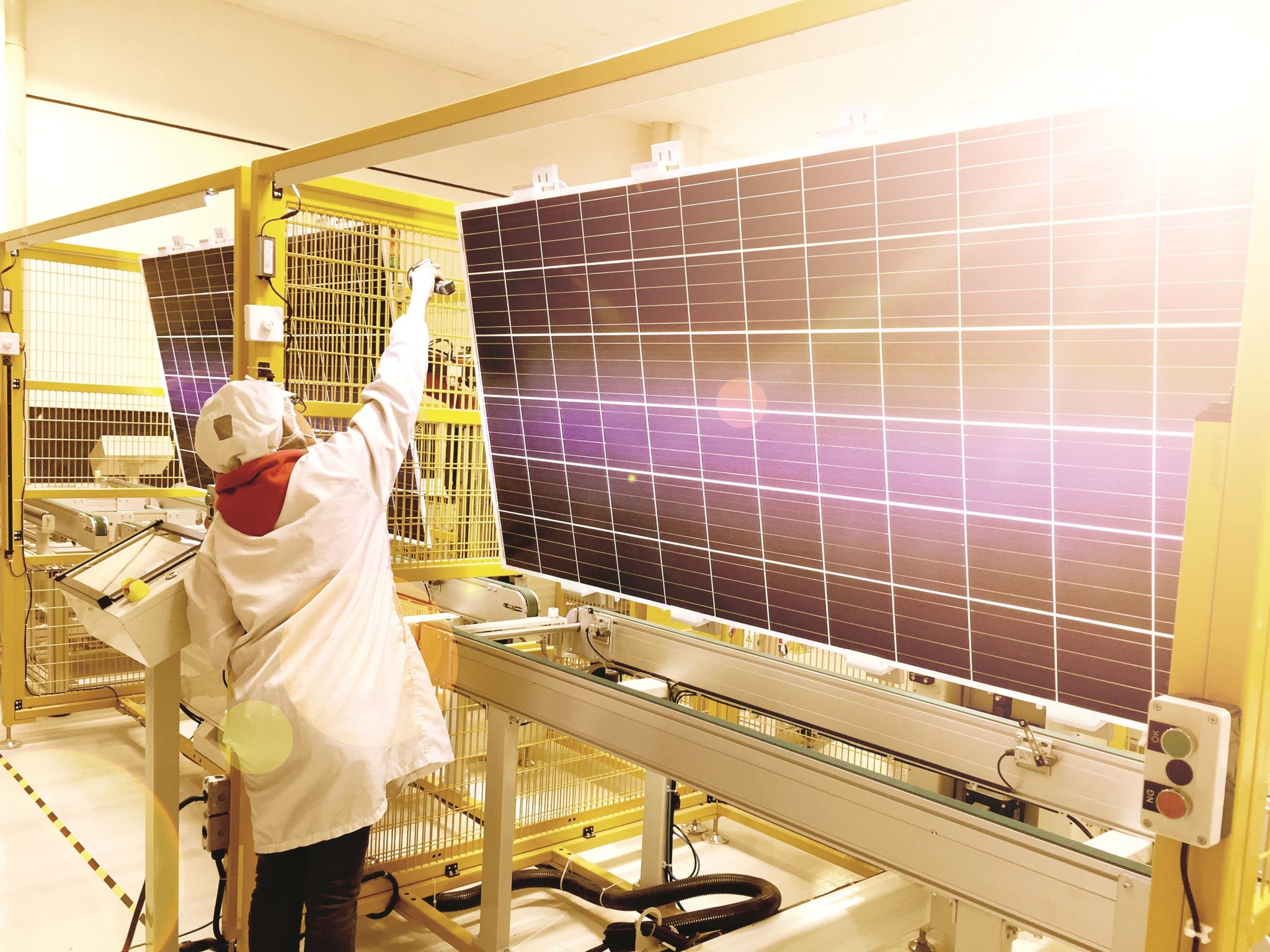
The United States has produced its first heterojunction technology (HJT) solar cells, following the opening of a new factory in Jeffersonville, Indiana. CS PowerTech Inc., a subsidiary of Canadian Solar, launched the first phase of the plant in April 2026, according to PV Magazine USA and Solar Power World.
The facility sits inside the River Ridge Commerce Center and is designed to eventually produce more than 6 gigawatts-peak (GWp) of solar cells per year. It is expected to bring about 1,200 jobs and nearly $1 billion in investment to the region, MarketScreener reported.
First HJT Cells Ever Made on US Soil
HJT stands for heterojunction technology. It is a type of solar cell that combines two different materials to capture more sunlight. The result is higher energy output compared to older cell designs. The Jeffersonville plant is the first facility in the country to make this kind of cell, according to Solar Power World.
The first phase has a nameplate capacity of 2.1 GWp. Trial production started in April 2026. A second phase is planned for later in 2026, which would push total output past 6 GWp per year. For context, all US solar cell production capacity combined stood at just 3.2 GWp at the end of the first half of 2026, per SEIA data cited by PV Magazine USA.
A Nearly $1 Billion Bet on Domestic Manufacturing
CS PowerTech is building more than just a factory. The company is constructing a full North American solar supply chain. The Jeffersonville cell plant feeds into CS PowerTech's module factory in Mesquite, Texas. That Texas plant already runs at 5 GWp and is targeted to hit 10 GWp by the second half of 2026, according to MarketScreener.
Rusty Schmit, President of CS PowerTech, called the Indiana facility central to the company's plan to anchor advanced solar manufacturing in North America. The nearly $1 billion local investment reflects how seriously the company is betting on US-made solar components over imported ones.
High-Efficiency Cells Aimed at Grid Reliability
Canadian Solar CEO Colin Parkin said the technology matters beyond the factory floor. "HJT technology is critical for the next generation of high-efficiency, high-performance solar modules," Parkin said. He added that the plant gives CS PowerTech the ability to deliver "improved energy yield, and long-term value for customers while strengthening domestic advanced manufacturing."
CS PowerTech executives said HJT cells will also help grid reliability. As more customers deploy next-generation solar products, higher output per panel means fewer panels are needed to hit the same energy target. That matters as the US pushes to expand clean power without straining land or grid infrastructure.
1,200 Jobs and a Push for Energy Security
The Jeffersonville plant is expected to create about 1,200 high-skilled jobs, according to PV Magazine USA. Those positions support a wider national goal: reducing dependence on imported solar components. The US has long relied on overseas factories, mostly in Asia, for both cells and modules.
With both a cell plant in Indiana and a module plant in Texas, CS PowerTech now controls two key steps of the solar supply chain inside the US. The second phase of the Indiana plant, planned for before year-end, could make the company one of the largest domestic solar producers in the country.
Sentiment
Mostly PositiveNEGATIVENEUTRALPOSITIVE
Publishers
14
Articles
27
Reach
41
Topics
A
AnonymousAuthor


