Offshore CGB Futures
Hong Kong Launches Offshore Chinese Government Bond Futures, Boosting Yuan Internationalization
Anonymous
Key Points
1
CGB futures details: The 5-year tenor is cash-settled and tracks onshore Chinese government bonds issued by the Ministry of Finance. Each contract is 500,000 yuan with a low minimum margin of 7,980 yuan, making offshore hedging more accessible to international investors.
2
HKEX chair Carlson Tong called the CGB futures launch an "important milestone" for Hong Kong’s fixed-income and currencies ecosystem, underscoring its significance in expanding the city’s hedging and asset-management toolkit.
3
The effort marks the third attempt at launching offshore China government bond futures, with foreign ownership of Chinese sovereign bonds having quadrupled—from about RMB 0.8 trillion in 2017 to roughly RMB 3.2 trillion by May 2026—creating the underlying demand that makes such a hedging product viable.
4
International investor interest is high, with HKEX reporting outreach to a broad set of global institutions. The onshore Chinese bond market is large (about RMB 200 trillion as of June), and foreigners held about RMB 3.2 trillion by end-March, enabling offshore futures to serve hedging and investment needs absent onshore QFII quotas.
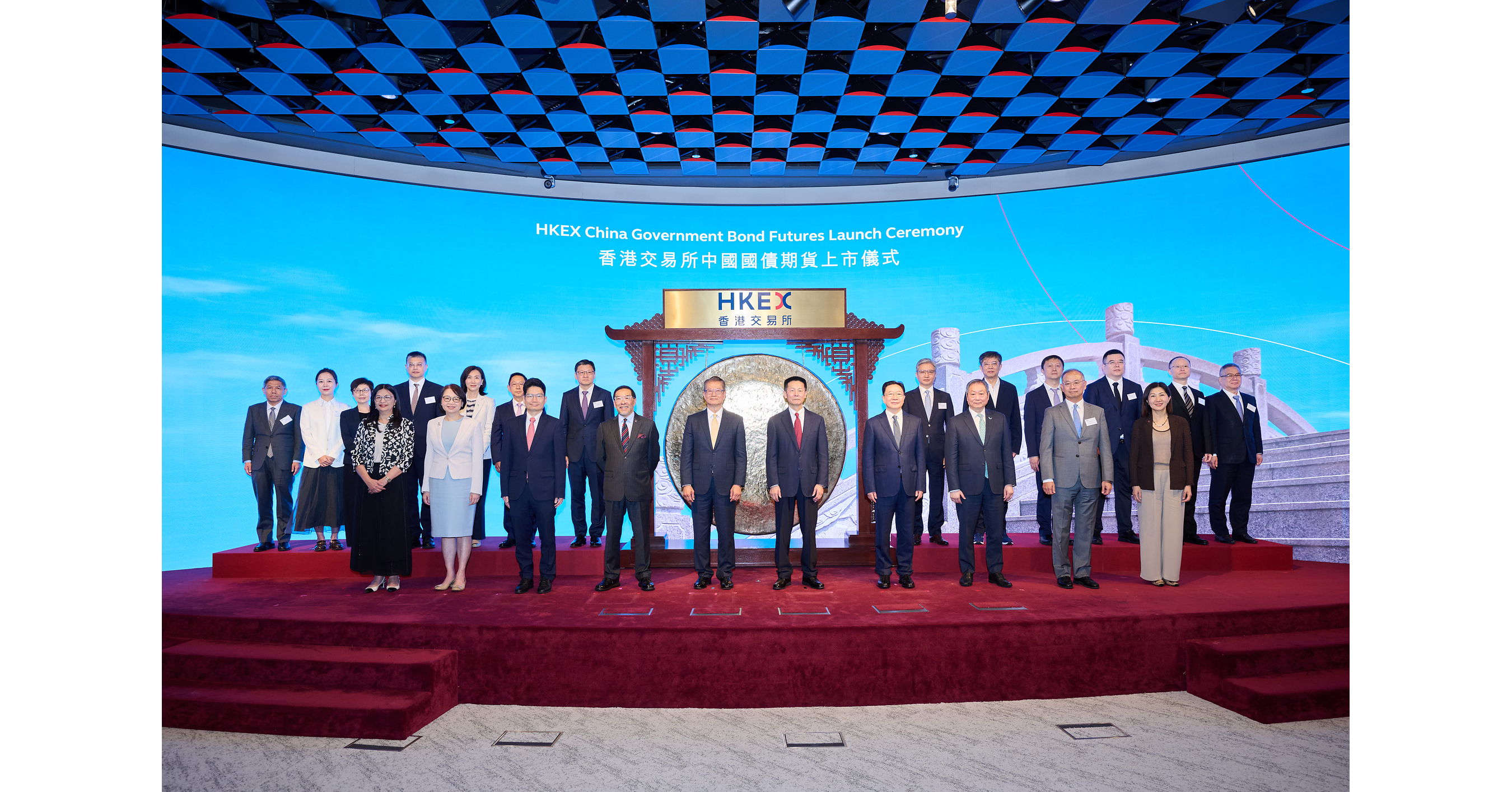
Hong Kong launched the world's first offshore Chinese government bond futures on August 3, marking a historic step in China's push to open its massive debt market to global investors. HKEX listed the 5-year contract on its exchange, giving international investors their first on-exchange tool to hedge interest-rate risk on Chinese sovereign bonds without needing to hold the bonds directly.
The move is seen as a milestone for the yuan's global role. South China Morning Post called it "a significant moment in the international monetary system." HKEX chair Carlson Tong described the launch as an "important milestone" for Hong Kong's fixed-income and currencies ecosystem.
How the New Futures Contract Actually Works
The contract tracks onshore Chinese government bonds issued by China's Ministry of Finance. Each contract covers 500,000 yuan in bonds. It is cash-settled, meaning investors receive or pay the difference in cash rather than exchanging actual bonds. That makes it far easier for foreign institutions to use.
The minimum margin — the deposit required to hold a position — is just 7,980 yuan. That is an unusually low bar. FX News Group noted the contract "complements HKEX's growing China-related product suite." The low cost and standardized structure make offshore hedging accessible to a much wider pool of investors.
Third Time Lucky After Two Failed Attempts
This is not the first try. Offshore Chinese government bond futures have been attempted twice before, both times without success. The difference now is demand. Foreign ownership of Chinese sovereign bonds has quadrupled since 2017 — from roughly RMB 0.8 trillion to about RMB 3.2 trillion by May 2026, according to HKEX.
China's onshore bond market is enormous — about RMB 200 trillion as of June. Foreigners hold only a small slice of that. But that slice is now big enough to make a hedging product viable. Global investors have been exposed to RMB interest-rate swings with no easy offshore tool to manage that risk — until now.
Global Investors Gain Access Without Onshore Quotas
Getting into China's onshore bond market normally requires a quota under programs like QFII — Qualified Foreign Institutional Investor — which can be slow and restrictive. The new futures sidestep that barrier entirely. International investors can now get RMB interest-rate exposure directly through Hong Kong without applying for onshore access.
HKEX says it has reached out to a broad set of global institutions. Many are already active in the onshore market and want a simpler offshore hedge. Caixin Global reported strong international interest ahead of the launch. The product targets both pure hedgers and investors seeking low-cost exposure to Chinese rates.
Hong Kong Bets on Its Role as China's Risk Hub
The futures launch fits a larger strategy. Hong Kong wants to be the world's main offshore venue for managing yuan-related risk. Earlier this year the city also launched offshore yuan Treasury bond futures. Together, these tools aim to make Hong Kong a two-way hub for hedging and asset allocation tied to China.
Hong Kong's economy grew 5.1% in the first half of the year. Officials credit AI-related demand, strong services, and rising visitor numbers. The financial push — deepening bond and currency markets — is part of the same effort to keep Hong Kong relevant as a global financial center while Beijing slowly opens China's capital markets to the world.
Sentiment
Mostly PositiveNEGATIVENEUTRALPOSITIVE
Publishers
13
Articles
23
Reach
36
Topics
A
AnonymousAuthor


