Space Force Expansion
Rocket Lab Wins $266 Million Space Force Contract, Expanding National Security Launches and Alaskan Site
Anonymous
Key Points
1
Insider selling activity was notable: in the three months leading up to the Space Force contract, Rocket Lab insiders sold about $362.8 million worth of shares, with no reported insider purchases.
2
The contract announcement did not identify payloads or specify which launch vehicle Rocket Lab will use for the missions, indicating payloads/vehicle details were not disclosed.
3
Rocket Lab’s HASTE suborbital vehicle continues to play a central role for hypersonic and missile-defense testing under Pentagon programs, reinforcing the company’s defense-oriented mission profile.
4
The government’s funding for the award included an initial obligation of about $112 million in fiscal 2025 for research and development related to the contract.
5
The Alaska-based work is scheduled for completion by December 31, 2028, marking a concrete timeline for the new fourth launch site alongside existing facilities in New Zealand and Virginia.
Rocket Lab has landed its biggest launch contract ever — a $266 million deal with the U.S. Space Force for up to 18 suborbital launches, according to MarketWatch. The agreement covers 12 confirmed missions, with options for six more, and the first launch is planned for no earlier than late 2026.
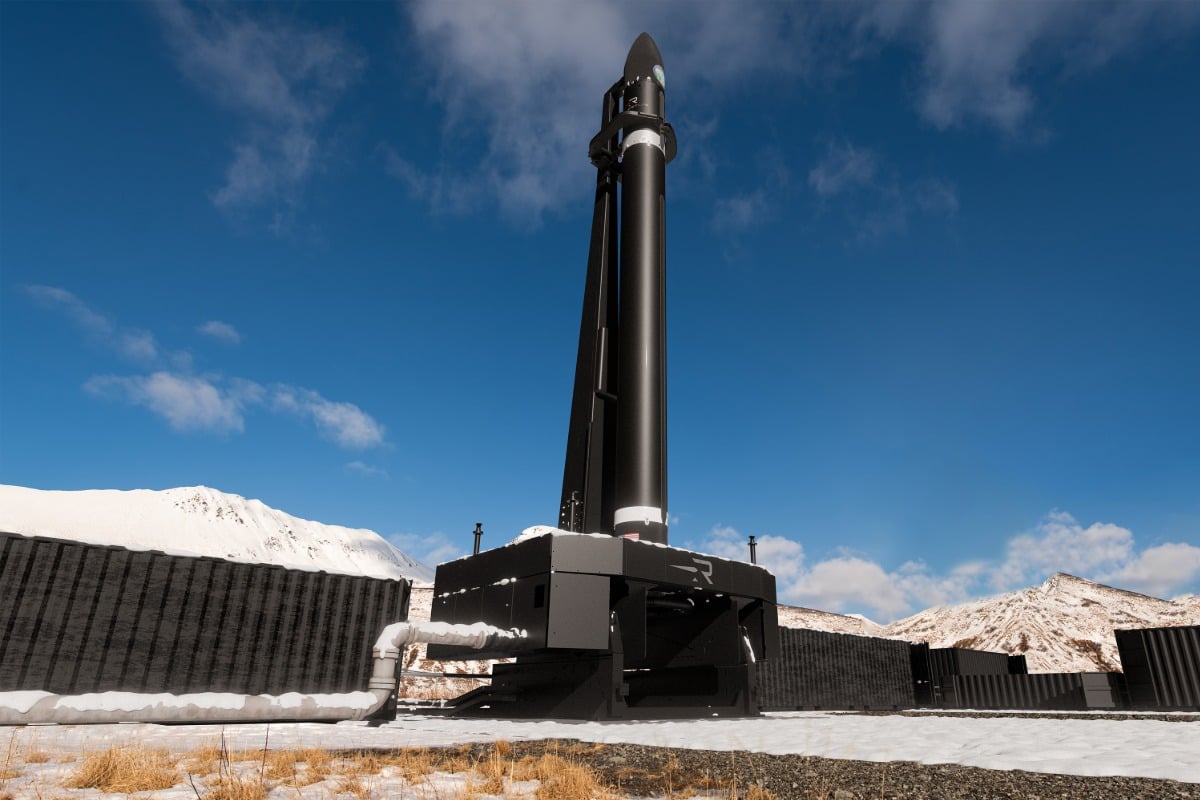
The contract also requires Rocket Lab to build a brand-new launch site at the Pacific Spaceport Complex in Kodiak, Alaska, Benzinga reported. That would give the company a fourth launch location, joining its existing sites in New Zealand and Virginia. Work at the Alaska site must be completed by December 31, 2028.
Space Force Wants More Hypersonic and Missile Testing
The deal is tied to Pentagon demand for hypersonic flight testing and missile-defense work. Rocket Lab's HASTE suborbital vehicle is central to that mission, Defence Blog reported. HASTE is built for exactly this kind of high-speed, short-range test work that the military needs to develop next-generation weapons and defenses.
The U.S. government put up about $112 million in fiscal year 2025 right away, covering early research and development costs, according to MarketWatch. The full $266 million value will be spread across the life of the contract. No payloads or specific launch vehicles were named in the announcement.
Alaska Launch Site Expands Rocket Lab's National Security Reach
The new Kodiak, Alaska site is a key part of the deal. It gives the Pentagon a launch point in the Pacific that does not exist in Rocket Lab's current lineup. MarketScreener noted the site adds strategic flexibility for national security missions that require specific orbits or flight paths.
Rocket Lab already operates from Mahia, New Zealand and Wallops Island, Virginia. Adding Alaska brings the total to four sites. The company must have the Alaska facility ready and all contract work done by the end of 2028, giving it roughly three years to build out the new location.
Insiders Sold $362 Million in Stock Before the Announcement
While the contract is a milestone, insider activity drew attention. In the three months before the Space Force deal was announced, Rocket Lab insiders sold roughly $362.8 million worth of shares, according to Benzinga. There were no reported insider purchases during that same period.
Rocket Lab shares climbed in premarket trading after the news broke. Still, some analysts noted that valuation remains a point of debate. The stock has attracted both enthusiasm and caution as the company shifts from commercial small-satellite launches toward a heavier defense focus.
Rocket Lab's Defense Portfolio Grows as Pentagon Spending Rises
This contract is the latest sign that Rocket Lab is pushing deeper into U.S. defense work. MarketScreener described the deal as the company's largest launch contract to date. It builds on earlier Pentagon relationships and shows that the Space Force sees Rocket Lab as a reliable partner for sensitive missions.
The broader defense space market is expanding fast. The Pentagon has made hypersonic testing a priority, and companies that can provide dedicated suborbital launches are in high demand. For Rocket Lab, the $266 million award signals a clear shift — defense is no longer a side business, it is a core strategy.
Sentiment
Mostly PositiveNEGATIVENEUTRALPOSITIVE
Publishers
23
Articles
81
Reach
104
A
AnonymousAuthor


