History of Health Frauds
Two Centuries of American Optimism Have Fueled Endless Vulnerability to Medical Frauds
Anonymous
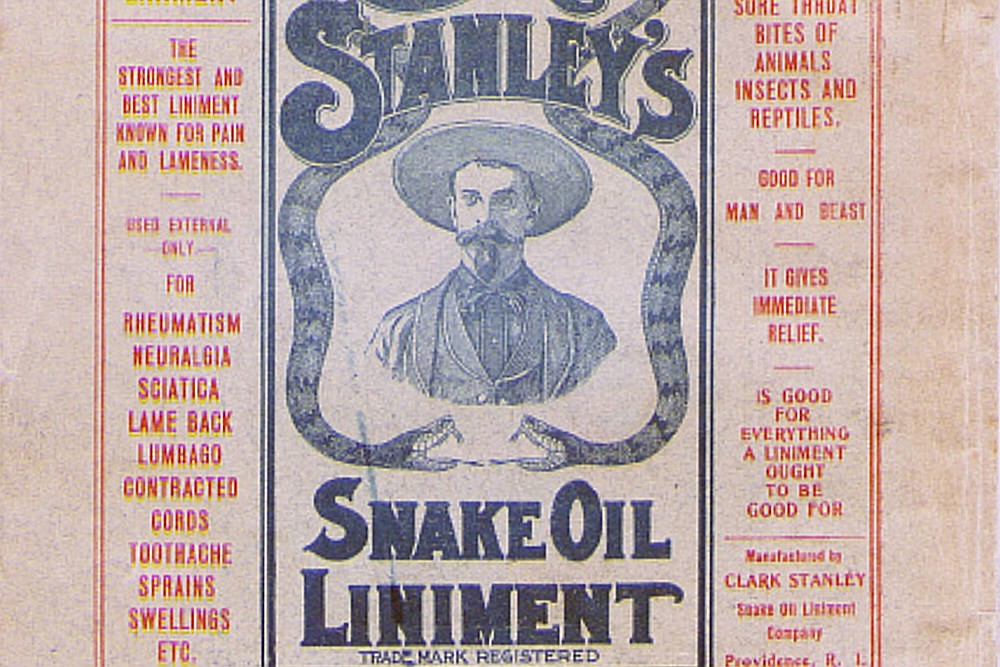
Americans’ long-standing belief that almost anything is possible has fueled both economic ambition and repeated vulnerability to fraudsters, medical fads and get-rich-quick schemes. Historical examples include a failed effort to extract gold from seawater, the radioactive Radithor tonic, Clark Stanley’s purported snake oil and Charles Ponzi’s investment fraud. The same willingness to believe extraordinary claims persists in enthusiasm for products and treatments such as raw milk, peptides and vitamin infusions despite limited evidence. Dr. Lydia Kang attributes much of this susceptibility to the enduring human desire to avoid illness, aging and death.
Key Points
1
Radithor was marketed in 1925 by Bailey Radium Laboratories of East Orange, New Jersey, as “a cure for the living dead,” promising to restore vitality and cure impotence; instead, the radioactive tonic poisoned consumers.
2
Clark Stanley’s snake-oil advertisements claimed his “snake oil liniment” could treat ailments ranging from rheumatism and sciatica to partial paralysis and could “reduce large joints to their natural size.”
3
The seawater-gold scheme centered on waters near Lubec, Maine, and was promoted in 1897 by a Baptist minister, but the promised gold did not exist.
4
Charles Ponzi’s scheme promised investors a 50% profit in just 45 days through investments in stamp coupons, helping make his name synonymous with fraudulent investment schemes.
Sentiment
Mostly NegativeNEGATIVENEUTRALPOSITIVE
Publishers
7
Articles
81
Reach
88
Topics
A
AnonymousAuthor


