Institutional fUSD Stablecoin Access
Frgmnt Partners With Anchorage Digital to Expand Institutional Access to fUSD
Anonymous
Key Points
1
Anchorage Digital CEO and co-founder Nathan McCauley said the integration combines access to innovative protocols with the “security and operational standards institutions expect,” giving clients another way to access onchain opportunities through trusted infrastructure.
2
Anchorage Digital had previously expanded its custody platform’s onchain offerings by integrating Lido, enabling institutional clients to mint and burn wrapped staked Ether without moving assets outside Anchorage’s custody environment.
3
Frgmnt plans to open another capped deposit wave in September, potentially broadening participation in its Base-based stablecoin products for institutional investors.
4
One account describes fUSD as audited and pegged 1:1 to the U.S. dollar, with backing drawn from a diversified pool of stablecoins and tokenized assets intended to reduce depeg risk and improve liquidity.
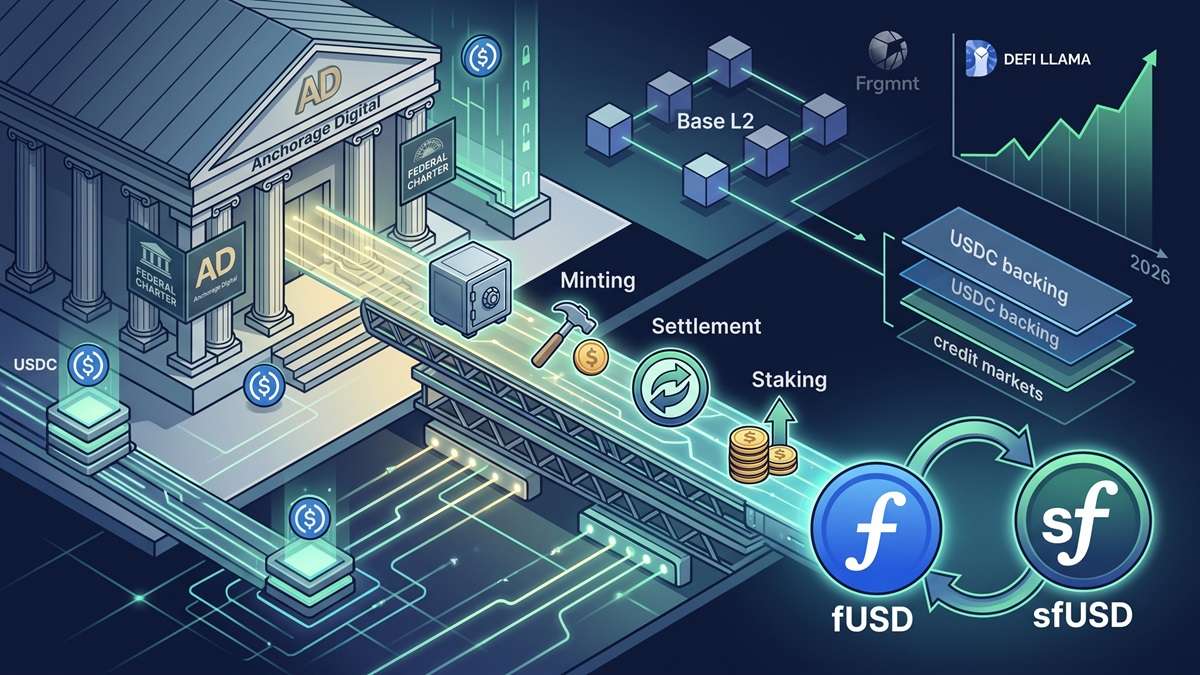
Frgmnt and Anchorage Digital have partnered to give institutional clients direct access to fUSD and sfUSD through Anchorage's custody platform. Crypto Economy reports clients can now mint, hold, stake, and redeem fUSD without leaving Anchorage's regulated custody environment. The move combines innovative onchain yield strategies with the compliance and security frameworks that institutions require.
fUSD is a stablecoin built on Base and pegged 1:1 to the US dollar. CoinLaw notes that backing comes from USDC deployed across selected onchain lending markets. Staking fUSD produces sfUSD and gives investors exposure to rewards from those strategies. Frgmnt plans to open another deposit wave in September to expand participation.
Anchorage's Regulated Custody Model Attracts Institutional Interest
Anchorage Digital is the only federally chartered crypto bank in the United States, Crypto Briefing explains. The bank is regulated by the Office of the Comptroller of the Currency and offers custody, staking, trading and settlement services. This partnership marks another step in Anchorage's expansion of onchain offerings for institutions seeking yield opportunities.
Nathan McCauley, Anchorage's CEO and co-founder, said the integration combines access to innovative protocols with the security and operational standards institutions expect. Bloomingbit notes this approach gives clients another way to access onchain opportunities through trusted infrastructure without managing separate custody arrangements.
How fUSD Backing and Yields Work
fUSD uses a diversified backing strategy to reduce depeg risk. CoinLaw describes it as audited and backed by a pool of stablecoins and tokenized assets. The fUSD is minted against USDC, with that backing deployed across selected onchain lending markets to generate returns. This structure is designed to improve liquidity and stability.
When users stake fUSD, they receive sfUSD in return. Head Topics explains that staking positions provide exposure to rewards generated by the underlying lending strategies. The setup targets funds, corporate treasuries, and fintech companies seeking onchain yield within institutional compliance frameworks.
Anchorage's Track Record With Onchain Protocols
This is not Anchorage's first move into protocol integrations. Bloomingbit reports the bank previously expanded its custody platform by integrating Lido, enabling institutional clients to mint and burn wrapped staked Ether without moving assets outside Anchorage's custody environment. The pattern shows Anchorage is methodically building a suite of onchain financial tools for institutions.
Sentiment
Mostly PositiveNEGATIVENEUTRALPOSITIVE
Publishers
16
Articles
9
Reach
25
A
AnonymousAuthor


