Integrated Care for Better Health
States Shift to Integrated Whole-Health Care Models to Improve Outcomes and Reduce Costs
Anonymous
Key Points
1
In Virginia, the articles highlight urban–rural disparities in healthcare access, noting differences in needs and barriers between Northern Virginia/Richmond and Southwest Virginia and rural communities within the state.
2
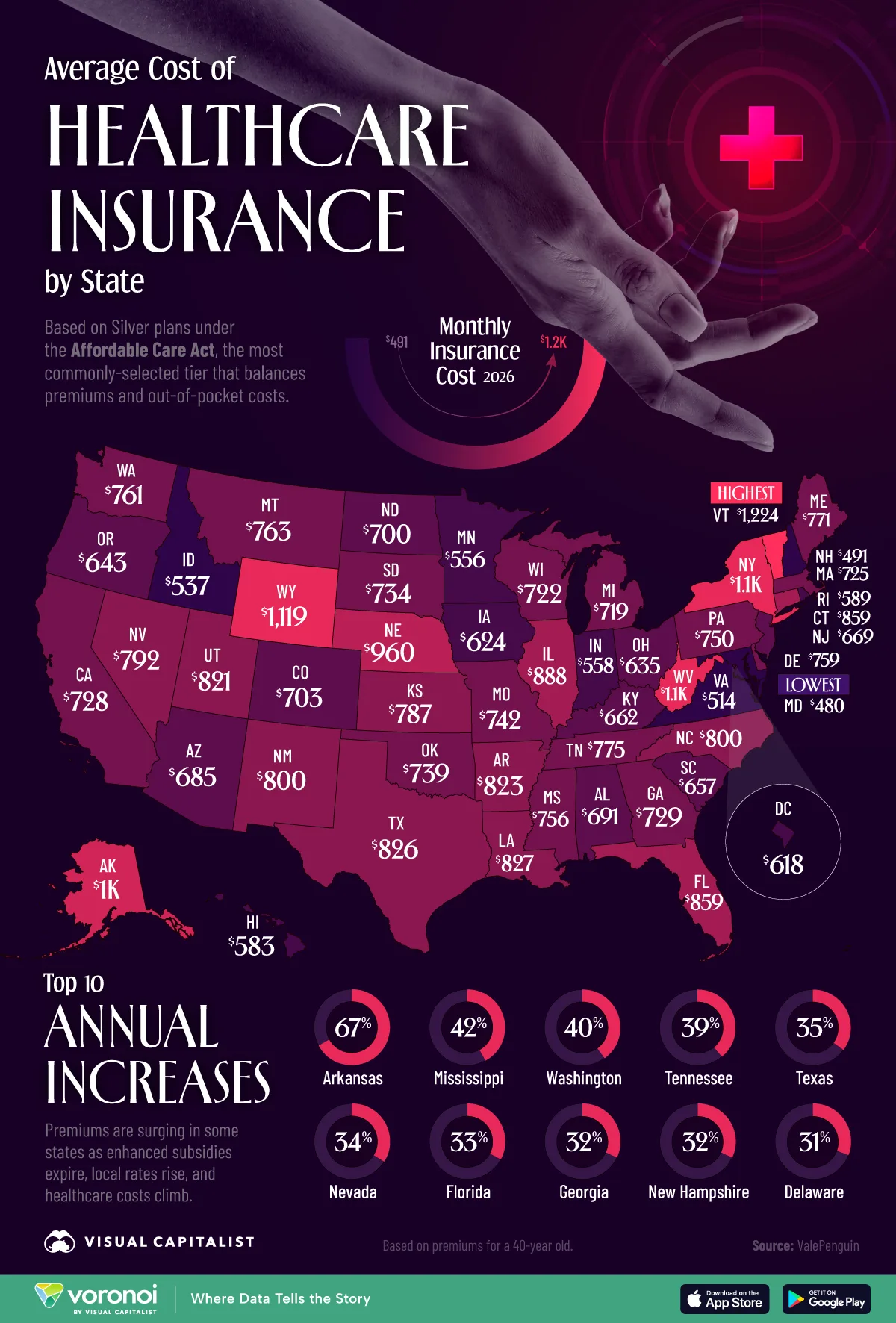
Indiana remains the 6th most expensive state for commercial hospital facility prices, at 338% of Medicare, signaling that price pressures persist even as broader ‘whole-health’ reforms are pursued.
3
Kentucky faces notable behavioral health risk factors, with 2024 adult smoking at 17.2% (versus 11.6% nationally), illustrating higher tobacco use as a persistent health challenge in the state.
4
Kentucky also confronts ongoing overdose concerns, reporting 1,110 drug-overdose deaths in 2025, with fentanyl present in 45.4% of those deaths, underscoring a significant public health crisis that the integrated-care narrative aims to address.
States across the country are redesigning healthcare to treat medical, behavioral, dental, and pharmacy care as one interconnected system instead of separate services. The push aims to lower costs by catching health problems earlier and helping patients navigate care more smoothly. Loudoun Now reports that Virginia's healthcare costs are rising, while The Post and Mail notes Indiana charges some of the highest hospital prices in the nation at 338% of Medicare rates.
The whole-health approach treats a patient's entire journey as one story instead of scattered visits to different doctors. When dental care, mental health, and pharmacy services connect to primary care, patients get better information and doctors spot risks faster. Early intervention costs less than emergency care, making this model attractive to states wrestling with healthcare spending.
Dental Care Shows How Connected Health Works
Oral health is becoming the concrete proof that healthcare systems are actually connecting. Tooth decay and gum disease link directly to diabetes and heart disease. When dentists and primary-care doctors share patient information, they catch these connections earlier. Inside Nova reports that Virginia is using this dental-to-systemic-disease connection as a model for its broader whole-health push.
Kentucky Faces Overdose and Smoking Crises
Kentucky confronts serious behavioral health challenges that whole-health systems must address. Adult smoking sits at 17.2%—far above the national rate of 11.6%. More urgently, the state recorded 1,110 drug-overdose deaths in 2025, with fentanyl found in 45.4% of those deaths. A coordinated-care system can flag addiction risk and connect people to treatment faster.
Urban-Rural Gaps Complicate Healthcare Access
Virginia reveals a core challenge: healthcare varies wildly by region. Northern Virginia and Richmond differ sharply from Southwest Virginia and rural communities in needs and barriers. Loudoun Now and Inside Nova both highlight these disparities, showing that even a whole-health system must account for geography. Rural areas often lack specialists and broadband to support digital care coordination.
System Redesign Requires Rethinking Who Pays
Whole-health care works only if payment models reward coordination instead of volume. States are discovering that hospitals charging 338% of Medicare rates—like Indiana's—make cost control nearly impossible. The Post and Mail notes that Indiana must address these price pressures alongside system redesign. When every service gets paid separately, doctors have little incentive to coordinate and prevent problems.
Sentiment
Mostly NegativeNEGATIVENEUTRALPOSITIVE
Publishers
10
Articles
26
Reach
36
A
AnonymousAuthor