Toyota Deepens Hydrogen Commitment
Toyota Acquires Equal Stake in Cellcentric, Advancing Heavy-Duty Hydrogen Fuel-Cell Technology with Daimler and Volvo
Anonymous
Key Points
1
Cellcentric's addressable market extends beyond on-road trucks to include coaches, stationary power generation, marine, rail, and other heavy‑duty off‑highway equipment.
2
Cellcentric employs more than 560 people and holds roughly 700 patents across its sites in Kirchheim/Teck, Esslingen and Stuttgart in Germany, and Burnaby, Canada.
3
Toyota's capital contribution to become an equal one-third owner is undisclosed.
4
Completion of the transaction is expected around year-end 2026 or start of 2027, subject to regulatory approvals.
5
Cellcentric will operate as an independent and autonomous company, with the three partners continuing to compete independently in all other areas, and they plan to collaborate with industry associations across the hydrogen value chain to support hydrogen supply and infrastructure.
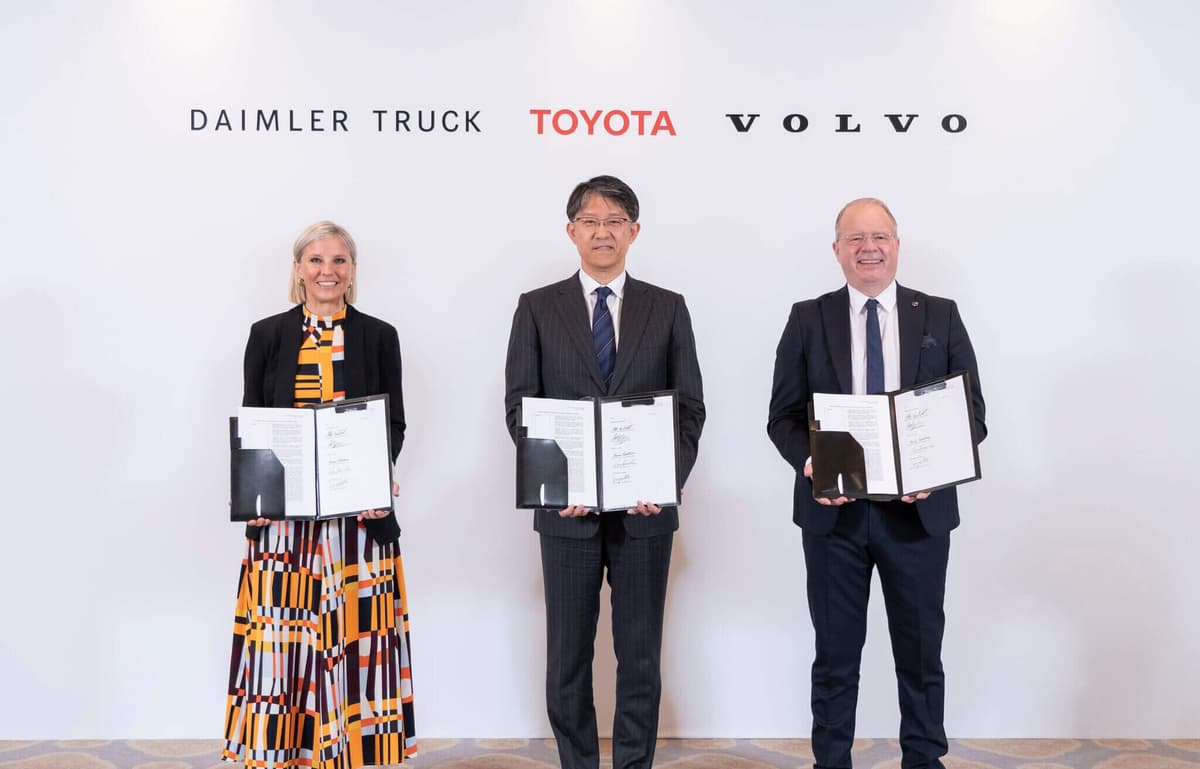
Toyota Motor Corporation has signed a binding agreement to become an equal one-third owner of Cellcentric, the hydrogen fuel-cell venture co-founded by Daimler Truck and Volvo Group, according to Gasworld. The deal makes Toyota, Volvo Group, and Daimler Truck equal partners, with each holding one-third of the company. Completion is targeted for late 2026 or early 2027, pending regulatory approvals.
The binding agreement follows a non-binding deal struck in March. Cellcentric will stay independent and serve customers beyond the three partners. The move marks a significant shift in Toyota's hydrogen strategy, pointing it squarely at commercial trucking.
Toyota Bets Big on Heavy-Duty Hydrogen Trucking
Toyota has long championed hydrogen fuel cells in passenger cars. This deal pivots that focus toward long-haul trucks. Fuel-cell trucks can refuel in minutes and carry heavy loads without sacrificing range — advantages that battery-electric trucks struggle to match, according to Sustainable Bus. Industry observers say heavy-duty trucking may be where hydrogen fuel cells find their strongest commercial footing.
Toyota's exact capital contribution has not been disclosed. But the investment signals confidence in Cellcentric's technology. Cellcentric holds roughly 700 patents and employs more than 560 people across sites in Kirchheim/Teck, Esslingen, and Stuttgart in Germany, and Burnaby, Canada, according to Mirage News.
Three Giants Share Costs, Compete Everywhere Else
Fuel-cell trucks need new refuelling stations and shared infrastructure investment. No single company can easily build that alone. By pooling capital across three global automakers, the partners spread the cost and risk of developing a hydrogen ecosystem, according to Gasworld.
Despite the joint venture, the three companies will keep competing in all other areas. Cellcentric will operate as an independent and autonomous company. The partners also plan to work with industry groups to support hydrogen supply and infrastructure across the broader value chain, according to Mirage News.
Cellcentric's Market Reaches Far Beyond Road Trucks
Cellcentric's target market is wider than on-road trucking. The company also develops fuel-cell systems for coaches, stationary power generation, marine vessels, and rail, according to Sustainable Bus. That broad scope gives the venture multiple revenue paths as hydrogen adoption grows across industries.
Volvo officials said the new arrangement should not materially affect Volvo's earnings. The three partners say they will collaborate on equal terms to advance hydrogen supply and infrastructure, going well beyond Cellcentric's own operations, according to Market Screener.
What Comes Next Before the Deal Closes
The transaction still needs regulatory sign-off in multiple jurisdictions. Closing is expected around year-end 2026 or early 2027, according to Gasworld. Until then, the three companies will operate independently while preparing for full equal ownership.
Once the deal closes, Cellcentric's independence is meant to reassure outside customers. The venture will be free to sell fuel-cell systems to any buyer, not just its three owners. That open-market approach is key to building the scale needed to drive down costs across the industry, according to Sustainable Bus.
Sentiment
Mostly PositiveNEGATIVENEUTRALPOSITIVE
Publishers
20
Articles
53
Reach
73
A
AnonymousAuthor


