Record $4.7B Missile Deal
L3Harris secures a record $4.7 billion contract to produce missile propulsion systems.
Anonymous
Key Points
1
The award follows a seven-year framework agreement signed on July 27, 2026, by L3Harris, Lockheed Martin and the Department of War. L3Harris said that framework could nearly triple production across propulsion products supporting the PAC-3 MSE interceptor, with the resulting contract expected to be definitized later in 2026.
2
The Department of War described the July framework as one of two major agreements announced that day, the other covering propulsion for the Terminal High Altitude Area Defense (THAAD) system. Michael P. Duffey, the department’s under secretary for acquisition and sustainment, said, “Rebuilding the Arsenal of Freedom requires moving with speed and precision to scale the production of critical munitions.”
3
The new Camden facilities build on earlier PAC-3 investments, including dedicated production bays and automated digital X-ray systems intended to modernize solid-rocket-motor manufacturing and improve quality-control throughput.
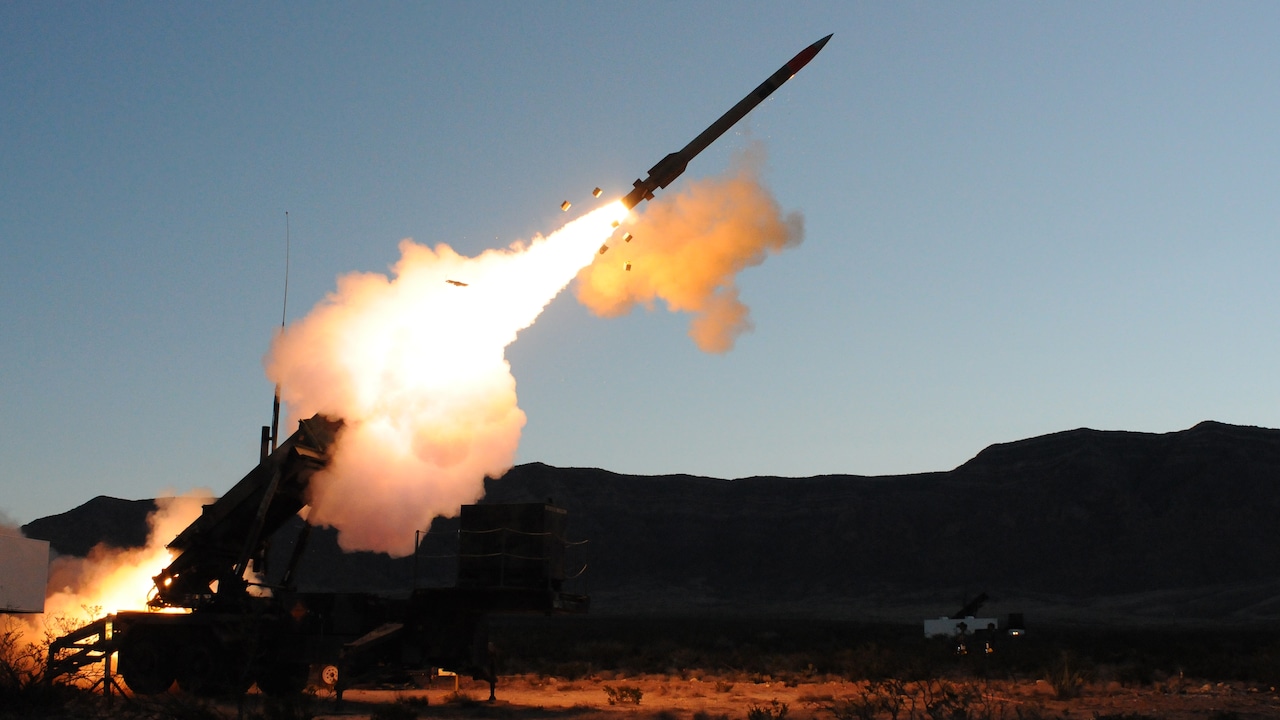
L3Harris Technologies won a $4.7 billion contract to build missile interceptor engines for the U.S. military, Yahoo News reported. The seven-year deal with Lockheed Martin is the largest PAC-3 propulsion award L3Harris has ever received. The company will produce rocket motors and related components for PAC-3 Missile Segment Enhancement interceptors, which defend against aircraft and cruise missiles.
The contract supports the Pentagon's push to boost munitions production after years of low output. L3Harris is building two new factories in Camden, Arkansas, set to open in 2027, plus expanding roughly 60 other manufacturing sites nationwide. The deal is undefinitized, meaning final pricing and contract terms will be negotiated later in 2026.
Pentagon's Weapons-Production Push Behind the Deal
The Department of War signed a seven-year framework agreement with L3Harris and Lockheed Martin on July 27, 2026, to nearly triple PAC-3 propulsion output. Breaking Defense noted this was one of two major munitions deals announced that day. Michael P. Duffey, the Pentagon's acquisition chief, said rebuilding "the Arsenal of Freedom requires moving with speed and precision to scale the production of critical munitions."
The second deal covered propulsion systems for THAAD air-defense missiles. Together, the agreements aim to address a critical shortage of air-defense weapons in the U.S. arsenal and support allied nations facing threats from Iran, Russia, and China.
Modernizing Rocket-Motor Manufacturing in Arkansas
L3Harris plans two new production facilities in Camden, Arkansas, expected to begin operations in 2027. The company is also investing in roughly 60 manufacturing sites across multiple states, adding more than 1 million square feet of factory space. These facilities will use automated digital X-ray systems to test rocket motors and improve quality control.
The expansion builds on earlier PAC-3 investments, including dedicated production bays designed to modernize solid-rocket-motor manufacturing. NJ.com reported the new capacity aims to keep pace with planned production increases from Lockheed Martin, the prime contractor for the PAC-3 system.
What PAC-3 Interceptors Do for U.S. Air Defense
PAC-3 stands for Patriot Advanced Capability-3, a ground-based air-defense system that shoots down aircraft, cruise missiles, and drones. The Missile Segment Enhancement (MSE) version is the latest variant, offering improved range and accuracy. Each interceptor needs two-pulse rocket motors, a lethality enhancer, and attitude-control motors — all parts L3Harris will now produce at scale.
The U.S. and its allies rely heavily on PAC-3 for near-term air defense while longer-range systems like THAAD and Patriot missiles cover wider areas. Boosting production ensures the military can replace aging missiles and meet commitments to NATO allies and Indo-Pacific partners.
Sentiment
Mostly PositiveNEGATIVENEUTRALPOSITIVE
Publishers
23
Articles
69
Reach
92
A
AnonymousAuthor


