Ancient Denisovan Cave Discovery
Fossils and Stone Tools Reveal Denisovan Cave Use Across 100,000 Years
Anonymous
Key Points
1
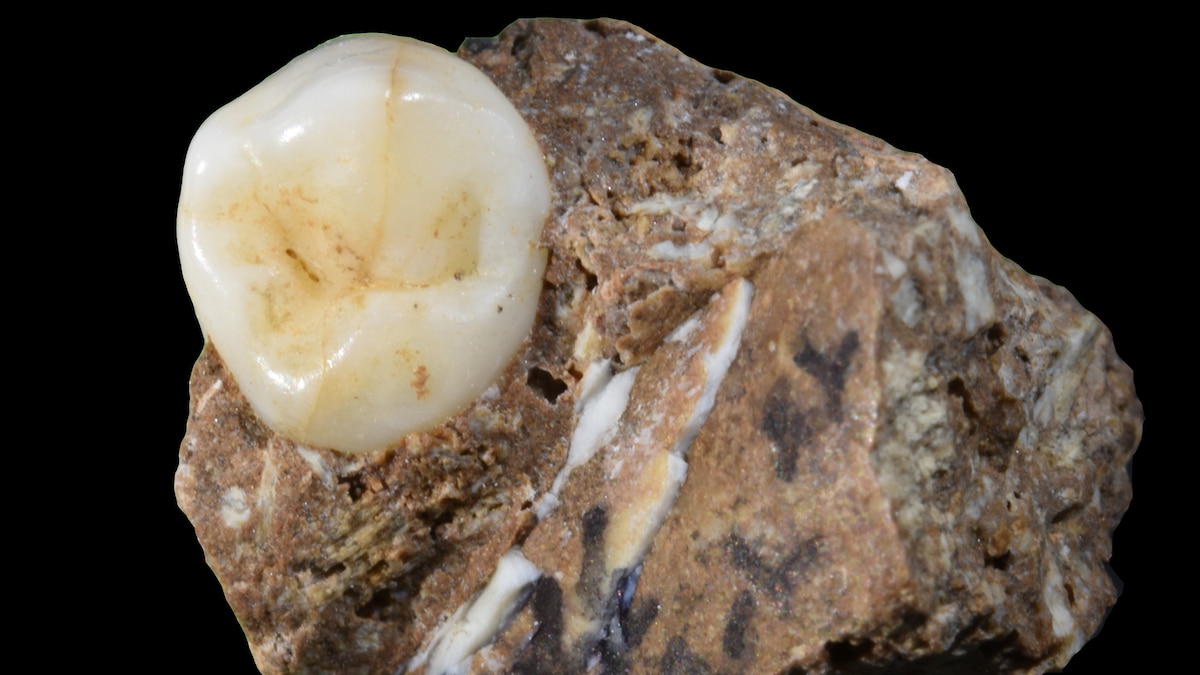
Bianfu Cave was discovered at an abandoned quarry, and archaeologists first excavated its stratigraphic layers in 2019. The excavation recovered nearly 1,400 stone artifacts, more than 64,000 mammal bones and four teeth attributed initially to an unknown human lineage.
2
Researchers developed the “morphological pre-screening + ZooMS identification” workflow partly because hominin fossils are exceptionally rare in bulk samples: at sites such as Denisova Cave and Baishiya Karst Cave, they make up only about 0.1% of recovered material. Screening all more than 60,000 Bianfu Cave fragments with ZooMS alone would have been costly and inefficient.
3
The radius is significant not only because of its mixed anatomy but also because its humanlike overall form may have supported “lightweight, precise manipulation,” according to the researchers—offering a functional interpretation of Denisovan hand and forearm abilities.
4
Outside experts characterized the discovery as an important shift in Denisovan research. Paleoanthropologist Shara Bailey said the cave “tells us a little about how Denisovans actually lived on the landscape” and that “Denisovans are becoming a bit less mysterious,” while Antonio Rosas praised the evidence concerning their stone-tool production and hunting practices.
Archaeologists in China have discovered five Denisovan remains in Bianfu Cave, including the first known Denisovan radius bone, filling a major gap in the fossil record of this mysterious archaic human group CNN. The fossils date to roughly 167,000–134,000 years ago, while evidence shows the cave was occupied continuously for over 100,000 years National Geographic. More than 1,300 stone tools and tens of thousands of animal bones reveal that Denisovans hunted large game and lived in forested environments, offering the clearest picture yet of how these extinct humans actually lived.
The radius bone is particularly significant because it combines features resembling both Neanderthal and modern human forearm anatomy National Geographic. Researchers used advanced protein analysis and bone-screening techniques to identify the fossils from over 60,000 fragments recovered from the cave, a workflow far more efficient than testing every bone individually Archynetys. The discovery strengthens evidence that Denisovans were widespread across Asia and interbred with modern humans.
First Complete Picture of Denisovan Hunting and Daily Life
The cave excavation, which began in 2019, recovered nearly 1,400 stone artifacts and more than 64,000 animal bones Head Topics. This haul gives researchers their first detailed view of what Denisovans actually ate and how they used tools. The stone tools and butchered animal remains show these humans hunted or processed large game in a forested setting, according to National Geographic.
Paleoanthropologist Shara Bailey said the discovery "tells us a little about how Denisovans actually lived on the landscape." She noted that "Denisovans are becoming a bit less mysterious" through findings like these Archynetys. The repeated occupation of Bianfu Cave over more than 100,000 years suggests these populations had stable, long-term settlement patterns.
Why the Radius Bone Reveals Denisovan Hand Strength
The radius—the larger forearm bone—is unlike any previously found Denisovan fossil. It blends anatomical features from Neanderthals and modern humans, suggesting Denisovans occupied a unique evolutionary position National Geographic. The bone's humanlike overall shape may have supported "lightweight, precise manipulation," meaning Denisovans could perform fine motor tasks with their hands.
This functional interpretation matters because it connects Denisovan skeletal anatomy directly to behavior. If Denisovans could manipulate objects precisely, they likely had advanced stone-tool production and hunting abilities Archynetys. Expert Antonio Rosas praised the evidence showing these capabilities, marking a major shift in how scientists understand Denisovan manual skills and cognition.
How Scientists Found Rare Fossils in 60,000 Bone Fragments
Finding five hominin fossils in a pile of 60,000+ bone fragments sounds impossible. Researchers developed a "morphological pre-screening plus protein analysis" workflow to make the job feasible Archynetys. This two-step approach screened fossils by shape first, then used advanced protein testing only on the most promising candidates.
This method was necessary because hominin fossils are vanishingly rare—they make up only about 0.1% of recovered material at similar sites National Geographic. Testing all 60,000 fragments individually would have been prohibitively expensive and time-consuming. The efficient workflow allowed researchers to identify the four teeth and two skull fragments that had been initially classified as unknown, plus the rare radius bone.
Sentiment
Mostly NegativeNEGATIVENEUTRALPOSITIVE
Publishers
27
Articles
15
Reach
42
A
AnonymousAuthor


