Oxford Street Pedestrianisation Plan
London plans permanent pedestrianisation of Oxford Street to support retail and regeneration.
Anonymous
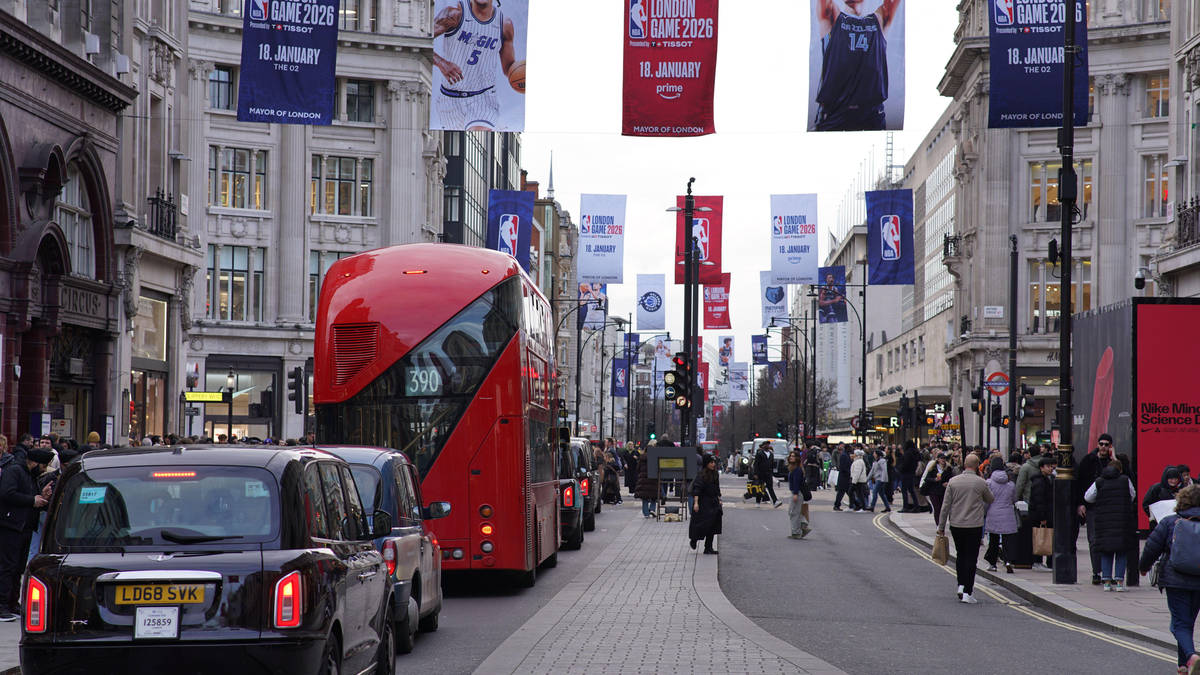
A roughly one-kilometer stretch of London’s Oxford Street, from the Selfridges area to Great Portland Street, is set to become permanently traffic-free on October 26, ahead of the Christmas shopping season. Cars, buses, taxis, bicycles and other vehicles will be barred from the pedestrianized section, with emergency access retained and bus routes redirected; the mayor says the change will support retail, leisure and broader regeneration. Westminster City Council says practical questions remain about access, pollution, street cleaning and public safety, and warns that displaced traffic could burden nearby streets and cause economic and environmental harm.
Key Points
1
The pedestrianised section will include Oxford Circus, and cars will still be able to cross Oxford Street at some junctions, including Duke Street, Davies Street and New Bond Street; some of those junctions will operate one-way.
2
Transport for London plans to divert 10 day and night bus routes, including routes 7, 94, 98, 139 and 390 and night routes N7, N98, N113, N137 and N207. Most will use Wigmore Street and Henrietta Place before rejoining Oxford Street at Great Titchfield Street; route 139 will instead continue along Regent Street.
3
Khan cited the challenges posed to the shopping street by the growth of online shopping as a reason for change, and said interest from high-quality retailers had increased since the pedestrian-zone plan was first announced.
4
The scheme marks the first permanent change of this kind on Oxford Street, following earlier temporary pedestrianisation trials. Plans also include installing new seating.
5
The council said it was writing to the Oxford Street Development Corporation to formally raise its concerns, arguing that preparations were being rushed with little time remaining.
Sentiment
Mostly NegativeNEGATIVENEUTRALPOSITIVE
Publishers
8
Articles
86
Reach
94
Topics
A
AnonymousAuthor


