AI Reshapes Education, Research, Assessment
AI Reshapes Education, Research, Assessment
Anonymous

Key Points
1
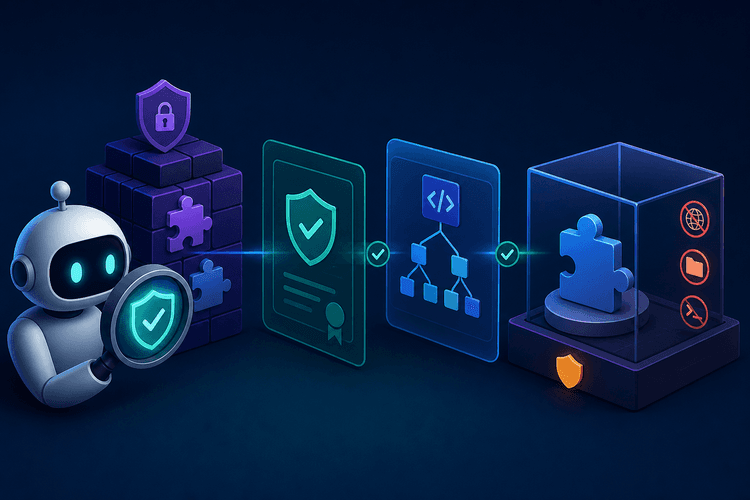
Paper2Agent uses Claude Code’s agent SDK in a six-step, multi-agent pipeline. A central orchestrator coordinates specialized agents, with standardized JSON reports and file conventions passing outputs between stages; the system can also process multiple tutorials in parallel.
2
Quizlet’s 2026 survey found that 98% of 1,005 students aged 14–22 considered it important for study tools to adapt to their learning progress, while 71% of teachers said AI effectively supports individualized learning. The survey included 2,017 U.S. respondents overall: 1,005 students, 501 teachers and 511 parents.
3
University of Hong Kong philosopher Simon Goldstein said Claude wrote “almost all of the prose” in a Philosophy & Public Affairs article and that he would have listed Claude as first author if the journal had permitted it. He nevertheless said Claude had not yet produced a good original idea for a paper.
4
The global online exam software market was valued at $9.4 billion in 2025 and is projected to reach $28.7 billion by 2034. The Association of Chartered Certified Accountants has ended remote exams over AI-cheating concerns, while Princeton University amended its 133-year-old Honor Code to introduce proctoring for in-person exams.
5
A study of nearly 100,000 students aged 13–14 across 23 countries found that short homework assignments given three to five times a week, taking up to 30 minutes each, were associated with higher test scores than assigning no homework. The researchers found the gains were driven more by frequency than by the total volume of work, and estimated that an extra homework hour was about half as effective as an additional hour of classroom instruction in comparable research.
Artificial intelligence is transforming education and academic research, but the changes are sparking tensions over authorship, cheating, and what students actually need to learn. A new system called Paper2Agent uses coordinated AI agents to turn research papers into working tools, while schools grapple with whether AI should adapt to students or replace good teaching. Universities are asking hard questions: Should an AI get credit as an author? Can remote exams survive the age of AI cheating? And do students actually want more AI in their classrooms, or something else entirely?
AI Agents Automate Research Into Production Tools
Paper2Agent represents a new frontier in turning academic work into usable software. The system uses Claude Code's agent SDK in a coordinated pipeline with specialized agents. A central orchestrator directs the workflow, passing outputs between stages using standardized JSON reports and file conventions TechEdu. It can process multiple tutorials at the same time, accelerating the journey from published research to working code.
Students Value Personalized Learning Over Broad AI Use
Surveys reveal a nuanced picture: students don't universally embrace AI, but they strongly support tools that adapt to their learning style. Quizlet's 2026 survey of over 2,000 U.S. respondents—including 1,005 students aged 14–22, 501 teachers, and 511 parents—found that 98% of students said it's important for study tools to adjust to their progress SchoolMgtPlus. Meanwhile, 71% of teachers reported that AI effectively supports individualized learning, suggesting the technology works best when it personalizes rather than replaces instruction.
Universities Confront AI Authorship and Credential Questions
As AI systems produce entire research papers, universities face unprecedented questions about intellectual property and credit. Simon Goldstein, a philosopher at the University of Hong Kong, revealed that Claude wrote 'almost all of the prose' in his article for Philosophy & Public Affairs TheHindu. He said he would have listed Claude as first author if the journal permitted it—yet added that Claude had not yet generated a genuinely original idea for a paper, raising the question of what authorship means when machines handle the writing.
Proctoring Expands as AI Cheating Threatens Remote Exams
Online exam software is booming, with the global market valued at $9.4 billion in 2025 and projected to reach $28.7 billion by 2034 SchoolMgtPlus. But AI-assisted cheating is forcing institutions to reconsider. The Association of Chartered Certified Accountants has eliminated remote exams, citing cheating concerns, and Princeton University updated its 133-year-old Honor Code to introduce proctoring for in-person tests SchoolMgtPlus. Yet critics warn that surveillance cannot fix poor exam design and may harm student privacy and access.
Frequent Short Homework Shows Modest but Real Gains
International research on nearly 100,000 students aged 13–14 across 23 countries found that short homework assignments—given three to five times per week for up to 30 minutes each—were linked to higher test scores than no homework at all SchoolMgtPlus. The gains came more from frequency than total volume. Researchers estimated that an extra hour of homework was about half as effective as an additional hour of classroom instruction SchoolMgtPlus. The finding suggests homework works best as a supplement, not a substitute, for quality teaching.
Sentiment
Mostly NegativeNEGATIVENEUTRALPOSITIVE
Publishers
16
Articles
7
Reach
23
A
AnonymousAuthor