Tech Giants Meet Xi
Top U.S. Tech Leaders Join Trump and Xi for Washington Dinner and AI Talks
Anonymous
Key Points
1
Xi warned that both countries “will lose in confrontation” and called for cooperation on business and AI rules, along with steady military contacts.
2
A small group of Chinese executives with U.S. visas travelled to Washington separately from Xi’s official delegation and was waiting to learn whether it would be invited. Alibaba, Xiaomi, CATL and BYD executives were among those reportedly discussed; Chinese EV companies were also interested in exploring U.S. investment opportunities.
3
The dinner menu included sesame-crusted sea bass with braised baby bok choy and roasted eggplant, followed by vanilla cremeux with sour cherry confit and walnut frangipane.
4
Some tech executives argued that companies already have incentives to develop AI responsibly: Mark Zuckerberg cited market competition and legal liability, while Nvidia’s Jensen Huang said market forces were sufficient.
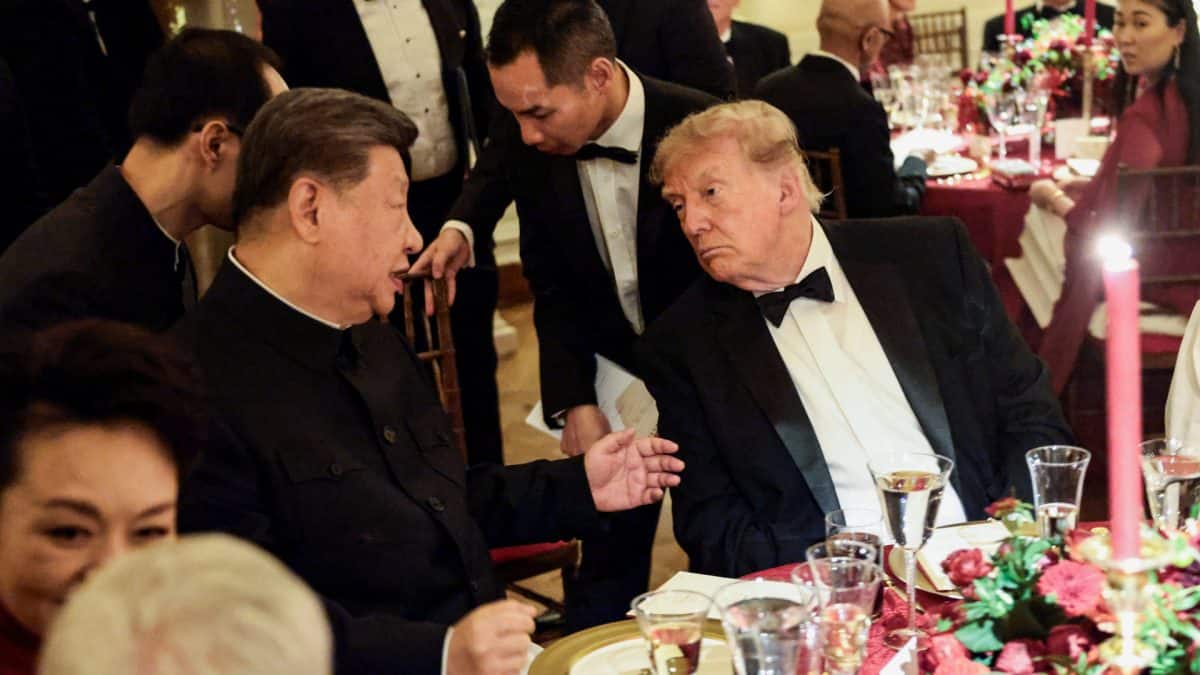
Donald Trump hosted Chinese President Xi Jinping at a White House state dinner focused on trade, AI, and military tensions. The dinner guest list featured six major U.S. tech leaders—Mark Zuckerberg, Elon Musk, Jensen Huang, Tim Cook, Sam Altman and Satya Nadella—but FirstPost reported no Chinese companies received invitations, a notable snub to Beijing's business elite.
Xi warned that both nations "will lose in confrontation" and urged cooperation on AI rules and military talks, according to Newser. The two leaders extended their trade arrangement by two months, though broader progress remained limited. Trump reiterated his opposition to AI safety guardrails, aligning with the tech executives present who have resisted calls to slow development.
Chinese Executives Left Waiting Outside Washington
A small group of Chinese business leaders holding U.S. visas arrived in Washington separately from Xi's official delegation, according to FirstPost. They waited to learn whether they would receive dinner invitations. Executives from Alibaba, Xiaomi, CATL and BYD were among those reportedly discussed, along with Chinese EV companies seeking U.S. investment opportunities.
The exclusion marked a sharp contrast to typical state visits, where host nations extend invitations to prominent business figures from the visiting country. AFR noted this snub highlighted tensions between Washington and Beijing's tech sector.
Tech Leaders Resist AI Regulation at White House Table
The dinner brought together Silicon Valley's most powerful figures. According to FoxBusiness, attendees included Meta's Zuckerberg, Tesla's Musk, Nvidia's Huang, Apple's Cook, OpenAI's Altman, and Microsoft's Nadella. Their presence underscored Trump's alignment with tech executives opposing strict AI safety rules.
Zuckerberg's participation proved especially significant given Meta's blocked status in China—Facebook, Instagram and WhatsApp remain unavailable there. Beijing previously blocked Meta's planned acquisition of Manus AI. Tech leaders at the dinner argued companies already have incentives to develop responsibly. Zuckerberg cited market competition and legal liability, while Huang said market forces were sufficient.
Deep Divisions Remain Over Taiwan and Military Buildup
Despite cordial dinner remarks, Trump and Xi remained divided on critical issues. Taiwan's status, China's ties with Iran, and Beijing's military expansion continued as sticking points, Newser reported. The leaders' extended trade arrangement for two months suggested limited expectations for breakthrough progress.
Xi's call for cooperation on business and military contacts reflected Beijing's desire for stable relations. Yet the absence of Chinese tech executives from the guest list signaled Washington's continued wariness of Chinese companies and technology transfer risks—a fundamental friction point remaining unresolved.
Sentiment
Mostly PositiveNEGATIVENEUTRALPOSITIVE
Publishers
21
Articles
105
Reach
126
A
AnonymousAuthor


