Whale Population Recovery
Massive Humpback Whale 'Supergroup' Signals Population Rebound, But Dangers Persist for Species
Anonymous
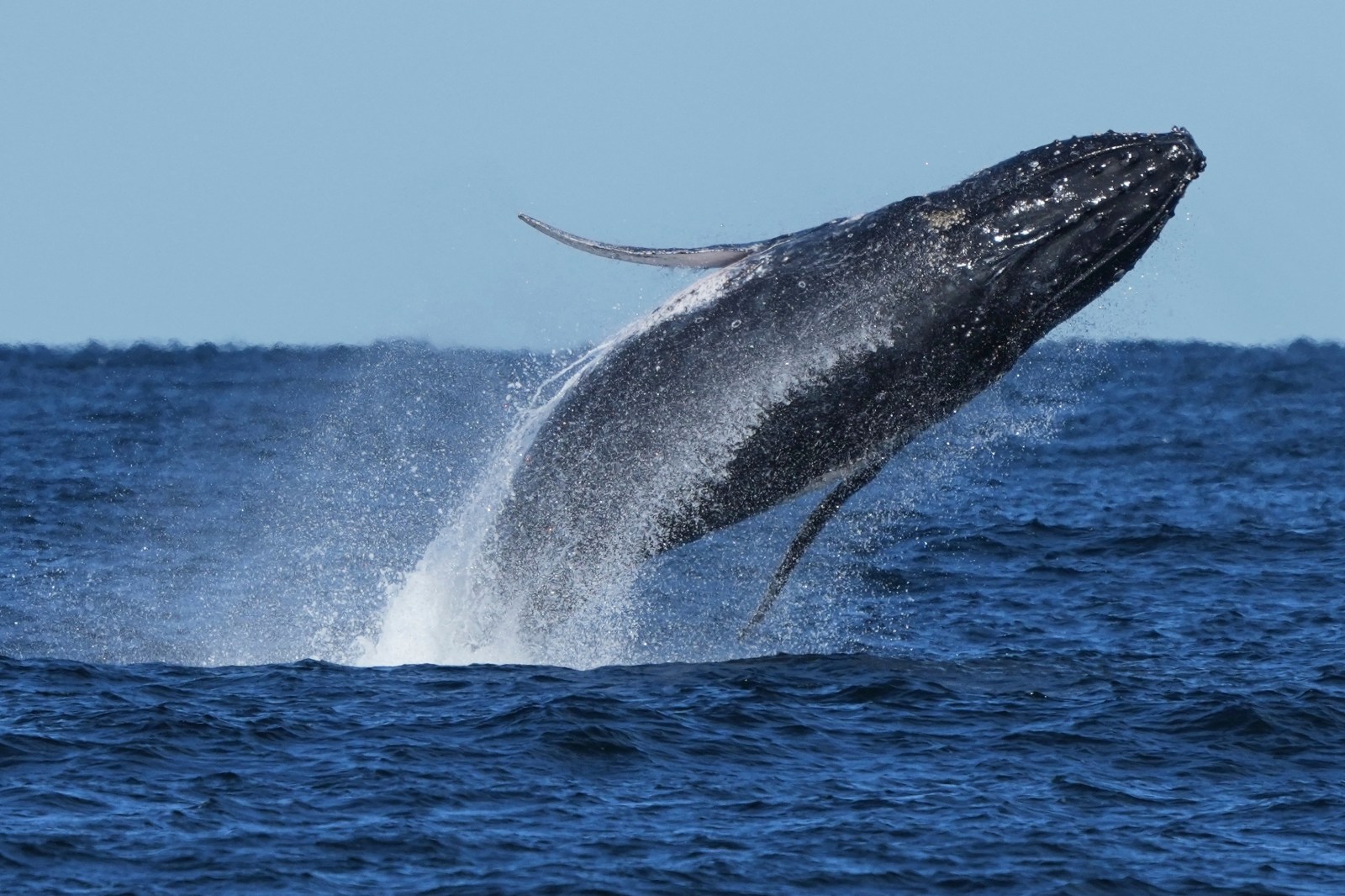
A South African couple has photographed what may be the largest group of humpback whales ever recorded — a "supergroup" of 299 animals spotted off the west coast of South Africa, according to AP News. The sighting is a stunning sign of how whale numbers have bounced back since the international whaling ban took effect in 1986.
Chris and Monique Fallows, wildlife photographers with 35 years of experience documenting marine animals, captured the massive gathering on camera. Alex Vogel, Africa coordinator for the whale-tracking platform Happywhale, said the group appears to be the biggest humpback supergroup ever sighted, AP News reported.
What a 'Supergroup' of 300 Whales Means
A "supergroup" is an unusually large gathering of whales in one place. Scientists say these groups are becoming more common as whale populations grow. Before whaling bans, humpback numbers had collapsed worldwide. The 1986 ban gave the species a chance to recover — and sightings like this one suggest it is working, Winnipeg Free Press reported.
Humpbacks have seen the biggest comeback of any whale species. The Fallows' sighting of 299 whales in a single group is rare even by today's standards. Such gatherings tend to happen where food is plentiful, as the whales follow rich patches of krill and small fish along the South African coast, according to WRAL.
A Few Countries Still Hunt Whales Commercially
The global whaling ban did not stop everyone. A handful of countries — including Norway, Iceland, and Japan — still hunt whales commercially today. Their continued hunts draw criticism from conservationists and many governments. The International Whaling Commission oversees the ban but has no power to force all nations to comply, Seattle PI noted.
Despite the holdouts, the ban has broadly worked. Humpback whale populations, which were among the most hunted, have grown significantly over the past four decades. Scientists and conservation groups say the rebound is one of the biggest success stories in modern wildlife protection.
Threats Remain: Nets, Ships, and Climate Change
The World Wildlife Fund warns that whales still face serious dangers even with hunting largely stopped. Getting tangled in commercial fishing gear is one of the biggest killers. Collisions with large ships also kill hundreds of whales each year. Climate change is shifting the oceans, which disrupts the food whales depend on, according to News4Jax.
These threats hit some species harder than others. Humpbacks are doing well, but other species — like the North Atlantic right whale, with fewer than 370 left — remain critically endangered. Conservation groups say saving whales now requires more than just stopping hunting. It means fixing fishing gear, slowing ships, and cutting carbon emissions.
Iran War Tension Adds a New Risk for Whales
The headline also points to a newer threat: conflict in the Middle East. Military activity near the Strait of Hormuz and surrounding waters can harm marine life. Sonar from warships and underwater explosions can disrupt whale communication and navigation. Whales rely on sound to find food, mates, and their way across oceans, Beaumont Enterprise reported.
An escalating conflict in the region — where heavy naval traffic is already common — could increase noise pollution in key whale migration corridors. Conservationists say military activity is an often-overlooked threat to whale populations that are still rebuilding decades after the worst of commercial hunting.
Sentiment
NeutralNEGATIVENEUTRALPOSITIVE
Publishers
11
Articles
11
Reach
11
A
AnonymousAuthor


