West Bank Settler Violence
Palestinians Report Widespread Settler Attacks and Crop Destruction Across West Bank
Anonymous
Key Points
1
Aqraba Mayor Salah Jaber said the 18-year-old woman was standing outside her home in the town’s eastern area when settlers fired toward her; she was subsequently taken to a hospital for treatment.
2
The Palestinian Colonization and Wall Resistance Commission said the 628 settler attacks in August directly affected 164 Palestinians, including 20 children and 17 women.
3
The commission reported that settler attacks were concentrated in Ramallah and al-Bireh, which recorded 157 incidents, followed by Nablus with 137 and Hebron with 120.
4
Landowner Mahmoud Ribhi called the settlers who burned his olive trees “terrorists”; the groves were set ablaze at about 8 a.m., according to residents.
5
The olive harvest is described as both a major source of income for many West Bank families and an important part of Palestinian cultural and historical life.
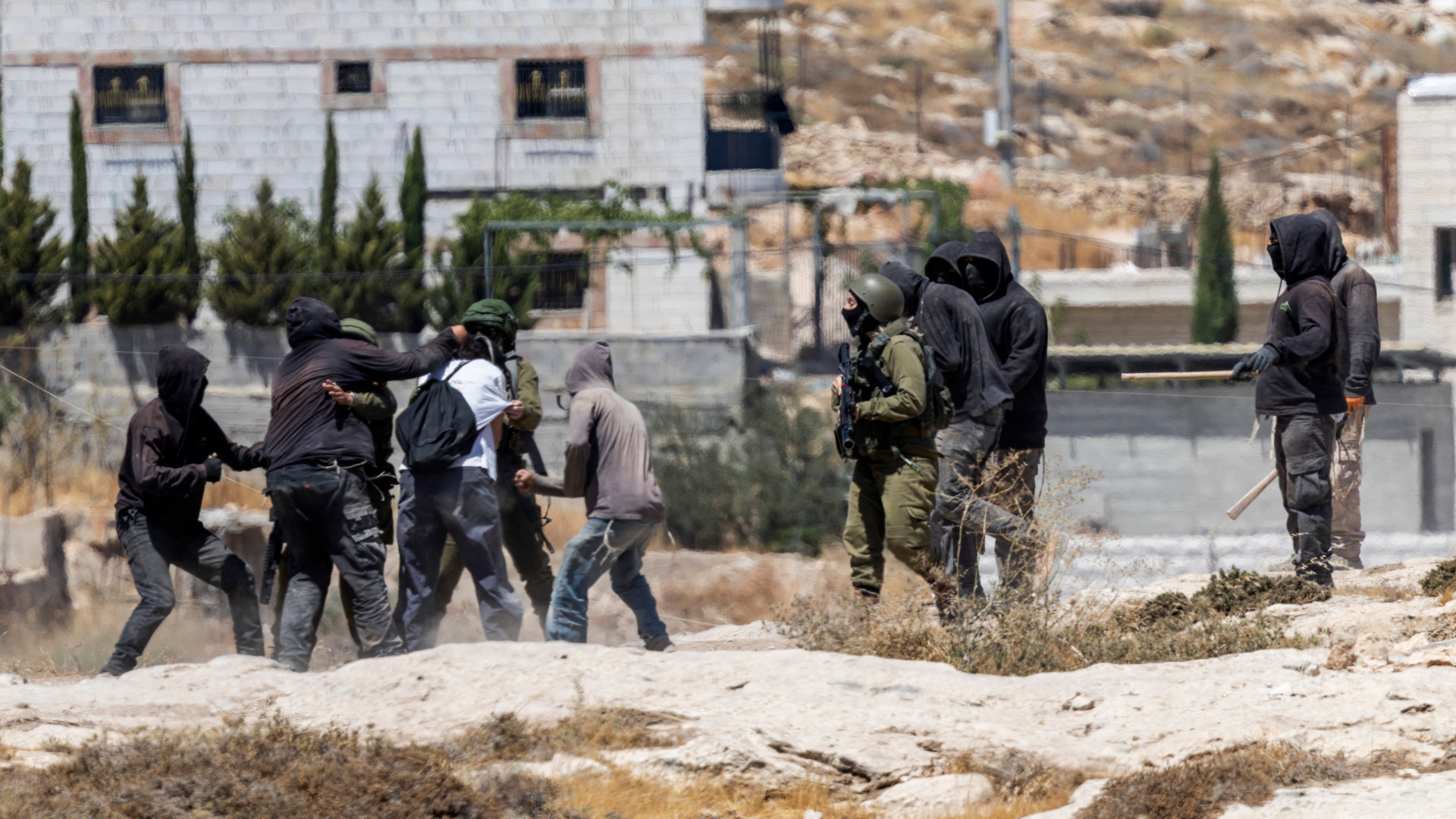
Israeli settlers have launched escalating attacks on Palestinians across the occupied West Bank, with incidents ranging from live gunfire targeting homes to deliberate burning of ancient olive groves. In September, an 18-year-old woman in Aqraba was struck by ammunition fragments when settlers opened fire near her home, while residents in Burqa reported that settlers torched thousands-of-years-old olive trees just before the harvest season. Palestinian Colonization and Wall Resistance Commission documented 628 settler attacks in August alone, directly harming 164 Palestinians including 20 children.
Israeli police arrested one suspect in connection with the Burqa fires and said they opened an investigation, while the military claimed it was reviewing the incidents. Palestinian officials accused Israeli forces of actively blocking residents and firefighters from reaching the burning groves, preventing any attempt to save the trees. The olive harvest represents a vital income source and cultural touchstone for West Bank families, making the destruction part of what Palestinians describe as a coordinated campaign to drive them from ancestral land.
Aqraba Shooting: Woman Injured by Live Fire
On September 18, settlers fired live ammunition toward an 18-year-old Palestinian woman standing outside her home in eastern Aqraba, south of Nablus. The woman was struck by ammunition fragments and rushed to a hospital for treatment. Aqraba Mayor Salah Jaber confirmed the incident and said the attack appeared deliberately targeted at the family residence. No arrests have been announced in connection with the shooting, though Israeli authorities said they were investigating.
Burqa Olive Grove Fires Destroy Ancient Trees
On September 17 at around 8 a.m., settlers torched olive groves in Burqa, near Ramallah, just weeks before the annual harvest begins. Landowner Mahmoud Ribhi said the burned trees were thousands of years old and called the settlers "terrorists" for destroying his family's livelihood. Residents reported that Israeli security forces blocked them and local firefighters from approaching the fires, preventing any rescue effort. Video footage reportedly showed a settler firing a handgun during the attack, though no injuries were reported.
Israeli police arrested one suspect in the arson case and opened an investigation. However, the delays in allowing firefighters access to the burning groves meant the damage was already done. Palestinian officials said the incident was part of a broader pattern of settler violence timed to coincide with the harvest season, when Palestinian farmers are most vulnerable.
August Recorded 628 Settler Attacks Across West Bank
The Palestinian Colonization and Wall Resistance Commission documented 628 separate settler attacks during August 2026, including shootings, assaults, and property damage. These attacks directly affected 164 Palestinians, among them 20 children and 17 women. The attacks included arson, home damage, livestock killing, and vehicle destruction. The highest concentrations occurred in Ramallah and al-Bireh with 157 incidents, followed by Nablus with 137 and Hebron with 120.
Between January and August 2026, Palestinians reported 4,914 total settler attacks. An estimated 21,508 Palestinian trees have been damaged or destroyed throughout the West Bank during this period. Palestinian rights groups say the low prosecution rate for settler violence creates impunity, allowing attacks to continue unchecked. Most incidents result in arrests but few convictions, leaving Palestinians with damaged farms and no legal recourse.
Olive Harvest Represents Livelihood and Cultural Identity
The annual olive harvest is both an economic lifeline and a deep cultural symbol for Palestinian families. For thousands of West Bank households, olive oil sales generate essential seasonal income. The groves themselves often represent generational heritage, with some trees claimed to be centuries or millennia old. Burning them destroys not just this year's crop but years of growth and centuries of family history. Palestinian leaders say the timing of settler attacks during harvest season is deliberate economic sabotage.
The destruction compounds the financial pressure on Palestinian farmers already facing land restrictions and limited access to water. Each burned tree represents months of lost income for families already struggling under occupation. Palestinian officials characterize the attacks as part of a systematic effort to force Palestinians off ancestral lands through economic destruction and physical intimidation.
Sentiment
Mostly NegativeNEGATIVENEUTRALPOSITIVE
Publishers
25
Articles
7
Reach
32
A
AnonymousAuthor