Ferrari Leads Italian Practice
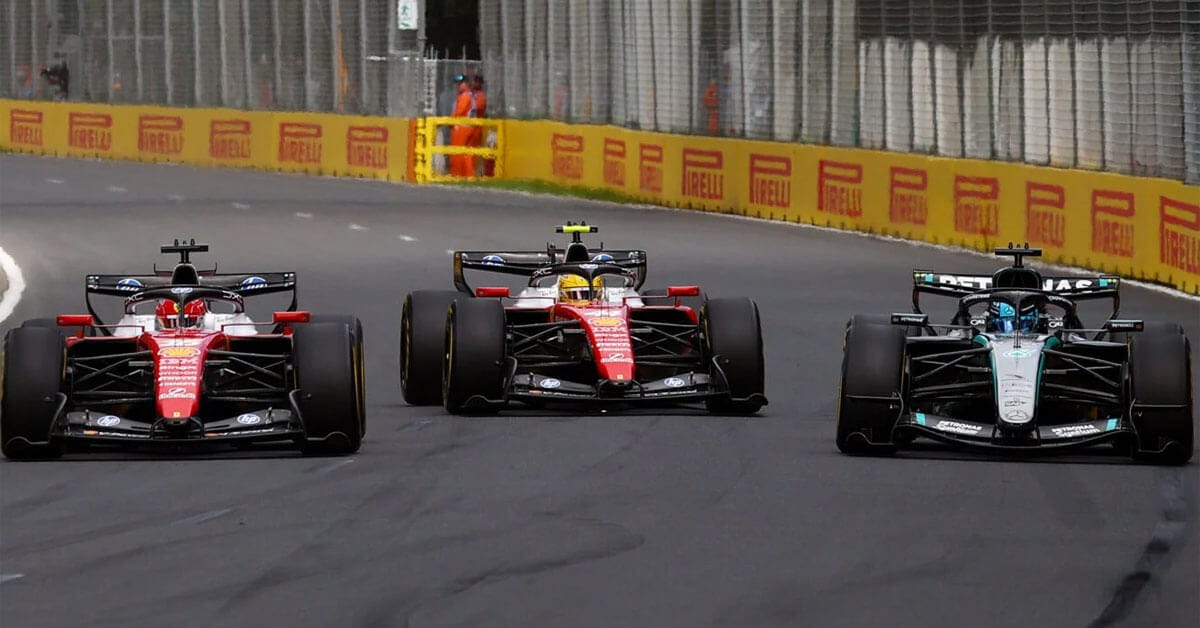
Charles Leclerc leads Ferrari teammate Lewis Hamilton during opening practice at the Italian Grand Prix.
Anonymous
Key Points
1
Leclerc’s benchmark lap was set on medium tyres rather than the soft compound, recording a 1:23.008 while rivals began switching to softer rubber for their fastest runs.
2
Four rookies took part in FP1: Ayumu Iwasa replaced Max Verstappen at Red Bull, Luke Browning replaced Alex Albon at Williams, Paul Aron drove Pierre Gasly’s Alpine, and Colton Herta stood in for Sergio Perez at Cadillac.
3
Lando Norris finished sixth, 0.711 seconds off Leclerc’s pace, after arriving at Monza with consecutive victories in Hungary and the Netherlands; he is 83 points behind Antonelli in the championship.
4
Among the rookie substitutes, Alpine’s Paul Aron was the highest finisher in 10th, while Red Bull stand-in Ayumu Iwasa ended the session 17th among the 22 drivers.
5
Leclerc said Ferrari is also studying how to manage slipstream effects during the race, warning that the new cars could produce unpredictable ‘yo-yo racing’ because gaps can become too large for drivers to react easily to the car ahead.
Charles Leclerc set the fastest time in first practice at the Italian Grand Prix, clocking 1:23.008 on medium tyres and beating Ferrari teammate Lewis Hamilton by 0.173 seconds. Scuderia Fans reported that Mercedes' George Russell finished third, roughly three-tenths back, as Ferrari showed early pace with its new engine upgrade at its home race. Hamilton is chasing his first Monza victory in red, while championship leader Kimi Antonelli ended fifth but faces a back-of-the-grid penalty after taking a fresh power unit.
Leclerc revealed that Ferrari plans to give Hamilton priority during qualifying's crucial slipstream strategy, a tactic that matters even more at Monza because of long straights and the unpredictable effects of the new 2026 power units. The session was briefly halted when Cadillac stand-in Colton Herta stopped with a suspected hydraulic issue, while four rookie drivers participated in the session, including Red Bull's Ayumu Iwasa and Alpine's Paul Aron.
Leclerc's Medium-Tyre Advantage Over the Field
Leclerc's fastest lap came on medium-compound tyres rather than the softer rubber that most rivals switched to for their qualifying simulations. This timing decision gave Ferrari an early benchmark that stood up against the competition as drivers rotated through different fuel loads and tyre compounds throughout the 60-minute session. The 1:23.008 lap showed Ferrari's upgrade package is delivering real pace at Monza's fast and technical layout.
Four Rookies Fill Seats as Teams Rotate Drivers
Red Bull ran Ayumu Iwasa in place of Max Verstappen, while Williams fielded Luke Browning instead of Alex Albon. Scuderia Fans noted that Alpine's Paul Aron replaced Pierre Gasly, and Colton Herta stood in for Sergio Perez at Cadillac before his hydraulic failure ended his session early. Among the rookie substitutes, Aron impressed most with a 10th-place finish, while Iwasa struggled to 17th among the 22-car field.
The rookie rotations are common in first practice, allowing teams to blood new talent and collect data at different skill levels. It also gives established drivers a lighter schedule ahead of Saturday's qualifying and Sunday's race.
Norris Arrives Hot but Trails Leclerc by Seven-Tenths
Lando Norris finished sixth, 0.711 seconds behind Leclerc, after back-to-back wins in Hungary and the Netherlands. UK Head Topics reported that despite his recent form, Norris sits 83 points behind championship leader Antonelli in the title fight and needs a strong Monza weekend to close the gap. His McLaren pace was steady but not enough to trouble the leading trio on Friday morning.
The gap between Norris and Leclerc highlights how much Ferrari's upgrade has helped close the performance window at this circuit. With qualifying next, every tenth will count as teams fine-tune setups for the high-speed demands of Monza's layout.
Ferrari Warns of 'Yo-Yo Racing' Risk With New Power Units
Leclerc flagged a potential problem for the race itself: the new 2026 power units could produce unpredictable 'yo-yo racing' where gaps between cars become too large for drivers to react safely to the car ahead. Scuderia Fans reported that Ferrari is already studying how to manage slipstream effects during the race to avoid dangerous situations. Monza's long straights amplify these effects, making recovery or overtaking attempts riskier if the leading car suddenly pulls away.
The warning reflects growing concerns in the paddock about how the new turbo-hybrid power units behave in traffic. Teams will need careful race strategy to avoid creating gaps that punish following drivers unfairly.
Sentiment
Mostly NegativeNEGATIVENEUTRALPOSITIVE
Publishers
17
Articles
34
Reach
51
A
AnonymousAuthor


