Record-Breaking Breaststroke Gold
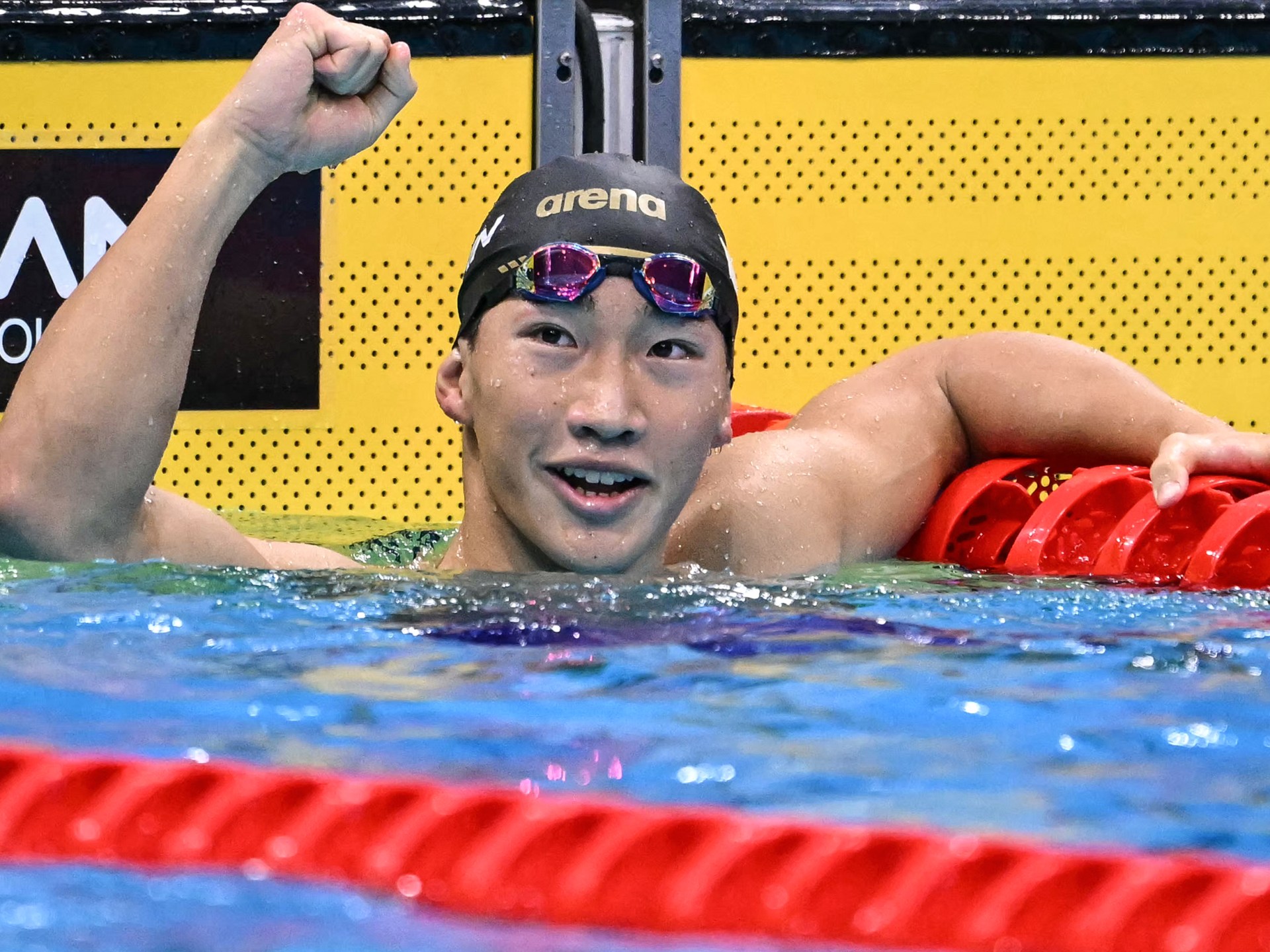
Japan's Shin Ohashi sets a 200m breaststroke world record and wins gold at the Asian Games.
Anonymous
Key Points
1
Ohashi entered the final with a personal best of 2:06.59, the world junior record, and improved it by 1.76 seconds with his world-record swim.
2
He opened aggressively, reaching 100 meters in 59.89 seconds after a 28.27-second first 50, then closed the race in 32.43 seconds.
3
Ohashi’s unusual technique helped distinguish his race: despite a relatively short 1.69-meter stature and a 0.74-second reaction time, he kept his upper body high in the water and took about six more strokes per 50 meters than other elite swimmers.
4
Ohashi said a cold before the Games and disappointing results over the summer had left him unsure he could succeed; at the Pan Pacific Championships the previous month, he had finished silver in the 100-meter breaststroke and bronze in the 200.
Japan's 17-year-old Shin Ohashi shattered the men's 200-meter breaststroke world record at the Asian Games in Tokyo, clocking 2:04.83 and winning gold Reuters. He erased China's Qin Haiyang's previous mark of 2:05.48 by 0.65 seconds, becoming the first swimmer ever to break the 2:05 barrier Yahoo Sports. Ohashi's record-breaking swim thrilled the home crowd and marked his second gold medal of the Games after sharing gold in the 100-meter breaststroke.
At just 17 years old, Ohashi became the youngest male swimmer since Michael Phelps to break an individual world record in an Olympic-size pool NBC Sports. He had entered the final with a personal best of 2:06.59—the world junior record—and slashed 1.76 seconds off that mark in one race. Ohashi credited the Japanese crowd's support and said his next target is winning gold at the world championships, with Olympic success also in his sights.
How Ohashi Pulled Off the Record Split
Ohashi's race strategy was aggressive and precisely executed. He reached the 100-meter mark in 59.89 seconds after a blazing 28.27-second first 50 meters, then powered home in 32.43 seconds to seal the record Head Topics. His time improvement of 1.76 seconds in a single race shocked the sport, showing how close competitive breaststroke has become at the elite level.
An Unusual Technique That Works
Ohashi's unorthodox style sets him apart from other elite breaststrokers despite his relatively short 1.69-meter frame. He keeps his upper body high in the water and takes roughly six more strokes per 50 meters than his competitors. Despite a 0.74-second reaction time, he compensates through efficiency and raw power, proving that swimming technique isn't one-size-fits-all.
From Doubt to Glory in Tokyo
Ohashi arrived at the Asian Games with lingering doubts about his form. A cold before the competition and disappointing summer results—including silver in the 100-meter breaststroke and bronze in the 200 at the Pan Pacific Championships—had shaken his confidence Al Jazeera. The world record swim proved those setbacks were merely a blip, and Ohashi now has Olympic champion Leon Marchand's full attention as a serious rival.
Sentiment
Mostly PositiveNEGATIVENEUTRALPOSITIVE
Publishers
16
Articles
112
Reach
128
A
AnonymousAuthor