Electric Performance SUV
Porsche Adapts Cayenne SUV Into Electric Coupe Amid Shifting Strategy
Anonymous
Key Points
1
The Cayenne Electric Coupe comes with a liquid-crystal panoramic sunroof and Porsche’s Sport Chrono package as standard equipment; its wireless phone charger is also magnetized.
2
The Coupe’s power output varies substantially by trim: the Turbo produces 1,139 horsepower, the S delivers 657 horsepower, and the base model makes 435 horsepower.
3
Porsche’s decision to refine the Cayenne’s electric strategy reflects a broader shift from its earlier goal of having electric vehicles account for 80% of its lineup by 2030, as consumer adoption has progressed more slowly than anticipated.
4
Ford unveiled the aerodynamic Taurus and Mercury Sable in 1985 at an elaborate space-themed event at MGM Studios, only four months before the cars entered production; some Ford executives feared their unconventional styling would fail with buyers.
5
The 1970s station wagons cited as styling precedents also offered distinctive functional or performance features: one used raised glass roof panels over the second row, while the AMC Sportabout was marketed as an unusually compact alternative and offered an optional Gucci-trimmed interior.
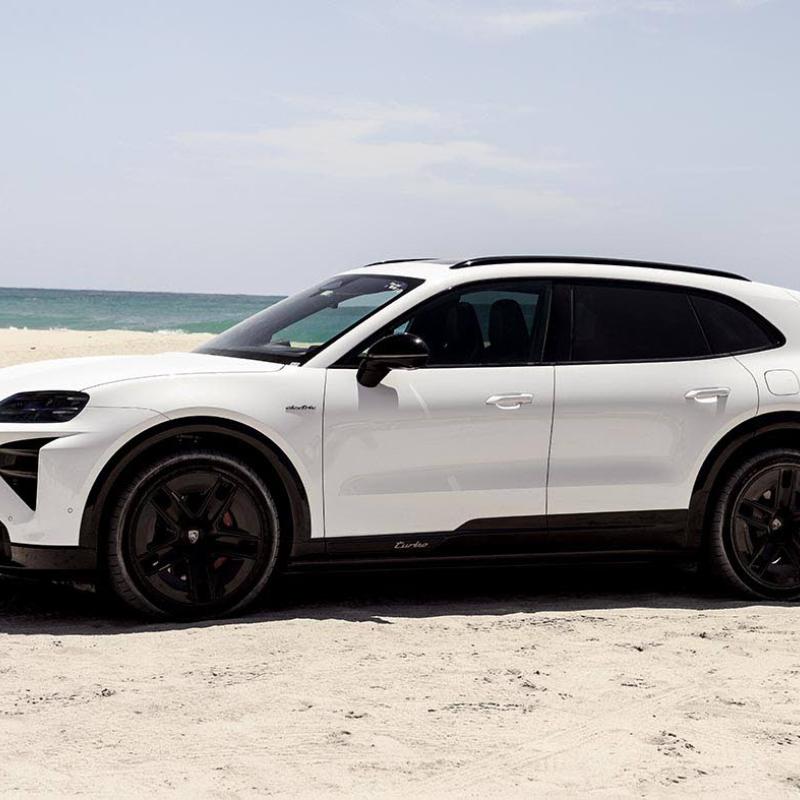
Porsche is reshaping its electric SUV strategy with the Cayenne Electric Coupe, a lower-roofed variant that balances performance ambitions with market realities. Jamaica Gleaner reports that the new Coupe shares powertrains with the standard Cayenne but adds sportier styling, a standard Sport Chrono package, and a liquid-crystal panoramic sunroof to justify its premium positioning. The move reflects Porsche's pullback from an earlier goal of making electric vehicles 80% of its lineup by 2030, as luxury buyers have adopted EVs more slowly than expected.
Performance Tiers Span 435 to 1,139 Horsepower
The Cayenne Coupe's power output varies sharply by trim level. The base model produces 435 horsepower, the S delivers 657 horsepower, and the Turbo generates 1,139 horsepower, giving buyers three distinct performance targets. Jamaica Gleaner confirms all trims include Porsche's Sport Chrono package as standard equipment, positioning even the entry model as sport-focused. A magnetized wireless phone charger rounds out the tech features aimed at affluent buyers seeking both convenience and performance.
Lightweight Package Shaves 39 Pounds with Carbon Fiber
Porsche offers an optional Lightweight Sport package that uses carbon-fiber components and larger performance wheels to reduce total weight by approximately 39 pounds. This targeting of weight reduction reflects traditional Porsche engineering priorities, even as the brand shifts toward electrification. The Coupe's lower roofline also slightly improves aerodynamic drag compared to the standard Cayenne, though cargo space suffers from the design change. The trade-off between sportier proportions and practical utility defines the Coupe's market positioning.
Rethinking Electric Targets as Buyer Adoption Slows
Porsche's decision to moderate its 2030 EV ambitions reflects a broader industry challenge: luxury-car customers weigh charging access, driving range, purchase price, and emotional attachments to combustion engines before switching to electric. By expanding its electric portfolio while maintaining flexibility for regional demand, Porsche preserves sales across multiple powertrains. This pragmatic shift abandons the brand's earlier goal of 80% electric sales within seven years, acknowledging that market adoption has progressed slower than initially forecast.
Echoing Bold Design Choices That Reshaped Sedans
The Cayenne Coupe joins a lineage of automotive designs that challenged established expectations before becoming accepted. Ford's 1985 Taurus revolutionized family-car styling by replacing boxy proportions with aerodynamic curves—a shift some Ford executives feared would alienate buyers. Similarly, 1970s station wagons pushed stylistic boundaries with raised glass-roof panels, compact proportions, and distinctive trims like the AMC Sportabout's optional Gucci interior. Porsche applies this same logic to electric SUVs, using new packaging requirements and aerodynamics to redefine a familiar category while retaining recognizable brand identity.
Sentiment
Mostly PositiveNEGATIVENEUTRALPOSITIVE
Publishers
12
Articles
4
Reach
16
A
AnonymousAuthor


