Flooding Disrupts Northeast Roads, Rail Service
Flooding Disrupts Northeast Roads, Rail Service
Anonymous
Key Points
1
More than 5,600 New Jersey customers were without electricity early Sunday, including over 2,000 PSE&G customers in Camden County. Rainfall rates could reach 2 inches per hour, with isolated totals of 2.5 to 3 inches.
2
The National Weather Service said the Saddle River near Lodi had risen to 5.2 feet—above its 5-foot bankfull stage—and was expected to reach about 5.7 feet before receding later Sunday.
3
Metro-North advised passengers to consider alternate travel or delay their trips, while Amtrak train No. 461 was required to terminate at Wallingford, Connecticut, because high water flooded the tracks; passengers were transferred to a CTrail bus to reach New Haven.
4
The National Weather Service warned motorists, “Turn around, don’t drown when encountering flooded roads. Most flood deaths occur in vehicles,” emphasizing that driving through floodwater was especially dangerous.
5
In Haledon, photographs showed mud, dirt and debris left around the Molly Ann Brook area, including material accumulated on a storm grate after the flooding.
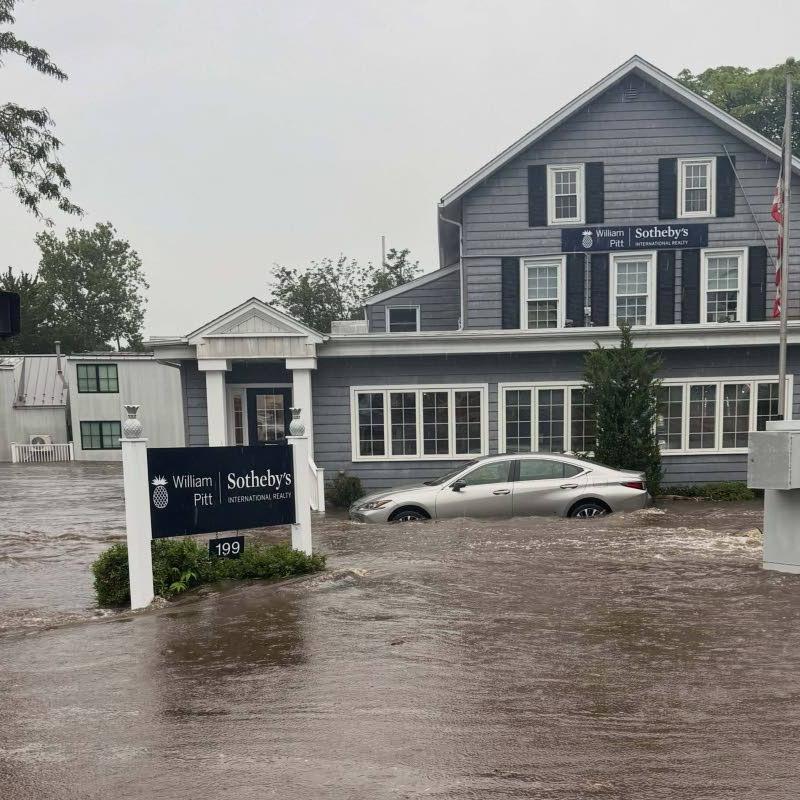
Heavy rain and flash flooding shut down major roads, rail lines and power across the Northeast on Sunday, stranding vehicles and leaving over 5,600 customers without electricity. Jamaica Gleaner reported that drenching rains triggered closures on Routes 17, 46, 57, 130 and 208 in New Jersey, while emergency crews rescued people from submerged cars in Paterson. In Massachusetts, up to four inches of rain flooded communities including Fall River and New Bedford.
The Saddle River near Lodi swelled to 5.2 feet — above its normal 5-foot bankfull stage — and was expected to crest at 5.7 feet before receding later Sunday, National Weather Service data showed. Rainfall rates peaked at 2 inches per hour in some areas, with isolated spots receiving 2.5 to 3 inches. The Traveler noted that the same tropical moisture that battered New Jersey and Massachusetts also disrupted commuter rail in Connecticut and briefly closed an airport terminal.
New Jersey Hit Hardest With Road Closures and Rescues
Northern New Jersey bore the brunt of Sunday's deluge, with Patch reporting nearly 5 inches of rain in some Bergen County towns — the highest totals recorded by the National Weather Service. Emergency crews pulled stranded motorists from flooded vehicles in Paterson, while roads in Haledon and surrounding communities became impassable. Debris and mud clogged storm drains and covered roadways, creating additional hazards for recovery crews.
Over 2,000 PSE&G customers in Camden County lost power during the peak flooding, part of the more than 5,600 without electricity statewide. Officials repeatedly warned drivers not to cross standing water, a message the National Weather Service reinforced: "Turn around, don't drown when encountering flooded roads. Most flood deaths occur in vehicles." The warning proved critical as floodwaters continued to rise through Sunday afternoon.
Metro-North and Amtrak Suspend Service Over Flooded Tracks
Rail service across Connecticut ground to a halt as rising water overwhelmed tracks. Jamaica Gleaner reported that Metro-North suspended trains between South Norwalk and New Haven, while Amtrak train No. 461 was forced to terminate early at Wallingford. Passengers were transferred to a CTrail bus to complete the final leg of their journey to New Haven as high water made the tracks impassable.
Transit agencies advised travelers to postpone trips or find alternate routes. The disruptions cascaded across Sunday's commute, affecting thousands of rail passengers who relied on service to coastal Connecticut communities. Most rail operations were expected to resume later Sunday once water levels receded and crews cleared debris from the tracks.
Massachusetts Communities Face Up to Four Inches of Rain
Southeastern Massachusetts took heavy rainfall totals, with Fall River, New Bedford, Plymouth and Wareham all reporting significant flooding. Jamaica Gleaner noted the drenching rains affected multiple communities across the coastal region. Storm drains overflowed and some roads became temporarily impassable as intense rain overwhelmed municipal drainage systems designed for slower, steady rainfall.
The flooding in Massachusetts closely mirrored the pattern seen in New Jersey and Connecticut, with the same tropical moisture system pounding all three states. While rainfall rates eased as Sunday progressed, water pooled on roads and in low-lying areas posed continued hazards to drivers. Most communities reported normal road conditions by Sunday evening once drainage improved.
Sentiment
Mostly NegativeNEGATIVENEUTRALPOSITIVE
Publishers
33
Articles
48
Reach
81
Topics
A
AnonymousAuthor


