ASD Clinical Study Progresses
Adia Med Completes Phase 1, Advances to Phase 2 for Autism Spectrum Disorder Study
Anonymous
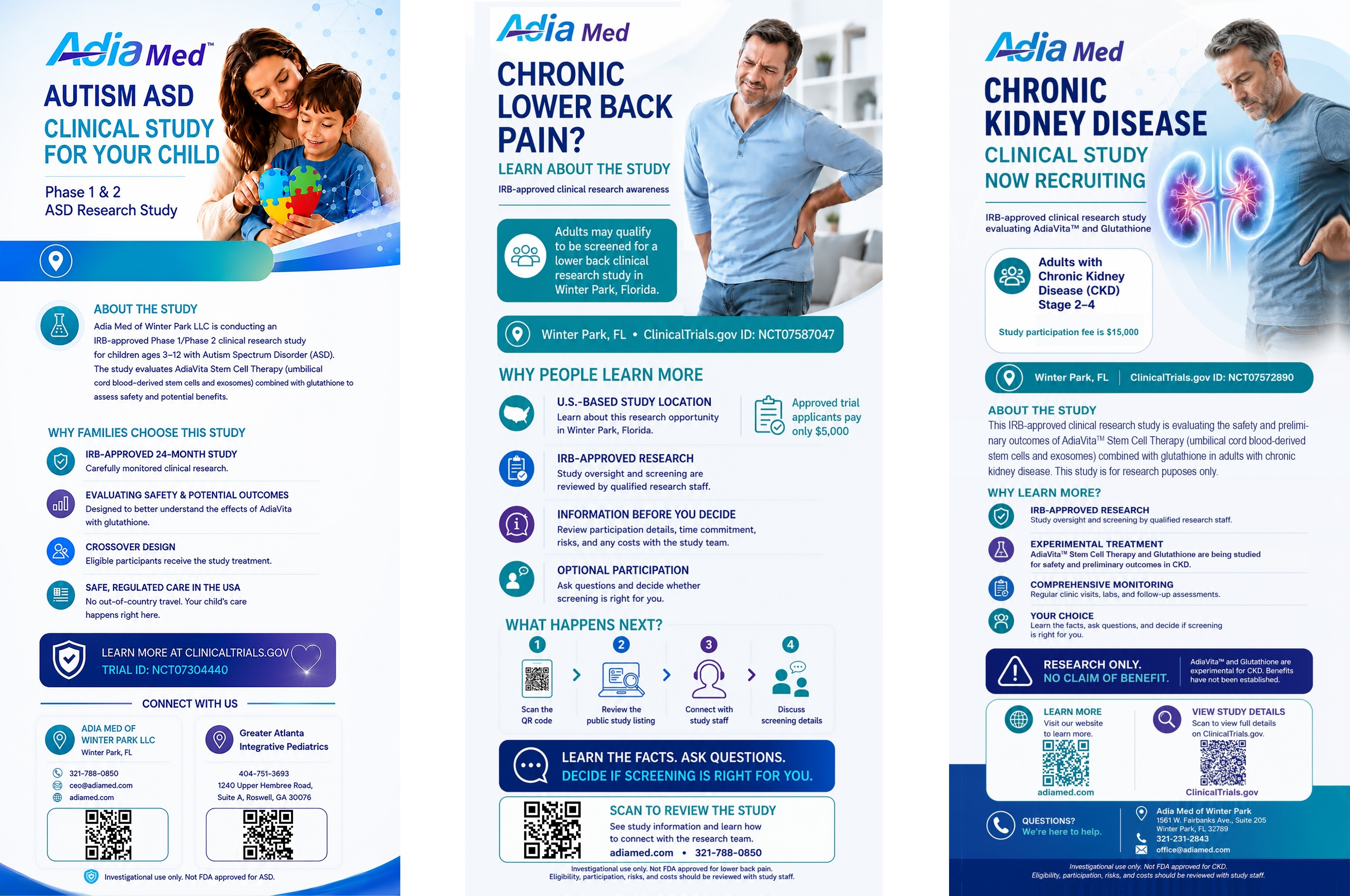
Adia Med Inc. (OTCQB: ADIA) has completed Phase 1 of its clinical study on Autism Spectrum Disorder and formally launched Phase 2, according to Mitchell Advocate. The company also cut the length of Phase 1 shorter than originally planned, and a new group of 30 children will begin Phase 1 treatments on October 1, 2026.
The study tests AdiaVita — a treatment made from umbilical cord blood-derived stem cells and exosomes — combined with glutathione therapy. The overall trial is designed to run 12 months and enroll about 100 children, The Whig reported.
What AdiaVita Is and How the Study Works
AdiaVita uses two biological components: stem cells and exosomes, both drawn from umbilical cord blood. Exosomes are tiny particles released by cells that help carry signals between them. Researchers believe combining these with glutathione therapy — an antioxidant treatment — may ease ASD symptoms in children.
The study is a randomized, interventional trial. That means children are assigned to treatment groups by chance, not by choice. Researchers measure results using the Autism Treatment Evaluation Checklist, or ATEC — a standard scoring tool that tracks changes in behavior, communication, and social skills, according to MarketScreener.
Phase 1 Ends Early, Phase 2 Now Underway
Adia Med reduced the length of Phase 1 before completing it with the study's first cohort of children. The company did not disclose exactly how many children were in the first cohort or by how much Phase 1 was shortened, PR Record Gazette reported.
With Phase 1 now done, Phase 2 has officially begun. Phase 2 is where researchers more closely track whether the treatment shows early signs of working. The two-phase structure lets the team check safety first before moving to a broader test of effectiveness.
New Cohort of 30 Children Starts October 2026
A fresh group of 30 children will begin their own Phase 1 treatments on October 1, 2026, according to Mitchell Advocate. This new cohort runs alongside the first group's Phase 2 work, letting the study build toward its goal of enrolling roughly 100 children in total.
Families join the study on a voluntary basis and can withdraw at any time. No pressure is placed on participants to stay in the trial. This approach follows standard ethical rules for studies involving children.
Why This Study Matters for ASD Research
ASD affects communication, behavior, and social interaction in millions of children worldwide. There is currently no cure, and existing therapies mostly manage symptoms rather than address underlying biology. Stem cell and exosome treatments represent a newer direction that researchers are actively exploring.
Adia Med trades on the OTCQB market, a tier for early-stage and developing companies. The study's primary outcomes hinge on ATEC score changes — meaning researchers will look for measurable improvements in how children communicate, behave, and interact socially by the end of the 12-month trial, PR Record Gazette reported.
Sentiment
NeutralNEGATIVENEUTRALPOSITIVE
Publishers
5
Articles
4
Reach
5
A
AnonymousAuthor