Nuggets Face Spencer Jones Decision
Oklahoma City Thunder Offer Spencer Jones $12M; Nuggets Face Crucial Luxury Tax Decision.
Anonymous
Key Points
1
Jones previously turned down a multiyear Nuggets offer around $2 million in average annual value to sign a rest-of-season deal, later landing a fully guaranteed two-year, $12 million offer sheet from Oklahoma City; he explained, “They wanted to lock me into certainty before the market had a chance to price my value.”
2
Jones is an undrafted Stanford product who joined the Nuggets on a two-way contract, progressed to a standard NBA contract in February, and became a larger part of Denver’s rotation—illustrating a homegrown development arc that isn’t guaranteed to stay with the Nuggets due to looming luxury-tax constraints.
3
Oklahoma City’s offseason cost-cutting included trading Isaiah Joe, Lu Dort, and Aaron Wiggins to other teams, saving roughly $240 million in luxury tax and leaving a standard roster spot open that Jones could fill.
4
Advanced analytics cited in coverage show Jones’ efficiency in non-traditional scoring contexts, including 1.179 points per possession on spot-ups (83rd percentile), plus strong transition and pick-and-roll contributions in recent analyses.
5
Denver has a deadline of 11:59 p.m. ET on Sunday to match the Thunder’s offer; the deal is fully guaranteed, adding another layer to Denver’s ongoing luxury-tax considerations and roster planning.
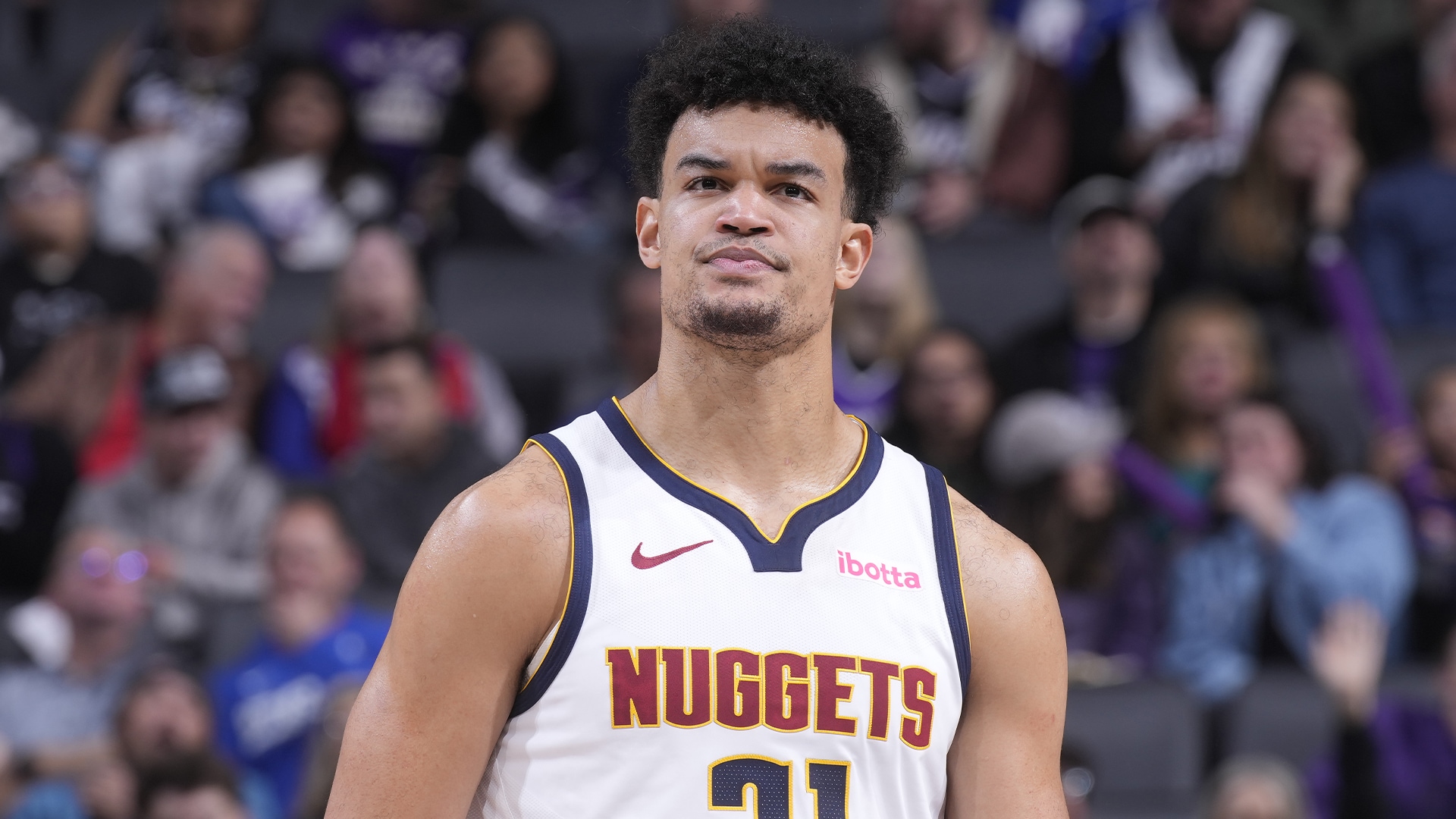
The Oklahoma City Thunder have signed Denver Nuggets restricted free agent Spencer Jones to a two-year, $12 million fully guaranteed offer sheet, according to NBC Sports. Denver now has until 11:59 p.m. ET on Sunday to decide whether to match the deal — or lose a homegrown wing they developed from scratch.
Jones, 25, is an undrafted Stanford product who started 37 games for Denver last season and posted an NBA-best 69.2% three-point shooting in the playoffs. The offer sheet is a direct bet on his breakout being real — and OKC is willing to pay for it.
How OKC Cleared Space to Make This Move
Oklahoma City spent the offseason cutting costs aggressively. The Thunder traded away Isaiah Joe, Lu Dort, and Aaron Wiggins — moves that saved the team roughly $240 million in luxury-tax payments. That cleared both an open roster spot and the financial room to sign Jones, according to OKC Thunder Wire.
The trades also pushed OKC below the NBA's second luxury-tax apron — a key threshold that limits what teams can do in free agency. By staying under it, the Thunder kept their options open. Jones fills that final roster spot at a reasonable price for a proven rotation wing.
Jones Bet on Himself — and It Paid Off
Earlier this offseason, Denver offered Jones a multiyear deal worth around $2 million per year. He turned it down. Instead, he signed a rest-of-season contract to prove his value on the court. The bet worked. Jones explained his thinking: "They wanted to lock me into certainty before the market had a chance to price my value," according to OKC Thunder Wire.
Jones averaged about 5.5 points and 3.3 rebounds per game last season. His advanced numbers back up the hype. He posted 1.179 points per possession on spot-up plays, ranking in the 83rd percentile league-wide. He also contributed in transition and pick-and-roll situations — the kind of versatile 3-and-D profile OKC covets.
Denver Faces a Costly Choice by Sunday Night
The Nuggets have the right to match OKC's offer and keep Jones — but it comes at a price. Denver is already deep in luxury-tax territory. A fully guaranteed $12 million deal adds another layer to a payroll that is already one of the priciest in the league, according to NBA.com.
If Denver lets Jones walk, they lose a player they built from a two-way contract into a rotation contributor. Two-way contracts are low-cost deals that limit playing time. Jones outgrew that label fast. Replacing that production — especially his playoff shooting — would not be easy or cheap.
What Happens Next for Both Teams
If Denver does not match by 11:59 p.m. ET Sunday, Jones joins OKC as a key bench piece on a Thunder team that reached the playoffs last season. Jones reacted to the possibility with a simple tease: "More to come," according to OKC Thunder Wire.
If Denver matches, Jones stays — but under terms OKC set. Either way, the offer sheet reshapes both rosters heading into the 2025-26 season. For OKC, it adds a proven shooter to a deep bench. For Denver, it forces a hard call on money versus talent in a tight Western Conference race.
Sentiment
Mostly PositiveNEGATIVENEUTRALPOSITIVE
Publishers
23
Articles
20
Reach
43
A
AnonymousAuthor


