New Superconductivity Breakthroughs
Three Major Experimental Advances Significantly Expand Our Understanding of Superconductivity Physics
Anonymous
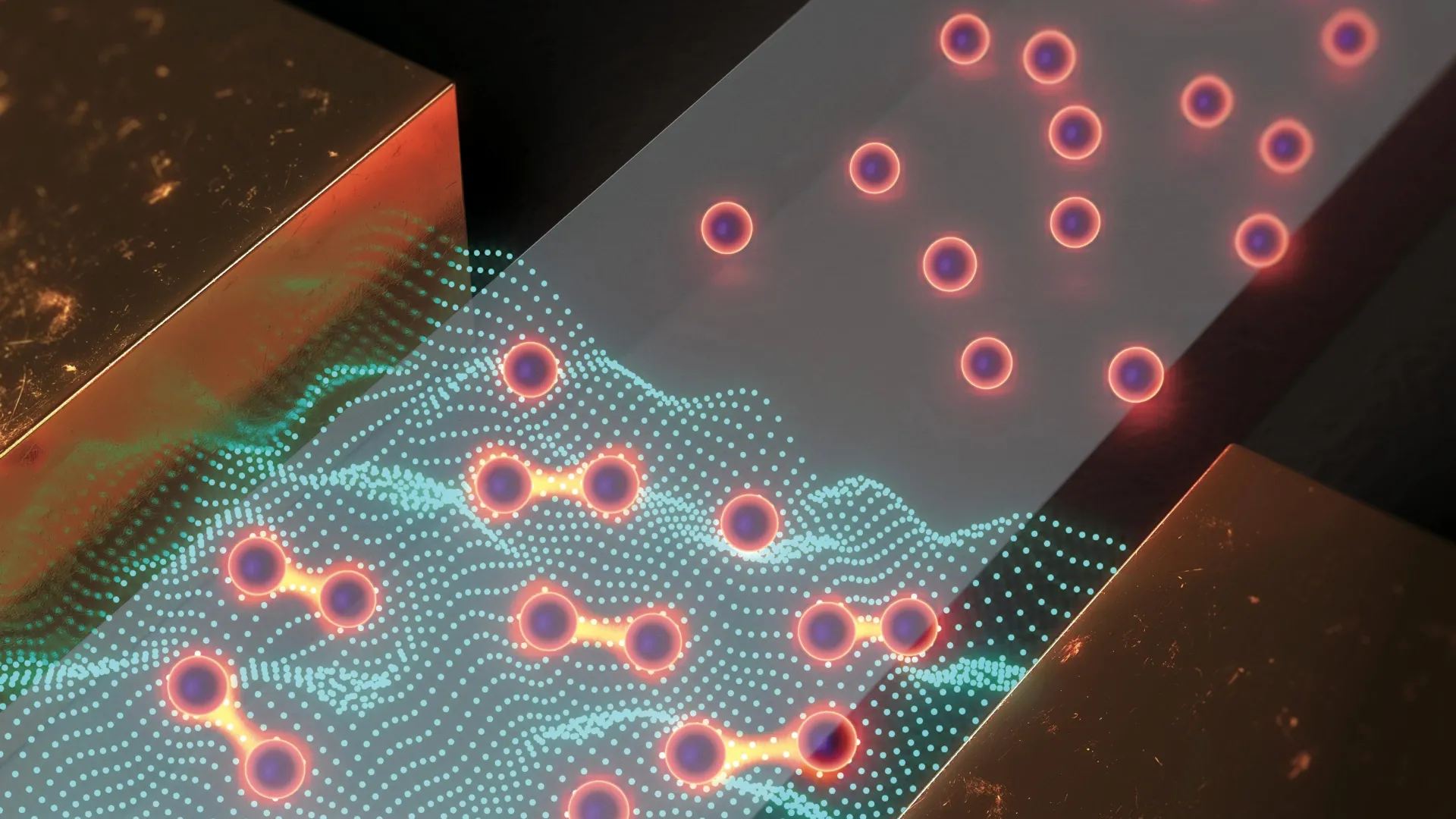
Researchers report three advances in superconductivity: an experiment indicating that quantum vacuum fluctuations can strengthen superconductivity; evidence that the type-I superconductor YbSb₂ spontaneously develops internal magnetic fields and breaks time-reversal symmetry, challenging the view that this behavior is limited to type-II superconductors; and a picosecond-pulse method for probing superconductors near their intrinsic depairing current. The ultrafast technique reduces the effects of moving vortices and heating, revealing how superconductivity becomes unstable in two materials. The findings offer new ways to investigate and potentially control quantum materials, though practical applications remain uncertain.
Key Points
1
Before testing the effect on superconductivity, the researchers had shown they could use a magnetic field to reversibly switch the Casimir force between attraction and repulsion. That work helped motivate whether engineered vacuum fluctuations could control larger-scale quantum states.
2
The YbSb₂ researchers grew single crystals and implanted muons into them as sensitive probes of tiny internal magnetic fields; they also checked the material’s response to magnetic fields to establish that it is type I.
3
The YbSb₂ study notes that the material’s atomic arrangement occurs in both conventional and unconventional superconductors, adding a structural point of interest to its unexpected time-reversal-symmetry breaking.
4
Eryin Wang described the current-driven instability as twisting the phase of the superconductor’s coherent quantum state “like winding a spring”; beyond the depairing threshold, Cooper pairs begin to break apart.
5
The YbSb₂ findings may have relevance to quantum-computing designs, according to the ScienceAlert article, which reports that the team synthesized the crystals and used X-rays to assess their chemical purity.
Sentiment
Mostly NegativeNEGATIVENEUTRALPOSITIVE
Publishers
10
Articles
8
Reach
18
A
AnonymousAuthor


