AI Upscaling For Base PS5
Sony introduces AI-powered image upscaling for standard PlayStation 5 consoles.
Anonymous
Key Points
1
Digital Foundry found that QSSR can reduce Marvel’s Wolverine’s frame rate by about 9 fps compared with Insomniac’s in-house upscaler at the same resolution, but using QSSR from a lower resolution can recover those frames while producing a cleaner image.
2
Sony developed QSSR through Project Amethyst, its AI-graphics collaboration with AMD, using a streamlined neural-network design and a hand-tuned implementation to run on the standard PS5; the feature can also be turned off.
3
Qualcomm’s Snapdragon 8 Elite Extreme Gen 6 introduces Adreno Neural Fusion, which is designed to upscale resolution and generate frames while also extending battery life during gaming.
4
Arm’s Mali G2-Ultra NX GPU also includes a denoiser intended to improve image quality in demanding effects such as ray-traced reflections and lighting, alongside its upscaling and frame-insertion capabilities.
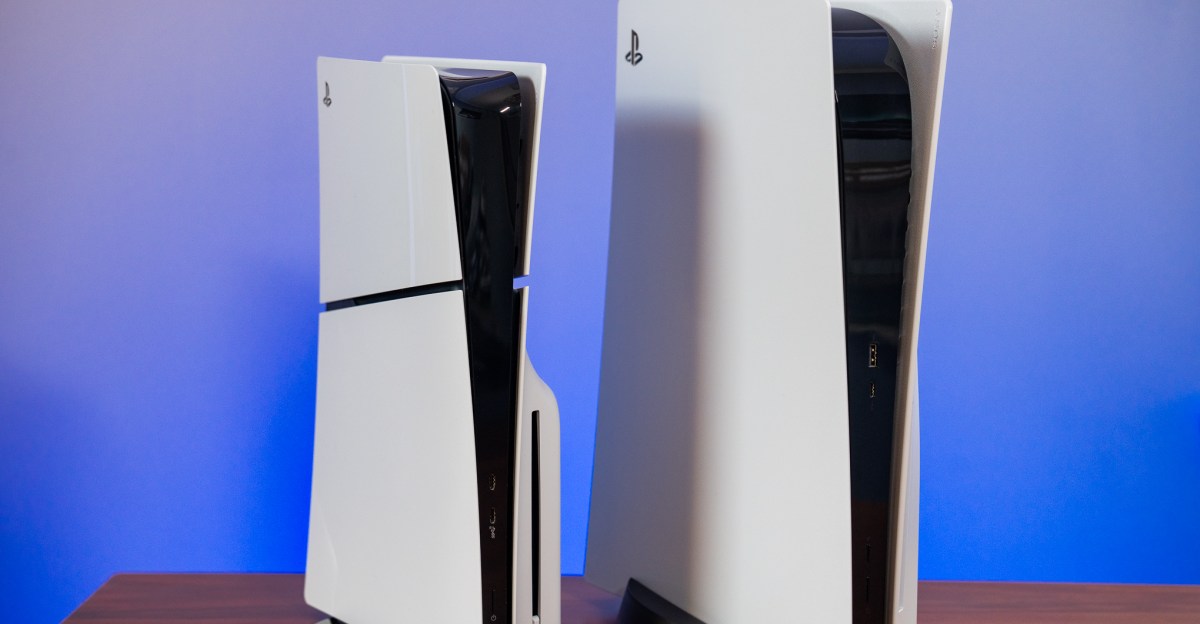
Sony has brought AI-powered graphics upscaling to the standard PlayStation 5 with Quick Spectral Super Resolution (QSSR), making advanced visual technology available without requiring the expensive PS5 Pro. InvenGlobal reports that QSSR debuted October 1 in Marvel's Wolverine and Ghost of Yōtei, with Sony planning to distribute the technology to all developers.
The move mirrors a broader shift as mobile phone makers introduce similar AI graphics features to smartphones. CNET notes that Qualcomm and Arm are now bringing upscaling and frame generation—technologies long standard on PCs and gaming consoles—to the latest flagship phones, though heat and battery limits pose unique challenges.
How QSSR Trades Speed for Image Clarity
QSSR runs on regular PS5 hardware by using simplified neural networks and hand-tuned code instead of dedicated AI chips. HotHardware explains that while QSSR's faster approach differs from the PS5 Pro's premium upscaler, it delivers cleaner images at a cost: Digital Foundry testing showed roughly 8 to 10 frames per second lost when upscaling from 1440p.
The workaround works well in practice. Developers can render games at lower internal resolutions—around 864p—then use QSSR to upscale and produce sharper, more stable visuals while recovering those lost frames. GodIsAGeek reports that both Marvel's Wolverine and Ghost of Yōtei ship with this flexibility built in from day one.
Sony and AMD's Project Amethyst Powers the Upgrade
QSSR emerged from Project Amethyst, a collaboration between Sony and AMD to adapt AI graphics for standard hardware. According to the PlayStation Blog, Daniel Craig, Sony's Principal Engineer for Graphics R&D, stated that 'PSSR remains the gold standard on PS5 Pro, QSSR provides notable improvements to both image detail and image stability on PS5.' The streamlined design sidesteps the expensive dedicated neural processing hardware found in the Pro model.
Insomniac Games' Mike Fitzgerald praised the results, saying QSSR 'adds more pixel-level clarity and stability to our environments.' Sucker Punch Productions went further, noting that the technology delivers temporal stability—smooth, flicker-free motion—at a level previously impossible on standard PS5 consoles. Sony plans to make QSSR available to all PlayStation developers starting immediately.
Mobile Phones Get Console-Grade Graphics Technology
Qualcomm and Arm debuted AI upscaling on phones in late September 2026. Qualcomm's Snapdragon 8 Elite Extreme Gen 6 includes Adreno Neural Fusion, designed to upscale resolution and generate frames while extending battery life during gaming. Arm's Mali G2-Ultra NX GPU added a denoiser that sharpens ray-traced reflections and lighting alongside its upscaling and frame-insertion features.
This shift mirrors the PC and console worlds, where AI upscaling—like Nvidia's DLSS and AMD's FSR—became standard years ago. CNET reports that mobile chipmakers face extra hurdles: phone processors generate heat faster and drain batteries quicker than desktop or console hardware. The new chips promise smooth 60 to 120 fps gameplay on flagship phones by rendering at lower native resolutions, then using AI to fill in the gaps.
Sentiment
Mostly PositiveNEGATIVENEUTRALPOSITIVE
Publishers
46
Articles
25
Reach
71
A
AnonymousAuthor


