Lunar Eclipse Viewing Guide
A near-total lunar eclipse will be visible across the Americas on Thursday night.
Anonymous
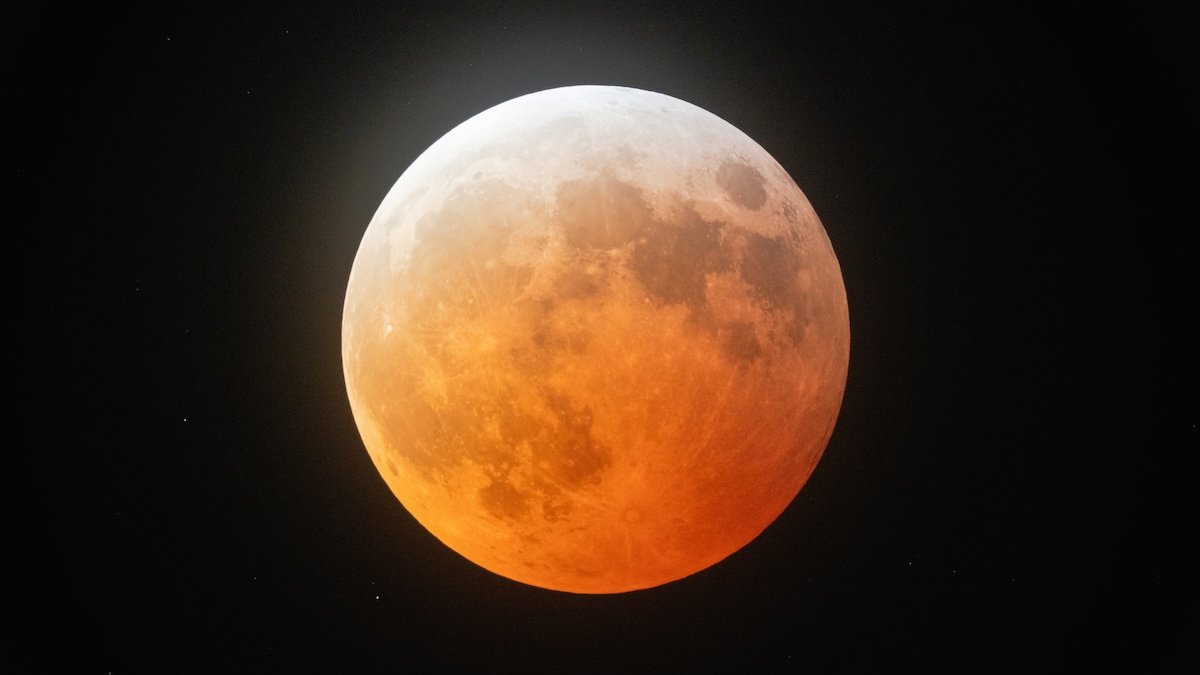
A near-total lunar eclipse will light up the sky Thursday night across North America, South America, and parts of Europe and Africa. NBC News reports that more than 96% of the Moon's surface will slip into Earth's shadow, with the eclipse peaking at 12:12 a.m. ET. The event comes just two weeks after a total solar eclipse crossed southern Europe.
Unlike solar eclipses, you can watch this one safely without special glasses. The Moon will glow reddish orange as Earth's atmosphere bends sunlight onto the lunar surface. Most viewers across the continental U.S., except those in Alaska and northern Canada, will see every stage of the eclipse from start to finish.
Why the Moon Turns Reddish Orange
During a lunar eclipse, Earth slides directly between the Sun and the Moon, casting its shadow across the lunar surface. NBC News explains that Earth's atmosphere doesn't block all sunlight — it bends and scatters the rays, filtering out blue light. The remaining red and orange wavelengths paint the Moon a deep copper color, creating a stunning and eerie sight in the night sky.
Who Will See the Eclipse and When
The eclipse will be visible across the continental United States, Canada, Mexico, Central America, South America, and parts of Europe and Africa. NBC San Diego reports that the peak moment — when 96% of the Moon is shadowed — occurs at 12:12 a.m. ET Thursday. Viewers in most of North and South America will witness every phase of the eclipse, making it a rare opportunity to watch the entire event unfold.
How to Get the Best View
Your eyes alone are enough to enjoy this eclipse safely — no special equipment needed. NBC Los Angeles notes that binoculars and telescopes can reveal dramatic details on the lunar surface during the eclipse. Find a location away from city lights, set your alarm for midnight, and look up to catch one of nature's most accessible celestial shows.
Sentiment
NeutralNEGATIVENEUTRALPOSITIVE
Publishers
8
Articles
8
Reach
8
A
AnonymousAuthor