US Decides War's End
Iranian President Masoud Pezeshkian Says Washington Must Decide When War Ends
Anonymous
Key Points
1
Pezeshkian said Iran was still willing to proceed with a June memorandum of understanding that envisioned a final peace deal within 60 days. He said it fell apart amid disagreements over navigation in the Strait of Hormuz.
2
Asked whether Iran would give up uranium enriched to 60 percent, Pezeshkian answered, “Yes,” saying Iran would adhere to its obligations under international law and the Nuclear Non-Proliferation Treaty.
3
Pezeshkian said the timing of a deal relative to the US midterm elections was immaterial to Tehran: “If not, before the elections or after the elections, what difference does it make for us?”
4
One account describes the conflict as beginning on February 28 with US and Israeli attacks on Iran, followed by Iranian strikes on Israel and Gulf states hosting US bases; it reports thousands killed and millions displaced.
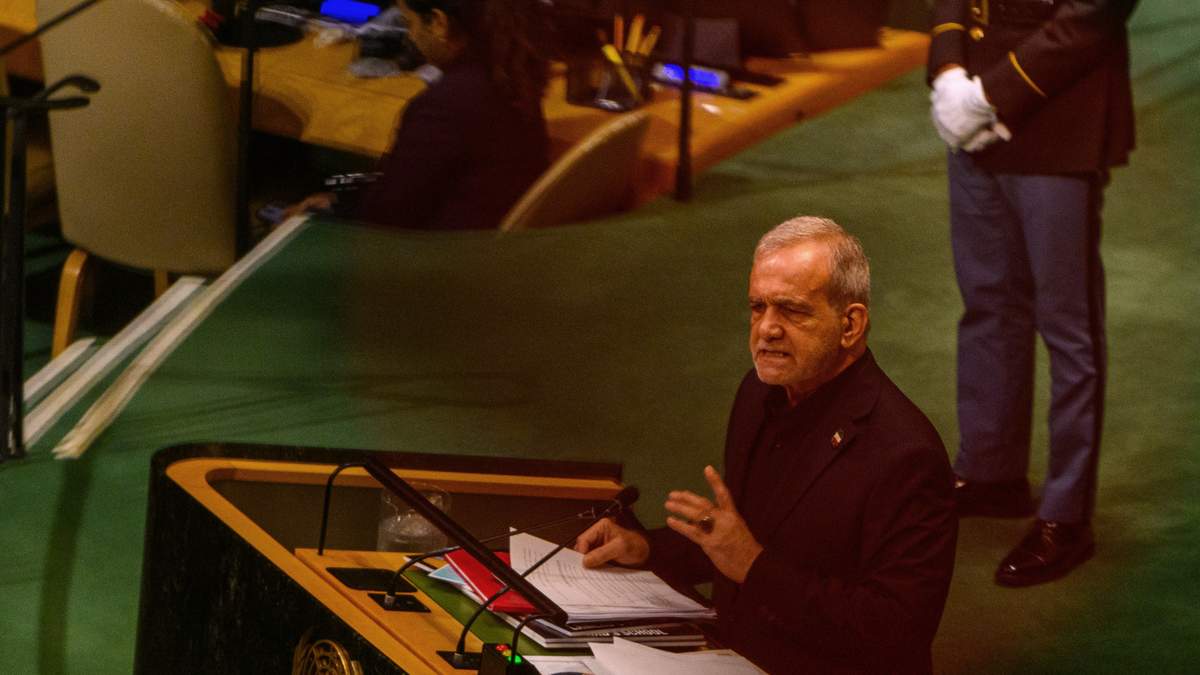
Iranian President Masoud Pezeshkian has put the ball in Washington's court, saying the US must decide whether to end the seven-month war between the two nations Tippin Insights. Tehran does not want to continue fighting, he stated, but remains open to a negotiated settlement that complies with international law JIJI Press. His comments came after indirect talks involving US envoy Steve Witkoff and Jared Kushner at the UN General Assembly, though no breakthrough emerged.
Iran's Nuclear Compromise on the Table
When asked directly if Iran would abandon uranium enriched to 60 percent purity, Pezeshkian answered with a single word: "Yes." Dynamite News He said Tehran would stick to its obligations under the Nuclear Non-Proliferation Treaty and international law. The 60 percent enrichment level has been a key sticking point in negotiations, sitting dangerously close to weapons-grade material.
A Deal That Fell Apart Over Hormuz Access
Pezeshkian pointed to a June memorandum of understanding that promised a final peace deal within 60 days. That agreement collapsed over disagreements about navigation through the Strait of Hormuz, a critical shipping channel. He remains willing to revive those terms, signaling Iran's flexibility despite months of escalating military exchanges iHeart Big FM.
Timing Matters Little to Tehran
Asked whether reaching a deal before the US midterm elections would change Iran's position, Pezeshkian shrugged off the timeline. "If not before the elections or after the elections, what difference does it make for us?" he said iHeart Moose. The remark suggests Iran is prepared to negotiate at any moment, regardless of American political calculations or Trump's stated deadline.
Skepticism Born From a Broken Past Agreement
Pezeshkian blamed Israel for starting the conflict and pointed to Washington's earlier withdrawal from the nuclear deal as reason for Iran's caution. That collapse damaged trust between the sides. President Trump has warned of fresh military strikes if talks fail, but has also hinted that an agreement remains possible, creating an uncertain diplomatic landscape Tippin Insights.
Sentiment
Mostly NegativeNEGATIVENEUTRALPOSITIVE
Publishers
15
Articles
63
Reach
78
A
AnonymousAuthor


