Dollar Awaits Fed Decision
Dollar Steadies Near 99 as Markets Await Key Federal Reserve Decision
Anonymous
Key Points
1
On the five-hour chart, the Dollar Index has broken above the Ichimoku cloud and formed a completed double-bottom pattern; however, the bullish setup remains valid only while prices hold above 98.71. Weak ADX readings suggest momentum could produce false breakouts and whipsaws.
2
Daily technical indicators remain subdued: the 14-day RSI is at 48.04, just below the neutral 50 level, while the index is below its 50-day EMA and only marginally above its nine-day EMA at 99.12. A daily close below 99.12 would reinforce the bearish bias.
3
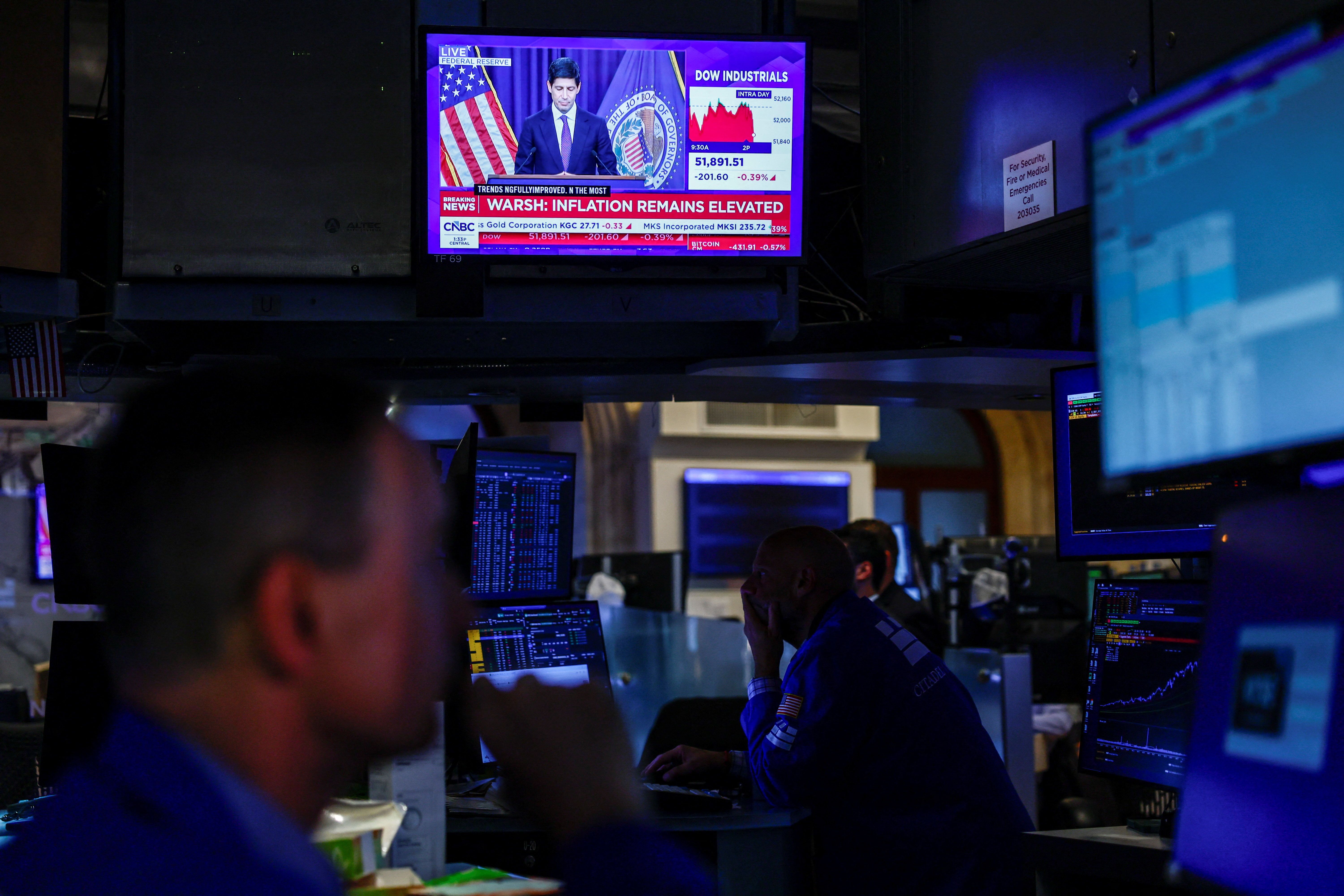
The expected Federal Reserve move would raise the target interest-rate range to 4.00% from 3.75%, according to the market outlook cited by VT Markets; the week also includes U.S. retail-sales data and updated Fed projections and a press conference.
4
AMP chief economist Shane Oliver said the Fed may find it difficult to delay action because its October meeting falls just before the U.S. midterm elections, while waiting until December could be considered too late.
5
Despite the stronger dollar-rate narrative, the yen was hovering near a seven-month high, while the euro traded around $1.159 and sterling near $1.3524—evidence that expectations of tighter policy abroad are limiting the dollar’s relative advantage.
The U.S. Dollar Index is holding steady near 99.15–99.35 as markets brace for a Federal Reserve rate decision this Wednesday. MarketScreener reports the Fed is widely expected to raise its benchmark rate by a quarter point to 4.00%, with a market probability of roughly 86% according to CME data. The dollar has gained some support from stronger-than-expected August inflation, but its technical position remains fragile—trading below key resistance around 99.63–99.68 that could signal further gains if broken.
Global central banks are tightening simultaneously, which is capping the dollar's relative advantage. The yen is hovering near a seven-month high, the euro trades around $1.159, and sterling sits near $1.3524. Meanwhile, oil prices above $100 a barrel and Middle East tensions surrounding Iran and the Strait of Hormuz are adding uncertainty to inflation expectations and monetary policy across all major economies.
Federal Reserve Faces Political and Inflation Pressure
The Fed raised the benchmark rate range to 3.75%–4.00% in early September after August consumer prices came in hot. Core CPI rose 0.3% month-over-month, above the 0.2% forecast. AMP chief economist Shane Oliver said the Fed faces a tight window: the October meeting falls just before U.S. midterm elections, and waiting until December would be too late. A rate hike this week could restore Fed credibility without appearing politically motivated.
Technical Setup Offers Limited Upside Without Breaking Key Barriers
On five-hour charts, the Dollar Index has broken above the Ichimoku cloud and completed a double-bottom pattern. However, the bullish setup depends on holding above 98.71. Investing.com data shows the 14-day RSI at 48.04—just below neutral—while momentum indicators remain subdued. A daily close below 99.12 would reinforce weakness and expose support near 99.07–99.20.
For the dollar to rally decisively, it must break and hold above resistance at 99.63–99.68. A successful break could target 100.02. Weak ADX readings at 20.62 signal that momentum is fragile and false breakouts are likely, creating whipsaws for traders. Without a clear directional catalyst, the dollar will likely remain range-bound.
Bank of Japan and Bank of England Limit Dollar's Haven Status
The yen's strength near seven-month highs suggests that rate expectations are rising globally, not just in the U.S. This week, the Bank of England decides on Thursday and the Bank of Japan announces Friday. TD Securities and MUFG analysts warn that unless the BoJ signals an aggressive tightening pace, USD/JPY risks a sharp rebound toward 157–160. Synchronized global tightening has eroded the dollar's traditional advantage as a safe-haven currency.
The European Central Bank already signaled further hikes earlier this month, while U.S. 2-year Treasury yields jumped 26 basis points to 4.6148%. ING analysts described the Fed move as "more of a policy recalibration than the start of a new hiking cycle." With major trading partners all hiking rates, the dollar cannot easily widen its yield advantage, limiting its rally potential.
Oil Above $100 and Mideast Tensions Cloud the Outlook
Brent crude has climbed above $100 a barrel due to U.S., Israeli, and Iranian military actions and Houthi attacks near the Strait of Hormuz. IG market analyst Tony Sycamore warned that unless this week's Oman talks produce results, crude could extend toward the $119.48 high from early March. High energy costs keep global inflation sticky and force central banks to act, offsetting any dollar support from higher U.S. rates.
Sentiment
Mostly NegativeNEGATIVENEUTRALPOSITIVE
Publishers
36
Articles
201
Reach
237
A
AnonymousAuthor


