Urgent National Blood Crisis
Red Cross Declares National Blood Crisis Amid Low Donations, Urges Public to Give Immediately
Anonymous
Key Points
1
Paul Sullivan, senior vice president of donor services for the American Red Cross, said, "This summer has brought a number of unique challenges that have placed additional strain on our blood supply, creating growing concerns for hospitals and the patients who rely on lifesaving transfusions."
2
A donation event was scheduled at The Summit of Coralville in Coralville, Iowa on July 28, 2026, from 11:30 a.m. to 4 p.m. to help bolster supplies.
3
Blood has a shelf life of 42 days, highlighting how quickly inventories must be replenished to meet hospital needs.
4
Hospitals are specifically relying on type O negative blood in emergencies, a critical nuance alongside the broader shortage of type O positive.
5
Donations are being organized regionally across northeast Wisconsin and Upper Michigan, with multiple drives planned in coming weeks to address the shortage.
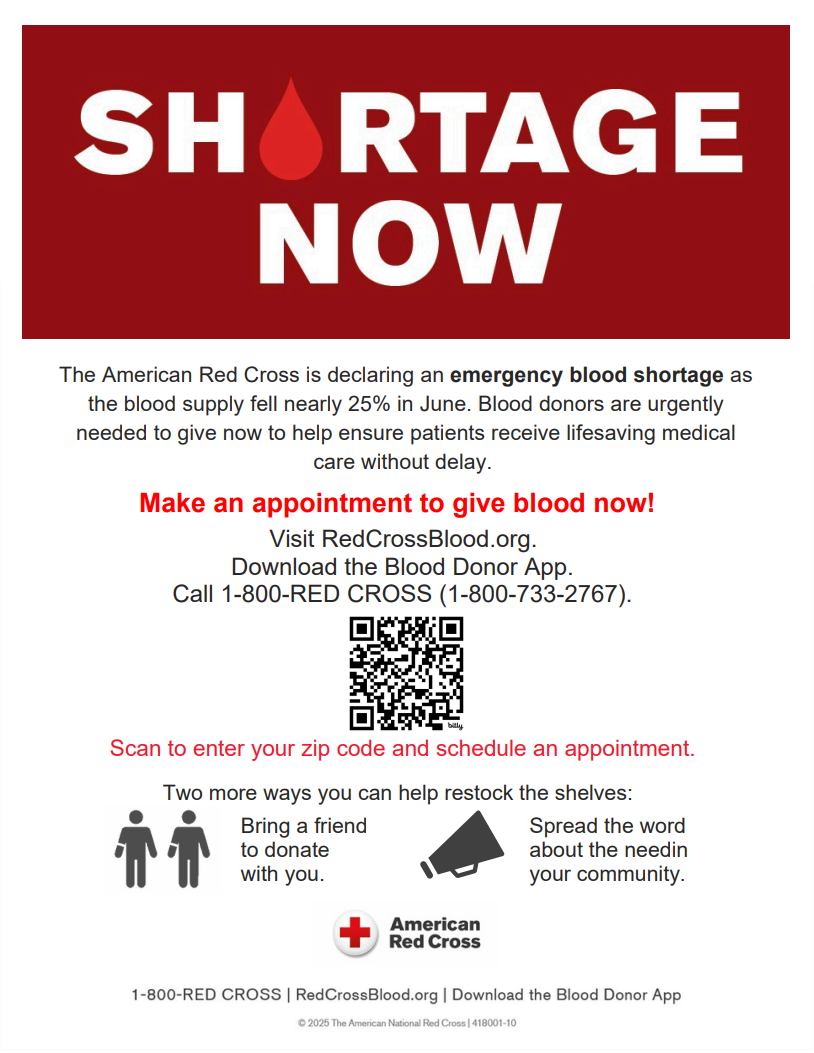
The American Red Cross has declared a national blood crisis — only the second time in its history — after donations fell to a four-year summer low, according to Reading Eagle and KIMT. The supply of type O positive blood has dropped below a one-day reserve, forcing the Red Cross to limit how much type O blood it sends to hospitals nationwide.
Paul Sullivan, senior vice president of donor services, said: "This summer has brought a number of unique challenges that have placed additional strain on our blood supply, creating growing concerns for hospitals and the patients who rely on lifesaving transfusions." Extreme heat, poor air quality, and widespread foodborne illnesses are keeping donors away at the worst possible time — when trauma season pushes hospital demand higher, WAOW reported.
Type O Blood Falls Below a Single Day of Supply
Type O blood is the most urgently needed. Hospitals rely on type O negative blood for emergencies because it can be given to any patient, regardless of blood type. Now both type O positive and O negative supplies are critically low, KWWL reported. The Red Cross has begun limiting distributions of O type products to hospitals to stretch what little remains.
Blood has a shelf life of just 42 days, according to KFIZ. That short window means supplies cannot be stockpiled. If donors do not give now, hospitals can run out fast. Every day without enough donations pushes the nation closer to a point where doctors may not have the blood they need to save a life.
Summer Heat and Illness Are Keeping Donors Away
Three factors are making this summer especially hard for blood collections. Extreme heat is discouraging people from going out. Poor air quality is keeping others home. And a rise in foodborne illnesses has sidelined would-be donors who feel sick or have recently recovered, WAOW reported. Together, these challenges have pushed donation totals to their lowest point in four years.
At the same time, hospital demand is rising. Summer is trauma season — more accidents, more surgeries, more emergency care. Hospitals need more blood just as the supply shrinks. The Red Cross says that if every drive brought in just three additional donors, it could meaningfully stabilize national supplies, according to KFIZ.
Incentives and Drives Aim to Reverse the Shortage Fast
The Red Cross is offering incentives to get donors in the door quickly. Anyone who donates through July 31 receives a free Fandango movie ticket. Donations made in August come with a $20 Amazon gift card, according to KIMT. The goal is to drive a surge in giving before the shortage worsens further.
Local drives are already being organized. A donation event is scheduled at The Summit of Coralville in Coralville, Iowa on July 28, 2026, from 11:30 a.m. to 4 p.m., KWWL reported. Regional drives are also being coordinated across northeast Wisconsin and Upper Michigan in the coming weeks. Donors can schedule an appointment through the Blood Donor App, RedCrossBlood.org, or by calling 1-800-RED-CROSS.
One Donation Can Save Up to Three Lives
The Red Cross wants people to know that giving blood is fast and straightforward. A single donation takes about an hour from start to finish. And one donation can save up to three lives, according to Reading Eagle. With supplies this low, every donor who walks through the door makes a real difference for patients in hospitals right now.
Sentiment
Mostly NegativeNEGATIVENEUTRALPOSITIVE
Publishers
41
Articles
64
Reach
105
Topics
A
AnonymousAuthor


