Highest-Grade Gold
Ballard Mining Discovers Highest-Grade Gold at Mt Ida, Expanding West Knell Prospect Potential
Anonymous
Key Points
1
The 9-metre intercept in WKEX101 sits at 191 metres depth, delivering 27.1 g/t gold for a total of 244 gram-metres, and lies outside Ballard's current Mt Ida resource envelope.
2
Nearby holes show multiple high-grade pockets, including WKEX102A with 4 metres at 7.2 g/t and 2 metres at 5.6 g/t, WKEX103 with 2 metres at 4.4 g/t, plus 1 metre at 4.2 g/t in WKEX107 and 2 metres at 2.1 g/t in WKEX104, indicating repeat zones.
3
West Knell mineralisation is hosted in north–south, moderately east-dipping shear zones composed of quartz and sulphides within an alteration zone of silica, biotite and chlorite, within anorthosite.
4
Ballard notes that the WKEX101 result represents the highest-grade gold result in the company's history.
5
In market context, Ballard Mining shares are around A$0.61, with a 52-week high near A$0.99 and a 52-week low near A$0.37, illustrating broader volatility and investor interest in the sector.
Ballard Mining has recorded the highest-grade gold result in its history at the West Knell prospect in Western Australia, hitting 27.1 grams per tonne (g/t) over 9 metres at 191 metres depth — a total of 244 gram-metres, according to Small Caps. The intercept sits outside the company's existing Mt Ida resource boundary, meaning the gold is in fresh, unaccounted ground.
The result sets West Knell up as a significant early-stage target. Ballard completed 45 drill holes totalling 5,528 metres across the Mt Ida project in May and June 2026, with multiple holes now returning elevated gold grades across a corridor stretching roughly 1.4 kilometres, TradingView reported.
One Drill Hole Rewrites the West Knell Story
Hole WKEX101 is the standout. It cut 9 metres at 27.1 g/t gold, starting at 191 metres depth. That single intercept sits beyond the edge of Ballard's current resource model. It suggests the mineralisation continues further north and deeper than previously mapped, according to Small Caps.
Nearby holes back up the story. WKEX102A returned 4 metres at 7.2 g/t and a separate 2 metres at 5.6 g/t. WKEX103 hit 2 metres at 4.4 g/t. WKEX107 added 1 metre at 4.2 g/t. WKEX104 returned 2 metres at 2.1 g/t. The pattern of repeat zones across multiple holes points to a consistent, connected system of high-grade gold.
How the Gold Is Sitting in the Rock
The mineralisation sits inside north–south shear zones — long cracks in the rock where gold-bearing fluids moved through. These zones dip moderately to the east. They are made up of quartz and sulphides, hosted inside a wider alteration zone of silica, biotite, and chlorite within anorthosite rock, Small Caps reported.
Shear zones like these are a well-known host for high-grade gold in Western Australia. The shallow depth of the mineralisation — sitting at around 191 metres — adds to its appeal. Shallow deposits are generally cheaper and easier to mine than deep ones, making early economics more attractive.
West Knell Corridor Now Stretches 1.4 Kilometres
The new results push the known West Knell mineralisation corridor to about 1.4 kilometres in length. Drilling has now confirmed gold both further north and at greater depth than any previous campaign, according to TradingView. That means the resource boundary could be set to grow once Ballard updates its geological model.
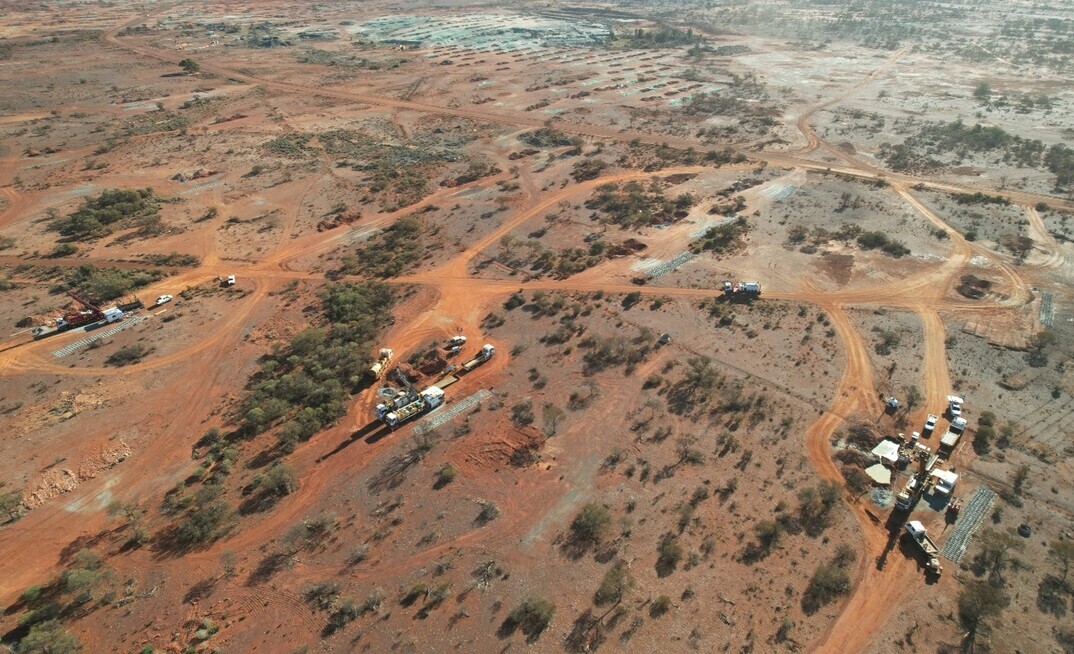
The 45-hole program in May and June 2026 covered several prospects across Mt Ida — not just West Knell. That broad scope of work shows Ballard is running an active, multi-front exploration campaign rather than betting everything on one target.
Ballard Shares Trade Well Below Their 52-Week High
Ballard Mining (ASX: BM1) shares are currently trading around A$0.61. The stock hit a 52-week high of A$0.99 and a 52-week low of A$0.37, reflecting a volatile run for investors. The gap between the current price and the peak high suggests the market has not yet fully priced in exploration upside from results like WKEX101.
The West Knell discovery comes at a moment of broad activity across ASX-listed gold miners. Whether Ballard can convert this high-grade intercept into a larger resource will be the key question for investors watching the Mt Ida project develop.
Sentiment
Mostly NegativeNEGATIVENEUTRALPOSITIVE
Publishers
11
Articles
1
Reach
12
A
AnonymousAuthor


