Treasury Yields Hit 5%
Treasury Yields Breach 5 Percent as Investors Debate Rising Borrowing Costs
Anonymous
Key Points
1
The U.S. Treasury market is valued at about $29 trillion, underscoring how a move in its benchmark yield can affect pricing across a broad range of global financial assets.
2
The articles give historical scale to the risk: the MSCI world stock index lost about half its value after the 10-year yield last broke 5% before the global financial crisis, while a spike to roughly 6.8% preceded the dotcom bubble’s collapse.
3
One article reports that Treasury auctions are struggling to attract buyers, a sign of bond-market strain alongside yields above 5%.
4
The Wednesday Wall Street pullback came after the Nasdaq reached a record high on Tuesday, while investors were also weighing signs of possible U.S.-Iran negotiations.
The U.S. 10-year Treasury yield briefly broke above 5% this week, reigniting investor fears about whether borrowing costs could climb to 6%. Benzinga reports the yield hit around 5.15%, its highest level since 2007. The move raises a critical question: Will higher Treasury yields crush stock valuations and trigger a market selloff, or is 5% just a psychological threshold with limited real impact?
Experts disagree on what happens next. JPMorgan analysts say AI growth and other economic shifts could push the danger zone to 5.5%–6%. But the real risk depends on how Treasury yields stack up against stocks' earnings power—a relationship that may be reaching a breaking point. Yahoo Finance notes the timing is striking: when the 10-year last topped 5% before the 2008 financial crisis, the Nasdaq Composite fell 56% over the next 16 months.
Why 5% Matters (And Why It Might Not)
The 10-year Treasury yield is the baseline for borrowing costs worldwide. When it rises, mortgages, auto loans, and corporate debt all get more expensive. Benzinga notes the 30-year yield also hit its highest since 2004. The U.S. Treasury market is worth about $29 trillion, so even small moves ripple through global finance. But traders debate whether 5% is a true danger line or just a number investors watch closely.
The relationship between Treasury yields and stock prices matters more than any single number. If stocks earn 5% on their investment while bonds yield 5%, bonds suddenly look competitive. Stocks lose their advantage. JPMorgan's view: that pressure point may have shifted higher due to AI and other growth tailwinds, meaning stocks can handle yields up to 5.5% or 6%.
Echoes of 2007: When Yields Spiked Before Crisis
History offers a sobering lesson. Yahoo Finance reports that when the 10-year yield last climbed above 5% before the 2008 collapse, the Nasdaq fell 56% over 16 months. Earlier, a jump to roughly 6.8% preceded the dotcom bubble's explosion in 2000. These aren't guarantees—but they show what high borrowing costs can trigger if combined with weak earnings or economic strain.
The current spike carries different causes. SSB Crack cites inflation concerns and a global race for investment returns. But whether yields stay above 5% depends on what the Federal Reserve does, inflation trends, and fears about U.S. government debt. A sustained breach could mean rates will stay high for years—a headwind for stocks.
Bond Market Stress Signals Growing Danger
Another red flag: Treasury auctions are struggling. Fewer buyers show up when yields are rising—they would rather wait for even higher returns. This auction weakness, combined with yields above 5%, suggests real strain in the bond market. A breakdown in demand could force yields even higher, compounding the squeeze on stocks and other asset prices.
Wall Street's Retreat Offers a Preview
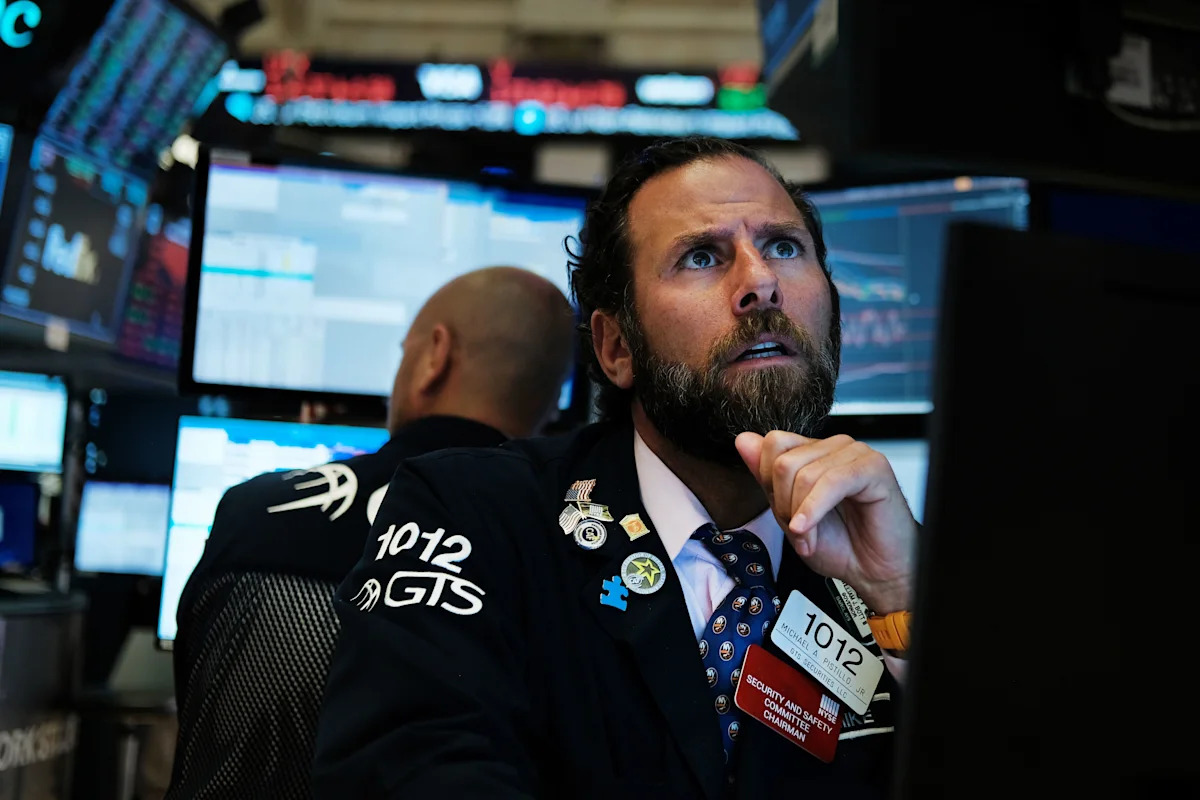
On Wednesday, the stock market pulled back sharply as Treasury yields surged, even though the Nasdaq had hit a record high the day before. The sell-off shows traders are taking the yield spike seriously. Still, the breach above 5% hasn't lasted long enough yet to prove whether it will spark a prolonged decline. Investors are also watching possible U.S.-Iran negotiations, which could ease geopolitical risk and provide some support for stocks.
Sentiment
Mostly NegativeNEGATIVENEUTRALPOSITIVE
Publishers
15
Articles
138
Reach
153
A
AnonymousAuthor


