Childhood Vaccine Schedule Changes
Trump administration plans to divide childhood vaccines into five separate doses over time.
Anonymous
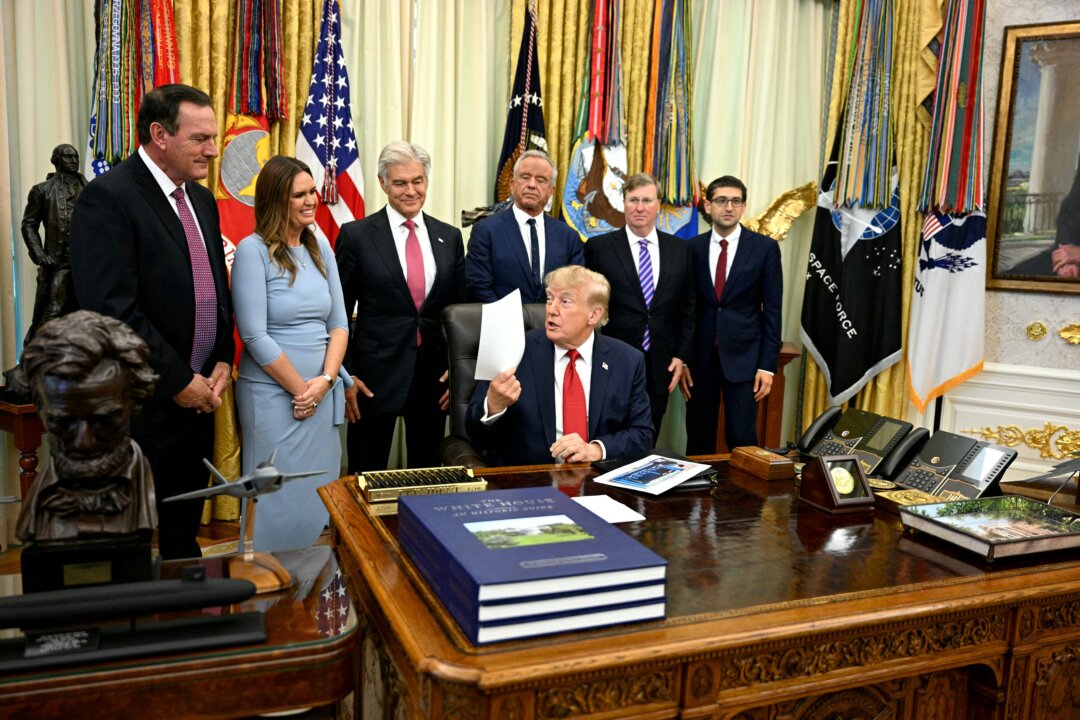
President Donald Trump said his administration plans to recommend breaking some childhood vaccines into five separate doses, each containing about 20% of the usual amount and administered six months apart, while delaying or removing certain vaccines from the schedule. He did not identify which vaccines would be affected, though he praised the polio vaccine and has previously criticized the MMR vaccine. Trump linked the proposed changes to a claimed “massive reduction” in autism, despite extensive scientific evidence finding no connection between vaccines and autism. Vaccine expert Dr. Paul Offit said the approach would not provide adequate protection and would not make vaccines safer because dosing schedules are designed to produce effective immune responses. The proposal follows an earlier administration effort to revise the childhood immunization schedule that was temporarily blocked by a federal judge, as Health and Human Services Secretary Robert F. Kennedy Jr. continues to receive support from vaccine skeptics.
Key Points
1
Dr. Paul Offit said vaccine schedules are developed using dose-response curves to produce protective immunity without giving doses that are too small to work. He called the proposed approach “buffoonery” and said it would amount to administering vaccines in a way that is not protective.
2
Trump’s August executive order reportedly urged a longer timetable for infant immunizations and recommended separating the measles, mumps and rubella (MMR) vaccine into three shots, despite the lack of supporting scientific evidence.
3
The administration’s executive order claimed that the United States recommends more childhood vaccines than any other peer nation—more than twice as many doses as some European countries—and directed the attorney general to support legal challenges to state vaccination requirements that conflict with asserted parental-authority protections.
4
Trump has previously called the MMR vaccine “lethal,” while vaccine skeptics’ autism claims trace in part to Andrew Wakefield’s fraudulent 1998 study, which was retracted in 2010 after data manipulation and undisclosed financial conflicts were exposed.
5
The Department of Health and Human Services had not responded to requests for details about which vaccines would be affected, leaving the administration’s proposed changes without a specified list of targeted immunizations.
Sentiment
Mostly NegativeNEGATIVENEUTRALPOSITIVE
Publishers
7
Articles
131
Reach
138
Topics
A
AnonymousAuthor


