WhatsApp parental controls
WhatsApp introduces new teen parental controls and privacy management tools in Singapore.
Anonymous
Key Points
1
Group-size alerts are triggered when a group reaches 30, 100 or 250 members, giving parents specific thresholds for notification.
2
The stricter “Limited Content” setting for Meta AI disables features including incognito chat and message summaries.
3
For Parent Managed Accounts, parents can review message requests from people they do not know.
4
Parents can disable the parental controls entirely, even though a parent-set PIN is required for a teen to change or loosen restrictions.
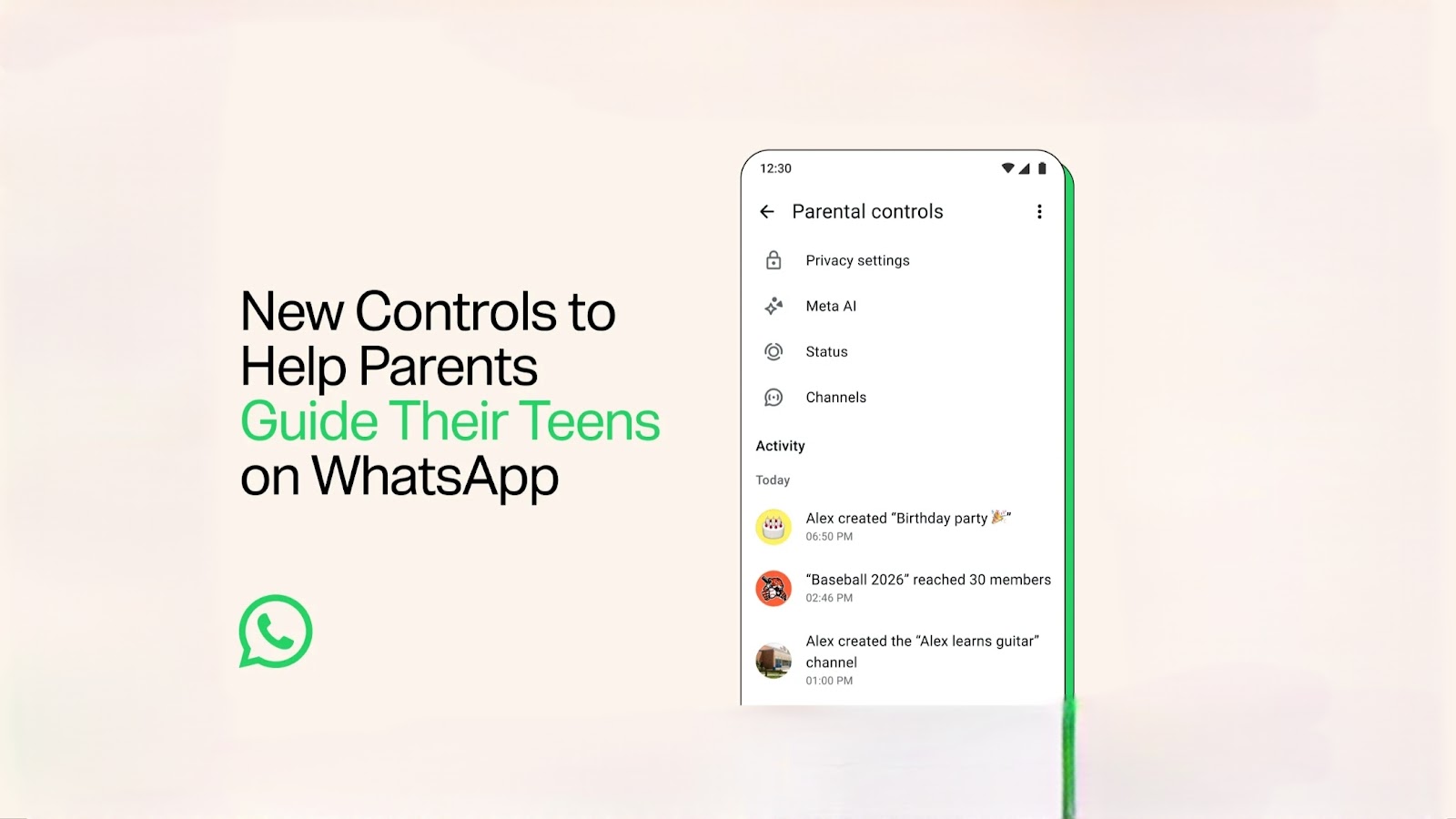
WhatsApp is rolling out parental controls in Singapore that let parents manage their teens' privacy settings without reading private messages. News18 reports the new tools allow parents to control who can contact their teens, view their profile, access Status updates, and add them to groups. The controls remain end-to-end encrypted, meaning parents cannot access chat contents or listen to calls.
The feature includes alerts when teens join or leave groups, and notifications at specific thresholds—30, 100, and 250 members—IBW News reports. Parents can also manage access to Meta AI and set stricter content limits. For children under 13, Parent Managed Accounts give parents more control over contacts and group participation. A parent-set PIN protects all settings, though parents can disable the controls entirely.
Balancing Safety Without Breaking Encryption
WhatsApp's biggest challenge was protecting teens without decrypting private messages. Tech Build Africa explains the tools manage metadata and AI features instead. Parents get visibility into group activity and profile settings. But the actual message content stays encrypted and hidden. This design protects both child safety and user privacy—a middle ground that other encrypted platforms like Signal and Telegram are now watching.
What Parents Can and Cannot Control
Parents can manage ten key settings through a PIN-protected interface. Daily Hunt lists these: who contacts their teen, who sees their profile picture and Status, group participation, channel access, and Meta AI restrictions. The stricter "Limited Content" setting disables incognito chat and message summaries. Parents also see message requests from unknown people. But they cannot read encrypted messages or monitor calls—those remain completely private.
For younger children under 13, Parent Managed Accounts give additional oversight. Parents can disable all parental controls if they choose, but changing or loosening restrictions requires the parent-set PIN. Brandi Icon Image notes this design encourages family conversations rather than secret surveillance, allowing teens to gradually earn more independence.
Group Size Alerts Protect Against Unwanted Expansion
One specific feature addresses a real problem: class group chats and study groups that explode with strangers. Parents receive alerts when groups hit 30, 100, or 250 members. News18 reports this gives families early warning when a group becomes large and potentially risky. A teen might join an innocent class chat that suddenly grows to hundreds of people via shared links. These thresholds let parents intervene before unknown contacts overwhelm the conversation.
Singapore Launch Precedes Global Expansion
WhatsApp is testing the parental controls first in Singapore before rolling out globally in coming weeks. IBW News confirms broader availability is expected soon across other markets. Singapore serves as the pilot market to catch technical issues and gather parent feedback. Meta's official statement, per Mumbrella, says: "As teens grow up, so does the way they communicate. Parents have told us they want to be there to guide them without reading over their shoulder." This reflects Meta's balance between oversight and teen autonomy.
Sentiment
Mostly NegativeNEGATIVENEUTRALPOSITIVE
Publishers
44
Articles
82
Reach
126
A
AnonymousAuthor


