North American Wildfire Smoke
NOAA Reports Widespread Wildfire Smoke Spanning Across the United States and Canada
Anonymous
Key Points
1
NOAA noted that some of the smoke seen over Canada during one observation window was “likely attributed to cross-polar transport,” with light density smoke stretching “across central and northern Canada into Baffin Bay and the Labrador Sea.”
2
On the U.S. northern Rockies/Prairies side, NOAA reported that Montana’s Snow Fire produced a “sprawling plume of heavy-density smoke” that traveled “east-northeast into North Dakota.”
3
NOAA’s Pacific Coast updates included a broader geographic reach during the evening observation: smoke extending from Oregon “to British Columbia,” alongside the presence of wildfires across Washington, Oregon, Idaho, and Montana.
4
In Canada, NOAA described additional spread beyond the summary’s general eastward movement: light density smoke was reported moving “southeast” over Hudson Bay and advancing “southward into Alberta and northern CONUS,” during one evening observation.
5
NOAA reported state- and basin-specific plume behavior from California’s Plaskett Fire in addition to general southeastward drift: during one evening update it was producing “moderate-density smoke,” with light-density smoke dispersing “northeastward within the state” and “southward into the Pacific Ocean.”
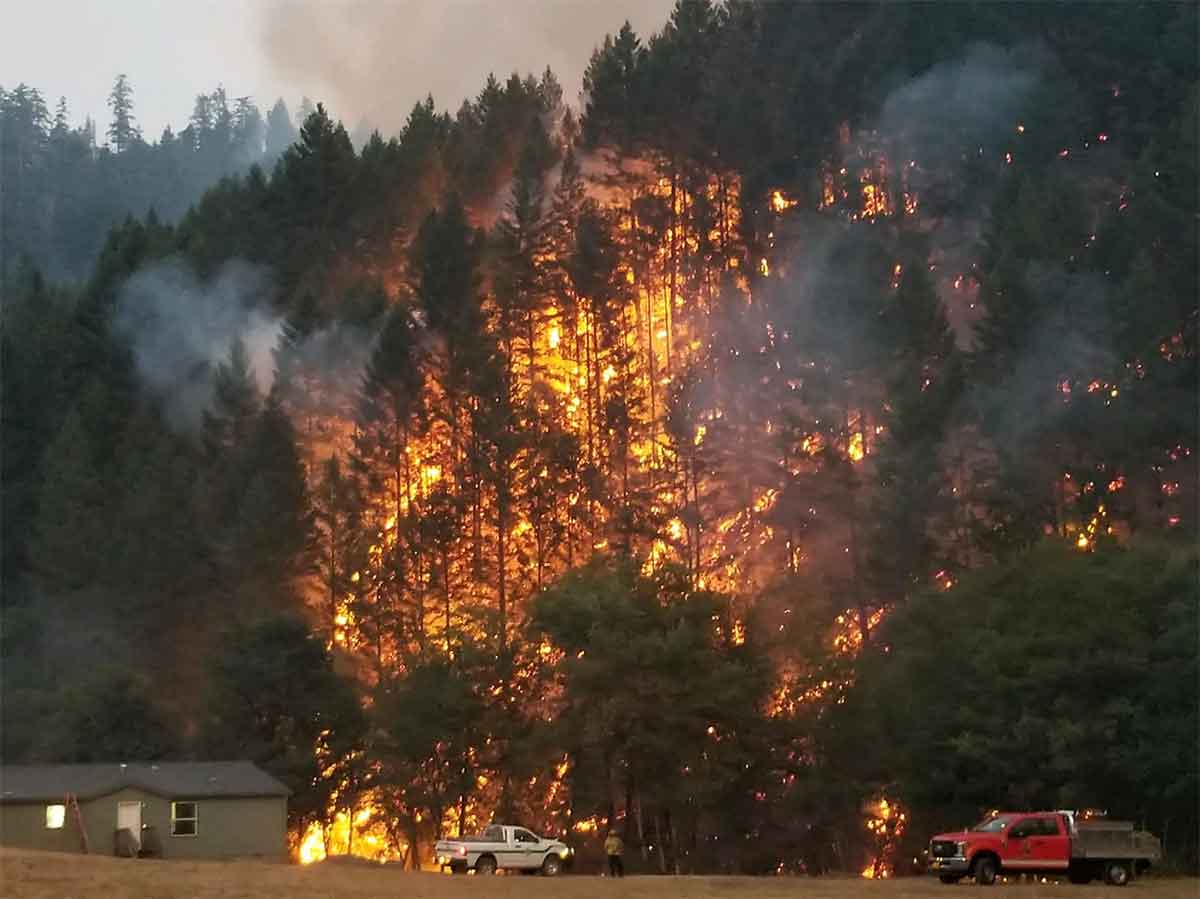
Thick smoke from wildfires is blanketing North America, stretching across the U.S. and Canada with visibility often blocked by clouds. NOAA reports light-to-moderate smoke drifting from active fires in Montana, Idaho, Washington, and California, while Canadian smoke is moving eastward toward the Atlantic and southward into the central U.S.
Montana's Snow Fire alone is producing a sprawling plume of heavy smoke that's traveling east-northeast into North Dakota. NOAA also documented smoke crossing from Canada into northern regions, with some traced to cross-polar transport, while California's Plaskett Fire is sending moderate-density smoke both inland and out to sea.
Montana and Pacific Northwest Fires Drive Heavy Smoke Plumes
The Snow Fire in Montana is the source of a massive, heavy-density smoke plume extending east-northeast across North Dakota. NOAA also identified active fires across Washington, Oregon, Idaho, and Montana as major smoke generators. On the Pacific Coast, smoke stretches from Oregon all the way to British Columbia, with some plumes drifting south into the Pacific Ocean.
California's Plaskett Fire is contributing moderate-density smoke that spreads both northeastward within the state and southward over the Pacific. NOAA noted that cloud cover often obscures the full extent of these plumes, making visibility poor across much of the West.
Canadian Smoke Travels Cross-Polar Routes and Southward
NOAA documented light-density smoke stretching across central and northern Canada into Baffin Bay and the Labrador Sea, with some smoke attributed to cross-polar transport. The smoke is moving steadily eastward toward Newfoundland and Labrador. Additional smoke is observed over Hudson Bay, moving southeast and southward into Alberta and northern parts of the continental U.S.
Central and Eastern U.S. Sees Smoke Drift Toward Atlantic
Active fires across the central and eastern U.S. are producing light-to-moderate smoke that moves east across the South and Mid-Atlantic regions. NOAA reports this smoke continuing toward the Atlantic Ocean. Meanwhile, remnant smoke hangs over Mexico and the Gulf of America, stemming from prior fire activity and industrial emissions from sources in the U.S.
The State reports that hazardous smoke from wildfires is affecting communities across the country, from North Dakota to New York and as far south as Maryland. The widespread nature of the smoke underscores how far wildfire pollution can travel from its source.
Sentiment
Mostly NegativeNEGATIVENEUTRALPOSITIVE
Publishers
17
Articles
7
Reach
24
Topics
A
AnonymousAuthor


