BYD Enters Japan Kei Market
BYD Enters Japan's Kei Car Market with Racco EV, Aiming to Disrupt Local Rivals
Anonymous
Key Points
1
BYD is building eight purpose-built ships to transport its electric vehicles for overseas markets as part of a ramped-up global export push.
2
BYD is expanding its production footprint with new factories in Hungary, Brazil, Thailand, Indonesia, and Uzbekistan to support its rapid international growth.
3
BYD's Racco EV kei car will offer a claimed range of 210 km to 320 km on a full charge, targeting urban driving in Japan.
4
Pricing for the Racco is around 1.95 million yen before taxes and subsidies, with subsidies potentially bringing the price under 2 million yen.
5
BYD argues its vertical integration gives it a cost edge over domestic Japanese rivals by controlling battery and other components in-house.
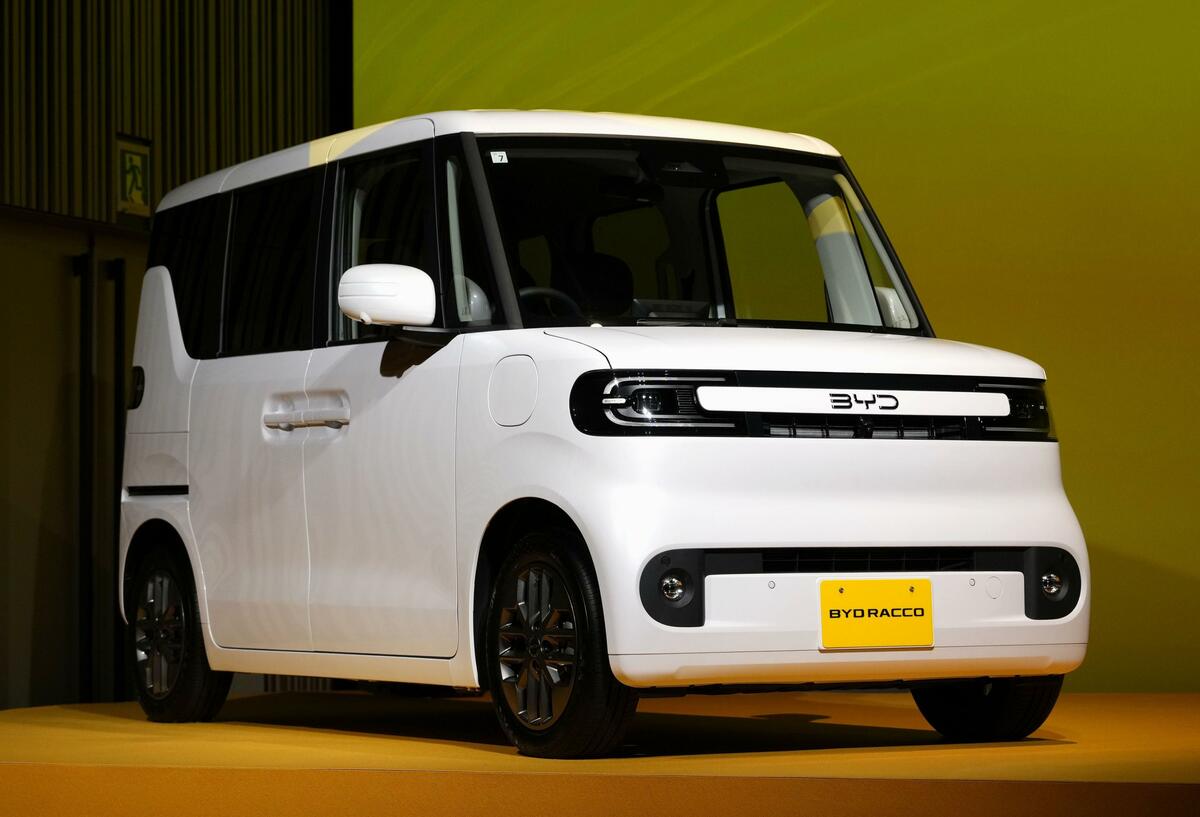
BYD has launched the Racco, its first purpose-built electric kei car, in Japan — marking the first time a foreign automaker has entered the country's fiercely guarded mini-vehicle segment, according to Kyodo News. Priced at around 1.95 million yen before taxes and subsidies, the Racco takes direct aim at Japanese staples like Nissan's Sakura in a segment that makes up roughly 40% of all new-car sales in Japan.
The launch signals BYD's most aggressive move yet in its push to become a global force in electric vehicles. Financial Times reports the Racco could cost less than 2 million yen after government subsidies, giving cost-conscious Japanese buyers a compelling reason to look beyond domestic brands for the first time.
What Makes Kei Cars So Hard to Crack
Kei cars are a uniquely Japanese vehicle class. They must stay within strict size limits — under 3.4 meters long and 1.48 meters wide — and below 660cc engine power. In return, owners pay lower taxes and cheaper insurance. The rules have created a closed ecosystem dominated by Suzuki, Daihatsu, and Honda for decades.
No foreign brand had ever built a car to these exact standards before. Kyodo News reported that BYD's engineers, who had never lived in Japan, spent years studying how Japanese drivers actually use their cars on narrow city streets before designing the Racco from the ground up.
Racco's Range and Price Undercut Rivals
The Racco offers a claimed range of 210 km to 320 km on a single charge, depending on the variant. That puts it squarely in the urban commuter sweet spot. Nissan's popular Sakura, by comparison, offers around 180 km of range. BYD is betting that more range at a lower price is a winning formula.
At 1.95 million yen before subsidies, the Racco is priced to compete hard. Financial Times noted the car could slip under the 2 million yen mark once government EV incentives are applied. BYD says its ability to make its own batteries in-house keeps costs lower than rivals who buy components from outside suppliers.
BYD's Japan Push Is Part of a Global Blitz
Japan is just one piece of a much larger expansion. BYD is building eight purpose-built cargo ships to move its EVs to overseas markets faster. The company is also opening new factories in Hungary, Brazil, Thailand, Indonesia, and Uzbekistan — a manufacturing footprint that rivals any automaker in the world.
According to Kyodo News, BYD has set its sights on becoming the world's largest carmaker by total sales within five years. The company is running a high-profile Japanese ad campaign for the Racco featuring top actress Alice Hirose — a sign it is serious about winning over local buyers, not just grabbing headlines.
Toyota and Japan's Carmakers Face a New Threat
Japanese automakers have long treated the kei segment as safe ground. No foreign rival had the incentive — or the ability — to meet Japan's strict kei rules. BYD's Racco changes that. It shows a Chinese EV maker can design a car specifically for another country's regulations, not just sell a tweaked export model.
Yahoo News reported that BYD's launch is being watched closely across the industry. If the Racco finds buyers, it could pressure Suzuki, Daihatsu, and Honda to cut prices or speed up their own EV plans. For Toyota, which has faced criticism for moving slowly on EVs, the timing could hardly be worse.
Sentiment
Mostly PositiveNEGATIVENEUTRALPOSITIVE
Publishers
22
Articles
34
Reach
56
Topics
A
AnonymousAuthor


