Judge Blocks Trump's Birthright Citizenship Orders
Judge Blocks Trump's Birthright Citizenship Orders
Anonymous
Key Points
1
The injunction explicitly notes it does not apply to children born before February 19, 2025; it blocks enforcement for births after that date (30 days after the initial order) but leaves earlier births untouched.
2
The August 2026 EO targeted several categories for birthright-eligibility denial, including children connected to ‘alien enemies,’ those who worked for foreign governments or international organizations, and individuals who engaged in a commercial transaction or fraud to obtain birthright citizenship.
3
The Justice Department argued that the new EO does not conflict with the Supreme Court’s Barbara decision because it was drafted around narrow exceptions left open by the Court, suggesting it is consistent with the ruling rather than overruling it.
4
State Department actions were cited as part of the policy shift, with reports that the department moved to require proof of citizenship or immigration status for individuals applying for US passports on behalf of their children.
5
The plaintiffs in the case include CASA Inc. and the Asylum Seeker Advocacy Project, indicating a class-action challenge brought by immigrant families and advocacy groups against the administration’s birthright-citizenship measures.
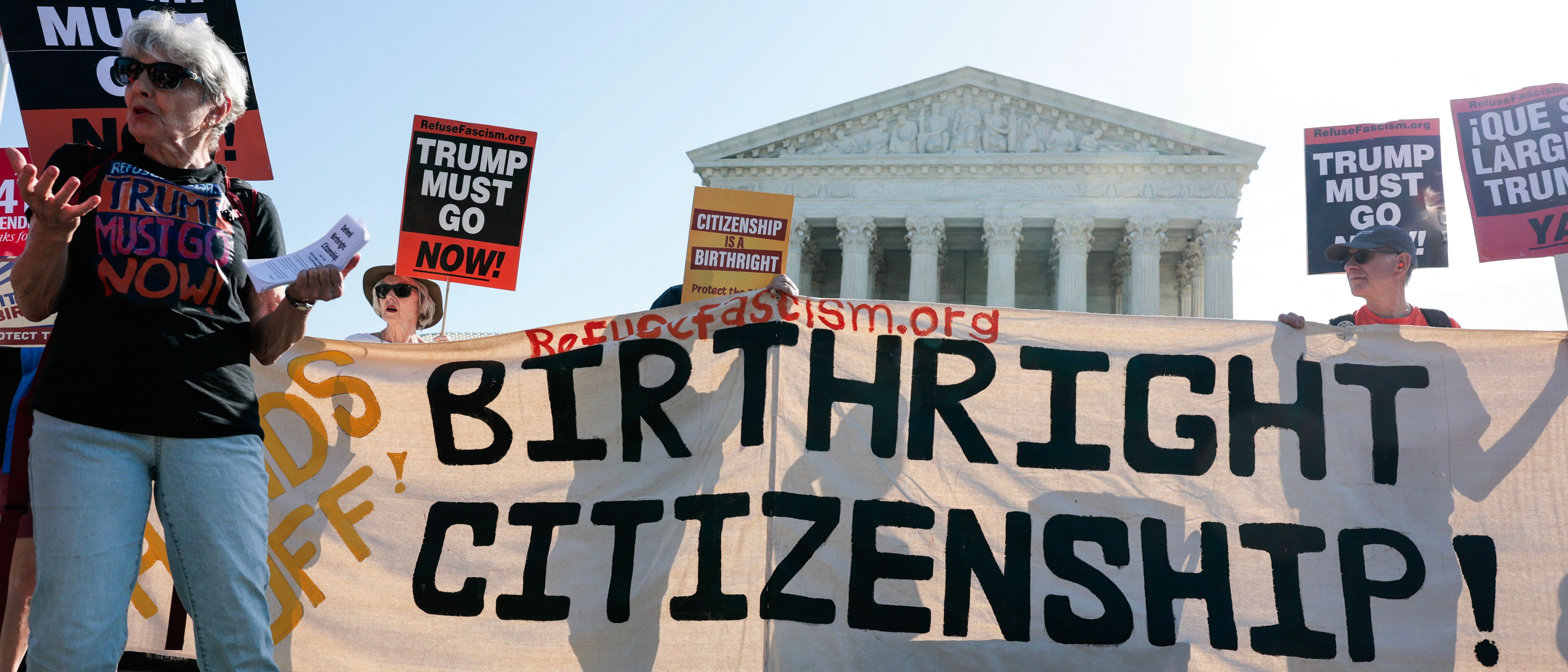
A federal judge blocked President Trump's latest attempt to limit birthright citizenship on September 2, 2026, ruling his executive order violates the Supreme Court's June decision in Trump v. Barbara. Judge Deborah L. Boardman said the 2026 order is "almost certainly unconstitutional" because the Supreme Court already decided that children born on U.S. soil to non-citizen parents are citizens at birth. The injunction pauses enforcement for births after February 19, 2025, as lawsuits from immigrant families and advocacy groups proceed.
The August 2026 executive order sought to deny citizenship to children whose parents were "alien enemies," worked for foreign governments, or engaged in birth tourism or fraud. The Justice Department argued the new order fits within narrow exceptions the Supreme Court left open. But Judge Boardman rejected this claim, writing the executive order's carveouts "bear little to no resemblance" to the narrow exceptions the Court described.
Trump's Second Birthright Citizenship Push Blocked
This is Trump's second legal loss on birthright citizenship in 18 months. In June 2026, the Supreme Court voted 6–3 to reject his first executive order, ruling that the 14th Amendment guarantees citizenship to all children born on U.S. soil. The administration responded in August by drafting a narrower order, claiming it targeted only extreme cases like foreign terrorists and "birth tourists." Judge Boardman said this still violates the Supreme Court's binding decision.
The August order targeted four categories: children of foreign government workers, "alien enemies" including cartel members, children born to parents engaging in birth tourism, and children whose parents committed fraud to enter the U.S. for birth. The Justice Department claimed these carveouts matched historical exceptions—like children of foreign ambassadors or occupying armies. The judge rejected this, saying the new rules stretched constitutional law beyond recognition.
The 14th Amendment's Long Shadow Over Presidential Power
The 14th Amendment, passed in 1868 after the Civil War, states that all persons born in the U.S. "and subject to the jurisdiction thereof" are citizens. For over 150 years, courts have interpreted this broadly—citizenship was denied only to children of foreign diplomats and occupying enemy soldiers. Trump's orders tried to expand these exceptions dramatically. Judge Boardman wrote that the executive order cannot rewrite what the Supreme Court already decided.
Conchita Cruz, co-executive director of the Asylum Seeker Advocacy Project, said in a statement: "Immigrant families should not have to come back to court to defend the rights of their U.S.-born children." The case involves CASA Inc., an immigrant advocacy organization, along with five pregnant non-citizen women. These groups filed suit in Maryland federal court on January 21, 2025, just one day after Trump signed his first birthright citizenship order.
Supreme Court Victory Becomes Binding Legal Reality
The Supreme Court's 6–3 decision in Trump v. Barbara on June 30, 2026, was decisive. A majority of justices rejected the argument that the 14th Amendment allowed exceptions for children of non-citizens or undocumented immigrants. The administration cannot simply ignore this ruling or redefine it through executive order. Judge Boardman emphasized that the Court's decision "is the law of the land and cannot be undone by presidential action."
The injunction only applies to births after February 19, 2025—30 days after the original January 2025 order. Children born before that date are not affected by the ruling. The Justice Department is expected to appeal Judge Boardman's decision to the U.S. Court of Appeals for the Fourth Circuit and likely back to the Supreme Court. The battle over who gets to be an American citizen will return to the nation's highest court.
Sentiment
Mostly NegativeNEGATIVENEUTRALPOSITIVE
Publishers
29
Articles
272
Reach
301
A
AnonymousAuthor


