New Apple Desktop Chips
Apple Refreshes Mac Studio And Mini With Advanced M5 And M6 Chips
Anonymous
Key Points
1
The Mac mini's M6 chip is built on a 2nm process and reportedly brings 12 CPU cores to the mini, marking a notable core-count increase over the prior generation.
2
The Mac Studio's top-end configuration uses a quad-die UltraFusion architecture that stitches two dual-die M5 Max chips into the M5 Ultra, enabling an up-to-80-core GPU and a 36-core CPU, with on-device LLM processing claimed to be up to 4x faster than the M3 Ultra.
3
Connectivity and networking upgrades include Thunderbolt 5 with up to 120Gb/s, Wi‑Fi 7, and Bluetooth 6, plus the ability to cluster four Mac Studio units over Thunderbolt 5 with RDMA for faster distributed AI inference.
4
Memory options differ by model: the M5 Max tops out at up to 128GB of unified memory, while the M5 Ultra can be configured with up to 512GB of unified memory, with the 512GB Ultra configuration expected in late October.
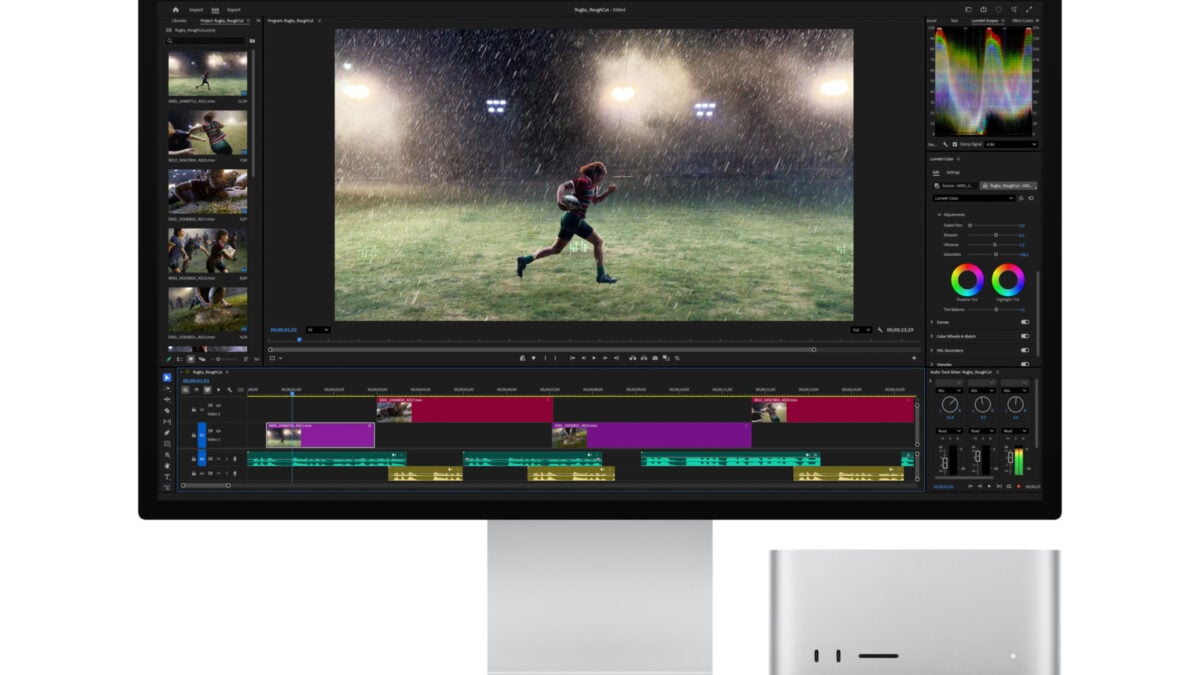
Apple unveiled refreshed Mac Mini and Mac Studio desktops on September 5, introducing the M6 chip for the Mini and both M5 Max and newly announced M5 Ultra options for the Studio. MacRumors reported that the M5 Ultra, Apple's most powerful chip ever, features a quad-die architecture with up to 36 CPU cores and an 80-core GPU. Base prices rise modestly: the Mac Mini climbs $100 while the M5 Ultra Studio jumps to $5,499, up $200 from expected pricing.
Preorders start immediately with general shipments on September 22, though the top-tier 512GB M5 Ultra config ships in late October due to supply constraints. CNET noted the M6 uses a groundbreaking 2-nanometer process, enabling higher core counts and speeds, while the M5 Ultra delivers AI performance up to 4x faster than its M3 predecessor for language model processing.
M6 Mac Mini Marks Apple's First 2-Nanometer Leap
The refreshed Mac Mini now packs 12 CPU cores thanks to Apple's M6 chip, a significant jump from prior generations. Mac Observer explained that the 2-nanometer process allows denser circuitry to pack more transistors onto the same silicon, directly enabling the core-count increase. The M6 brings faster clock speeds and improved efficiency, positioning the Mini as a more capable entry-level desktop for everyday users and light professional work.
M5 Ultra Stitches Two Chips Into One Powerhouse
The Mac Studio's M5 Ultra uses Apple's UltraFusion bridge to link two dual-die M5 Max chips into a quad-die package, creating Apple's strongest silicon. Mac Observer reported the result: up to 36 CPU cores split between 12 super cores and 24 performance cores, plus an 80-core GPU. This architecture lets the M5 Ultra cluster four Mac Studio units over Thunderbolt 5 with RDMA, enabling rapid distributed AI inference for teams running massive workloads.
AI Speed and Memory Push Professionals Forward
The M5 Ultra processes language model prompts up to 4x faster than the M3 Ultra, according to Apple's claims cited by CNET. Memory options reflect the performance jump: the M5 Max tops out at 128GB unified memory, while the M5 Ultra reaches up to 512GB—crucial for AI researchers and video editors handling massive datasets. The M5 Max Studio starts at $2,499, while the M5 Ultra starts at $5,499, creating a $3,000 price gap between the two models.
Connectivity Gets Faster With Thunderbolt 5 and Wi-Fi 7
Both new Macs gain Thunderbolt 5 with up to 120Gb/s bandwidth, Wi-Fi 7 for wireless speeds, and Bluetooth 6 for peripherals. Mirage News highlighted these upgrades as part of Apple's push into local AI capabilities, letting professionals run powerful models without sending data to the cloud. The combination of faster storage, networking, and unified memory on-device makes these desktops ideal for graphics rendering, video production, and machine learning work that demands speed and privacy.
Sentiment
Mostly PositiveNEGATIVENEUTRALPOSITIVE
Publishers
33
Articles
21
Reach
54
Topics
A
AnonymousAuthor