Warsh Proposes Fed Overhaul
Warsh Proposes Fewer Federal Reserve Meetings, Signaling Major Operational Shift for FOMC
Anonymous
Key Points
1
Warsh announced five task forces to rework key areas of the Fed’s operation—communications, the balance sheet, data sources, productivity and jobs amid technological shifts, and the inflation framework—with a goal to deliver work by year-end and to start from first principles.
2
The Banking Act of 1935 requires the FOMC to meet at least four times per year, a floor that Warsh has signaled any reduced cadence would sit above or below depending on the final design (likely between four and eight meetings).
3
Three hawkish officials—Dallas Fed President Lorie Logan, Minneapolis Fed President Neel Kashkari, and Cleveland Fed President Beth Hammack—formally voted for an immediate quarter-point move at the July 29 decision, highlighting notable intra-meeting splits.
4
A leaner, less-regular cadence could alter volatility patterns in crypto and broader markets, as investors have to adjust to fewer scheduled updates that may carry more weight when they occur.
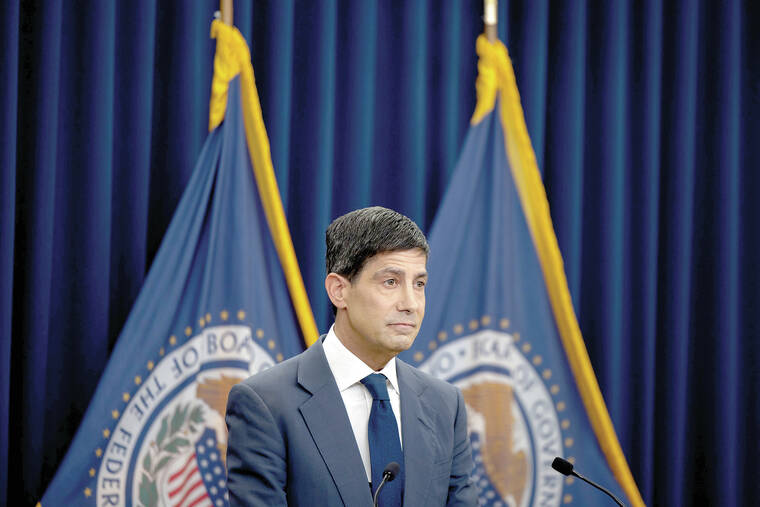
Federal Reserve Chair Kevin Warsh is pushing to cut the number of scheduled Federal Open Market Committee meetings each year, according to West Hawaii Today. The change would be the biggest shift to the Fed's calendar since Paul Volcker set the eight-meeting-per-year pace back in 1981.
A decision on the new calendar could come before the September 15–16 meeting, with any changes taking effect as early as 2027, TechTimes reported. A Fed spokesperson declined to comment on the proposal.
Warsh Wants Fewer Meetings and No Forward Guidance
The proposal would cut annual FOMC meetings to somewhere between four and eight — down from the current eight. The Banking Act of 1935 requires at least four meetings per year, setting a hard floor. Whales Book reported the final number has not been decided yet.
The calendar change would go hand-in-hand with eliminating forward guidance. Forward guidance is when the Fed signals in advance where rates are headed. Without it, each meeting would carry more weight, but investors would get fewer clues about what comes next, according to West Hawaii Today.
Five Task Forces Set to Rebuild the Fed from Scratch
Warsh has launched five task forces to overhaul key parts of how the Fed runs. The groups cover communications, the balance sheet, data sources, jobs and technology, and the inflation framework, WebProNews reported. The goal is to deliver results by the end of the year.
Warsh told the task forces to start from first principles — meaning nothing is off the table. This is a major departure from the Fed's usual slow, incremental approach to change.
Three Fed Hawks Voted to Cut Rates at July Meeting
The July 29 FOMC decision revealed sharp disagreement inside the committee. Dallas Fed President Lorie Logan, Minneapolis Fed President Neel Kashkari, and Cleveland Fed President Beth Hammack all voted for an immediate quarter-point rate cut, according to TechTimes. They were outvoted, but their dissent signals growing pressure for action.
A quarter-point cut equals 0.25 percentage points. Three formal dissents in one meeting is rare and shows the Fed is not as unified as it often appears in public statements.
Crypto and Markets Brace for Bigger, Rarer Policy Shocks
Fewer scheduled meetings could reshape how markets move. Right now, investors spread their bets across eight potential decision points each year. With fewer meetings, each one could trigger bigger price swings, according to Crypto Times.
Crypto assets are especially sensitive to Fed decisions. Bitcoin and other digital currencies often spike or drop sharply on rate news. A leaner calendar means longer stretches of uncertainty — and then potentially larger market reactions when a decision finally lands, Crypto Times noted.
Sentiment
Mostly NegativeNEGATIVENEUTRALPOSITIVE
Publishers
11
Articles
22
Reach
33
A
AnonymousAuthor


