Long-term nuclear power partnership
Google and Fortum Sign 22-Year Nuclear Power Deal to Support Finnish Plant
Anonymous
Key Points
1
The agreement begins in 2028 with a smaller contracted capacity before ramping up to as much as 50% of Loviisa’s generation from 2030 through 2049.
2
Loviisa consists of two 507-megawatt pressurized-water reactors commissioned in 1977 and 1980, producing roughly 8 terawatt-hours of electricity annually.
3
Fortum said the plant would not be able to operate beyond 2030 without the planned lifetime-extension program, making the agreement important for maintaining Finland’s fossil-free generation and electricity-system resilience.
4
The public announcements did not disclose the PPA’s electricity price, total contract value or indexation terms, leaving the financial value of the long-term arrangement partly unspecified.
Fortum's stock surged after the Finnish energy company signed a 22-year power purchase agreement with Google, securing a major buyer for electricity from its Loviisa nuclear plant starting in 2030. World Nuclear News reported that Google will purchase up to 50% of Loviisa's output through 2049, giving Fortum the revenue certainty needed to fund a €1 billion program extending the plant's operation to 2050.
The deal lifts Fortum's expected return on net assets by roughly 1.4 percentage points and supports Google's massive €13 billion AI infrastructure investment in Finland over 2027 and 2028. The agreement represents a rare long-term commitment to nuclear energy in Europe, bolstering Finland's fossil-free power supply and resilience.
Two Reactors Built in the 1970s Need New Life
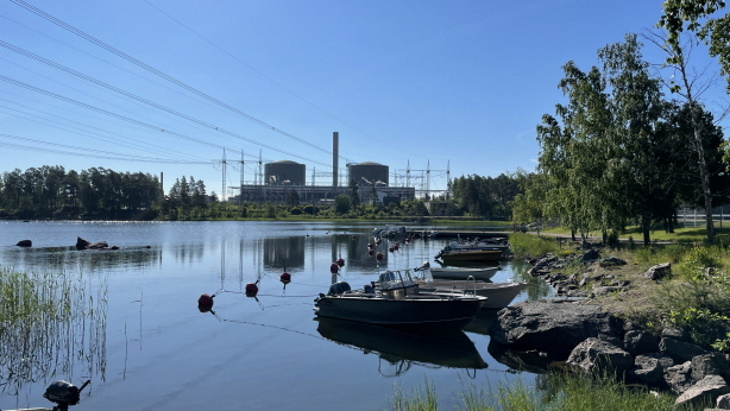
Loviisa sits near Google's Hamina data center and consists of two 507-megawatt pressurized-water reactors commissioned in 1977 and 1980. World Nuclear News noted the plant produces roughly 8 terawatt-hours of electricity yearly, supplying about 10% of Finland's total electricity. Without the lifetime-extension program, Fortum said the plant cannot operate beyond 2030.
Google Bets Big on Finnish Data Centers and Clean Power
Google announced plans to invest at least €13 billion in AI infrastructure across Finland in 2027 and 2028, marking its single largest European investment. NWA Online called it a major milestone for the region's tech sector. The company aims to power these data centers with reliable, carbon-free electricity — a key reason for the nuclear agreement.
The power purchase deal begins in 2028 with a smaller contracted capacity before ramping up to 50% of Loviisa's generation in 2030. EDIE reported that this arrangement will support both the nuclear plant's expansion and Google's growing computational needs in northern Europe.
Details on Price and Terms Stay Behind Closed Doors
The companies did not disclose the contract's electricity price, total value, or indexation terms in public announcements. This leaves investors and analysts guessing about the financial mechanics of the 22-year arrangement. World Nuclear News confirmed the agreement covers Loviisa's lifetime-extension period but withheld specifics on how power costs will adjust over time.
The Deal Lifts Fortum and Spreads Joy Across Finnish Stocks
Fortum's share rally after the announcement also lifted other Finnish companies, including Nokia, UPM, and YIT. The boost reflects investor optimism that nuclear power projects will attract more long-term corporate buyers. Fortum and Google also signaled they would explore additional nuclear, renewable, and energy-storage projects together in the coming years.
Sentiment
Mostly PositiveNEGATIVENEUTRALPOSITIVE
Publishers
19
Articles
42
Reach
61
A
AnonymousAuthor


