Historic Track Double Wins
Kenny Bednarek and Melissa Jefferson-Wooden Claim Double Sprint Titles at Ultimate Championship
Anonymous
Key Points
1
Melissa Jefferson-Wooden’s 21.47-second 200-meter victory came in a 0.6 meters-per-second headwind and moved her to fourth on the women’s all-time list, behind Florence Griffith-Joyner and Shericka Jackson’s three faster performances.
2
Bednarek said of his performance, “Performance-wise and execution-wise, I give myself an A-plus. This year was a year just to make some progress. I did that.”
3
The new championship brings together reigning Olympic champions, world champions and other top-ranked athletes, with no limit on the number of athletes each country can enter; World Athletics described its $10 million prize pool as the richest in the sport’s history.
4
Bednarek led the 200-meter final at halfway and pulled away in the closing stages, while both Letsile Tebogo’s 19.76 and Courtney Lindsey’s 19.79 were season bests.
5
Britain’s Josh Kerr also won in Budapest, taking the men’s 1,500 meters in 3:29.35 after producing a 52.57-second final lap despite spending much of the race toward the back of the field.
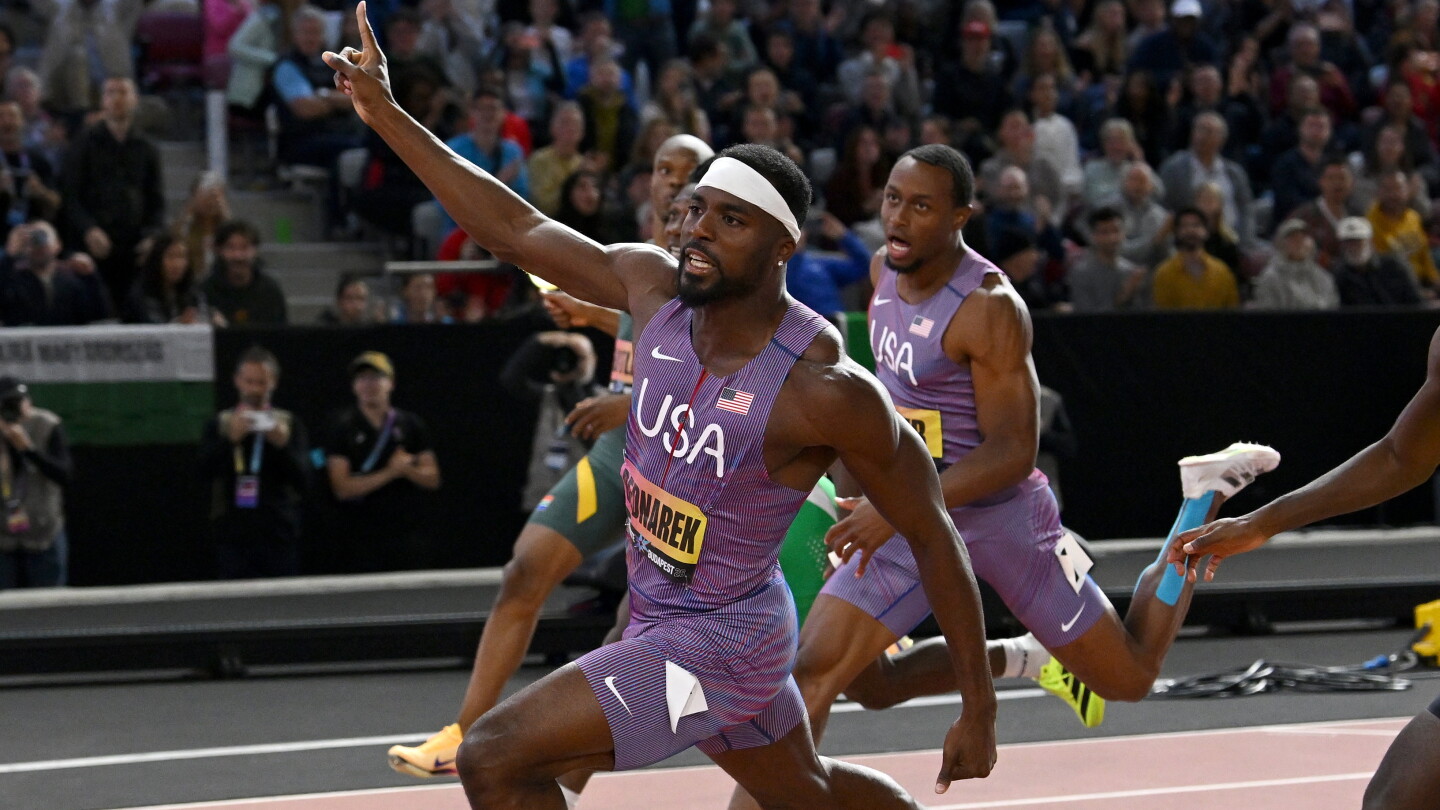
American sprinters Kenny Bednarek and Melissa Jefferson-Wooden swept the sprint events at the inaugural World Athletics Ultimate Championship in Budapest, each winning the 100 and 200 meters. NBC Sports reported that Bednarek clocked a world-leading 19.52 seconds in the men's 200m—the seventh-fastest time ever—while Jefferson-Wooden ran 21.47 seconds in the women's 200m, ranking fourth all-time despite a headwind. The victories marked Bednarek's first major individual titles after four global silver medals, and each sprinter earned $300,000 from the championship's record $10 million prize pool.
FloTrack noted that Bednarek defeated Olympic champion Letsile Tebogo (19.76) in the 200m and Jamaica's world champion Oblique Seville (9.90) in the 100m, where Bednarek won in 9.85 seconds. Jefferson-Wooden topped Olympic champion Gabby Thomas in the women's 200m, completing a sprint sweep that underscores American depth in sprinting's showcase event.
Bednarek Breaks Through After Four Silver Medals
Kenny Bednarek's double victory ended a frustrating run of near-misses at major championships. Morning Chronicle reported that his 19.52-second 200m clocking ranks seventh in history and moved him into elite company. Bednarek led from midway through the race and pulled away in the final stages, controlling a field that included defending Olympic and world champions. Bednarek said of his performance: "Performance-wise and execution-wise, I give myself an A-plus. This year was a year just to make some progress. I did that."
In the 100m final, Bednarek's 9.85 seconds topped Seville's 9.90, with American Ronnie Baker taking third in 9.93. KSL.com noted the tight margins at the top of world sprinting, where hundredths of a second separate champions from runners-up. For Bednarek, the double marked his transition from consistent global medalist to championship-level winner.
Jefferson-Wooden Joins Rare Air in Women's Sprinting
Melissa Jefferson-Wooden's 21.47-second 200m run ranks fourth-fastest in history, trailing only Florence Griffith-Joyner and Shericka Jackson's three faster performances. The New York Times reported that she achieved this mark into a 0.6 meters-per-second headwind, adding to the time's significance. She defeated Olympic champion Gabby Thomas in a race where American Courtney Lindsey clocked a season-best 19.79 for third place.
Jefferson-Wooden also won the 100m to complete her sprint double, the second consecutive major-meet sweep for the American sprinter. Her performances signal exceptional depth in American women's sprinting and position her among the fastest sprinters ever to compete.
New Championship Transforms Athletics' Prize Money
The World Athletics Ultimate Championship concentrated the sport's strongest available athletes—Olympic champions, world champions, and top-ranked sprinters—in a single biennial competition. NBC Sports reported that World Athletics called its $10 million prize pool the richest in the sport's history, with individual event winners earning $150,000. Bednarek and Jefferson-Wooden each received $300,000 for their two victories, fundamentally changing the financial incentives for peak performance outside the traditional Olympic and world-championship cycles.
The new format allows unlimited athletes per country and creates a high-stakes competition that rewards speed and consistency across multiple events. This structure gives athletes powerful motivation to excel in meets outside the four-year Olympic schedule, reshaping how elite sprinters structure their seasons.
Lyles Absence Opens Door for Bednarek's Breakthrough
Four-time world 200-meter champion Noah Lyles did not compete in Budapest due to injury, removing the favorite from the men's 200m final. His absence may have created an opening for Bednarek, though the American still faced Olympic champion Tebogo, whose 19.76 seconds represented a season best. The competitive field remained deep despite Lyles' withdrawal.
Sentiment
Mostly PositiveNEGATIVENEUTRALPOSITIVE
Publishers
21
Articles
13
Reach
34
A
AnonymousAuthor


