Record Critical Acclaim
Zach Cregger's Resident Evil earns record Rotten Tomatoes score and strong box office projections.
Anonymous
Key Points
1
The film is reportedly being made on a production budget of about $75 million, excluding marketing, and its projected $80 million global opening would give Sony a particularly strong start.
2
Resident Evil: Afterlife currently holds the franchise’s domestic opening-weekend record at $26.6 million, while the series’ highest worldwide theatrical grosser is Resident Evil: The Final Chapter, which earned about $312 million globally.
3
Zach Cregger has described navigating fan skepticism over the original adaptation as an “apology tour,” reflecting the pressure created by his decision to exclude established game characters and previously told storylines.
4
Some critics specifically praised the film’s ability to reproduce the games’ tonal contrast: TheWrap described it as starting terrifying, becoming ridiculous and successfully “getting away with that tonal shift,” while The Hollywood Reporter called it a “propulsive, simultaneously terrifying and hilarious thrill ride.”
5
The film’s Rotten Tomatoes performance briefly put it ahead of other highly rated game adaptations such as The Last of Us season one and Fallout season two, both at 96%, although Arcane season two remained above it with a perfect score.
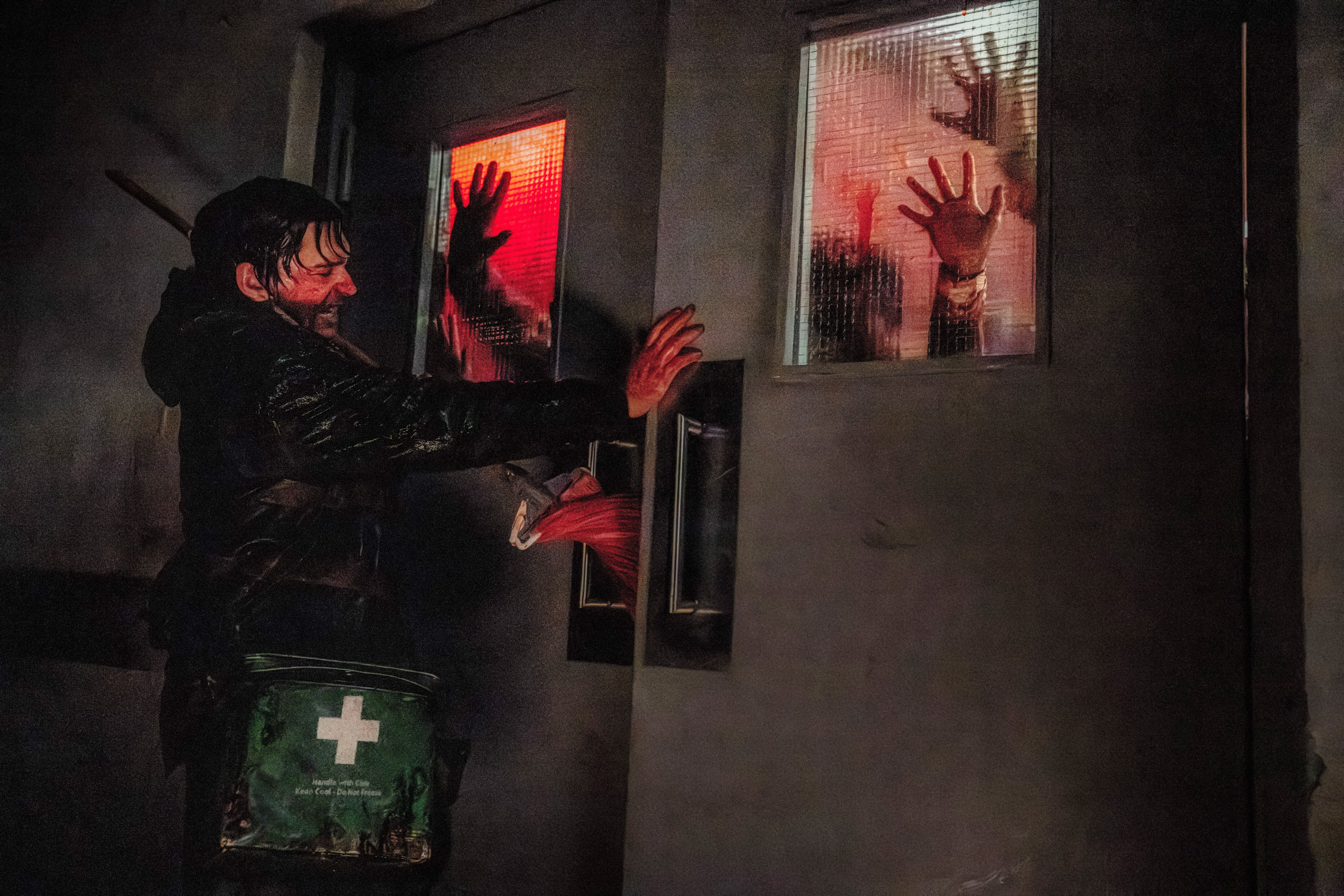
Zach Cregger's Resident Evil has become a critical sensation, debuting at 96%–97% on Rotten Tomatoes and earning the title of highest-rated live-action video-game adaptation ever made Koimoi. The film follows an everyday medical courier through a nightmare in Raccoon City, deliberately abandoning iconic game characters like Leon S. Kennedy to craft a lean survival-horror experience Comic Basics. Critics call it a "propulsive, simultaneously terrifying and hilarious thrill ride" Hollywood Reporter, praising its taut structure, inventive creature effects, and ability to capture the games' unique blend of terror and dark comedy.
The film is tracking for a massive box office debut: $40 million–$50 million domestically, with potential to reach $60 million, plus roughly $31 million internationally Newsy Today. This $80 million global opening would shatter the franchise's previous domestic record of $26.6 million set by Resident Evil: Afterlife in 2010. Made on a $75 million production budget, the film gives Sony an exceptionally strong start in the competitive fall season.
How Cregger Captured the Games' Signature Tone
One of Cregger's boldest choices was ignoring established Resident Evil characters and storylines. Instead, he crafted a standalone survival scenario that captures what made the games special: a tonal whiplash between terror and absurdity. TheWrap noted the film starts genuinely terrifying, becomes ridiculous, and "totally gets away with that tonal shift." Critics say this approach—avoiding fan service—actually made the film stronger, not weaker.
GamesRadar+ awarded four stars, calling it "the best Resi movie by a distance, and the best video game movie full stop." The film's body horror, creature effects, and inventory-management tension all mirror the tactical, claustrophobic design of the games themselves. By stepping away from established lore, Cregger was free to focus purely on visceral survival-horror filmmaking.
Why Fans Were Skeptical Before Release
Before the film dropped, gaming communities erupted in criticism. Cregger described the pre-release pressure as an "apology tour"—die-hard players demanded recognizable characters like Claire Redfield and Leon S. Kennedy, not a new protagonist named Bryan Hodukavich. Online fan bases viewed the omission as a betrayal of Capcom's source material and feared another forgettable video-game movie.
But critics flipped that narrative on its head. IndieWire hailed the film as "a middle finger to the Comic-Con-brained idea that video game adaptations should just give 'the fans' what they think they want." By prioritizing tight survival-horror storytelling over nostalgia callbacks, Cregger proved that a game adaptation could succeed by respecting the *feeling* of the original—not just its roster of characters.
Record-Breaking Previews Hint at Strong Opening Weekend
Before Friday's wider release, the film already posted franchise records. Deadline reported Resident Evil earned $8 million–$9 million in Thursday night previews—the highest preview total in the series' history Yahoo News. That momentum signals confident moviegoers and strong word-of-mouth, rare for video-game adaptations.
If projections hold, a $40 million–$60 million domestic opening would demolish Afterlife's $26.6 million debut and mark a watershed moment for the franchise. The worldwide Resident Evil catalog has grossed over $1.2 billion historically, but The Final Chapter's $312 million remains the series' biggest theatrical earner—a milestone this new film could realistically challenge.
The Reservation: Pacing and Story Predictability
Not every critic was uniformly ecstatic. Common complaints center on abrupt tonal shifts, uneven comedic pacing, and a thin or somewhat predictable plot structure. Some reviewers felt the humor didn't always land or that the survival scenario lacked genuine surprises. These issues prevented the film from reaching universal perfection.
Still, Resident Evil's 96%+ rating places it above The Last of Us Season 1 and Fallout Season 2 (both 96%), though below Arcane Season 2's perfect 100%. For a video-game adaptation—a historically maligned category—hitting near-unanimous critical approval represents a genuine breakthrough for the medium.
Sentiment
Mostly PositiveNEGATIVENEUTRALPOSITIVE
Publishers
37
Articles
35
Reach
72
A
AnonymousAuthor


