AI Infrastructure Hub
BCE Partners with Saskatchewan to Develop a Massive 1.2-Gigawatt AI Infrastructure Hub
Anonymous
Key Points
1
Kirsten Green has helped scale more than 100 startups through Forerunner Ventures, including Warby Parker and Dollar Shave Club, giving Gap’s board additional experience in emerging consumer brands and changing purchasing behavior.
2
Carrier is collaborating with a hyperscaler on a 3-megawatt air-cooled chiller designed to support rapid restart and efficient operation in high ambient temperatures, adding a technology-development component to its commercial HVAC expansion.
3
Cosmos Health insiders bought approximately $1.7 million of company shares over the past year and reported no insider sales, a contrast to the company’s weak profitability and low GF Score.
4
Cosmos Health’s price-to-sales ratio was 0.15, well below its historical median of 0.83; earnings-based valuation measures such as P/E were not applicable because the company has continued to report losses.
5
BCE described the Saskatchewan project as potentially the largest capital investment in the province’s history. The company also expanded its telecommunications footprint through its 2025 acquisition of Ziply Fiber in the U.S. Pacific Northwest.
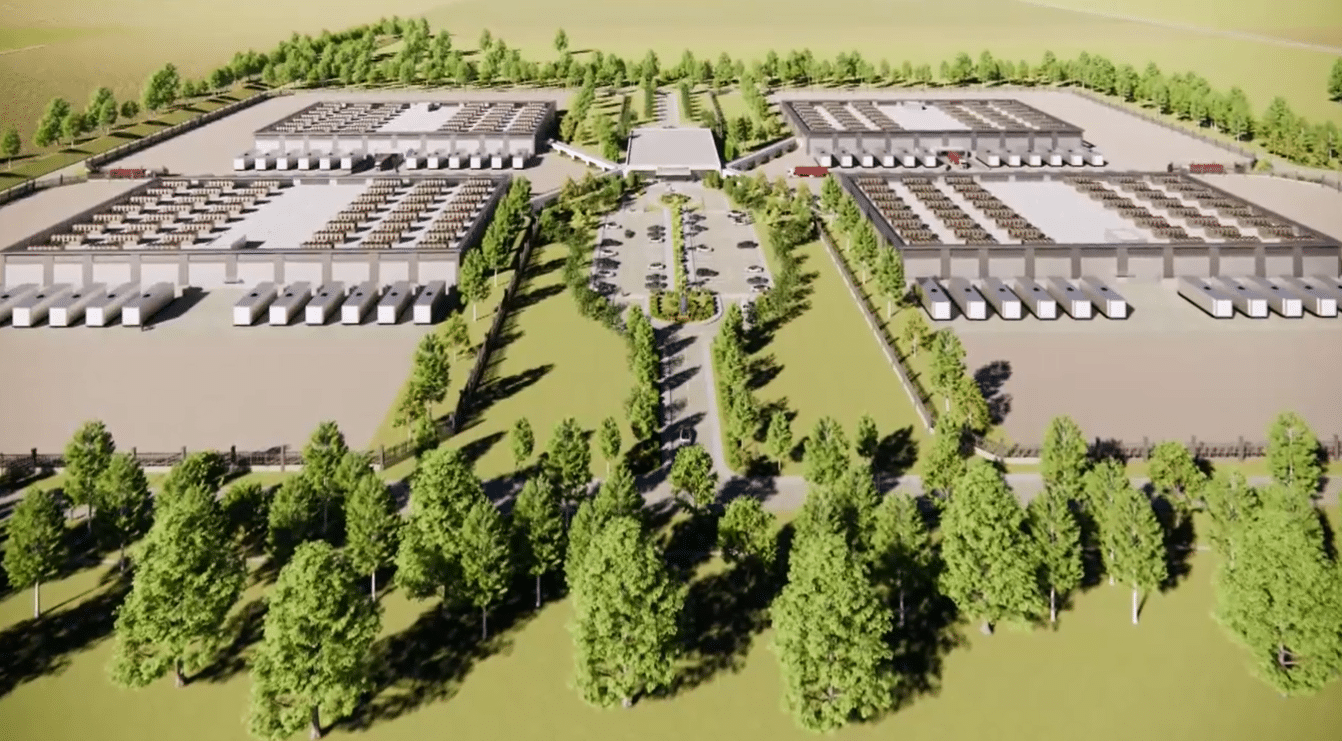
Bell Canada (BCE Inc.) is building a massive 1.2-gigawatt artificial intelligence data center hub in Saskatchewan, marking what the company calls potentially the largest private capital investment in the province's history. BCE partnered with Saskatchewan's government in September 2026 to expand an initial 300-megawatt facility near Regina by adding 900 megawatts of computing power, subject to customer commitments and regulatory approvals. The project could eventually cost up to $52.5 billion CAD and create 1,600 to 4,300 jobs across construction, operations, and support roles.
CEO Mirko Bibic chose Saskatchewan because it's "a great place to invest," according to the company's public statements. Reuters reported that the hub will store and process sensitive enterprise, health, and government AI workloads under Canadian legal jurisdiction as part of BCE's "Bell AI Fabric" national digital ecosystem. The project requires no municipal water and uses partner-developed power systems, addressing environmental concerns about large data centers.
Saskatchewan Chosen for Nation-Building Infrastructure
Premier Scott Moe compared the sovereign data initiative to Canada's historic transcontinental railway, saying "the infrastructure has changed, but the purpose has not." CBC noted that Prime Minister Mark Carney called the hub a "fantastic example" of digital infrastructure investments needed across Canada. The facility sits near Regina and will operate under Saskatchewan's "Bring Your Own Power" principle, meaning tenants provide their own energy sources rather than burdening provincial rate-payers.
The project expands BCE's strategic focus on fiber and infrastructure assets following its late-2025 acquisition of Ziply Fiber in the U.S. Pacific Northwest. Power capacity grows from 300 megawatts to 1.2 gigawatts, quadrupling the original footprint through partner-developed natural gas systems. Phased deployment of the additional 900 megawatts will proceed based on tenant demand, commercial agreements, power supply agreements, and environmental permits.
Employment and Economic Impact Across Province
The hub will create 800 to 1,200 construction, engineering, and technical jobs during development, plus 500 permanent operations and power plant roles, according to BCE's employment projections. An additional 100 management positions will open at the newly established Bell AI Fabric headquarters in Saskatchewan. Global News reported that indirect support positions in logistics, maintenance, and security could reach 3,000 jobs offsite.
Total prospective capital investment reaches $52.5 billion CAD across data center infrastructure, partner energy systems, and high-performance computing hardware. However, Financial Post analysts note that a substantial share will be directed overseas for advanced semiconductor procurement from companies like TSMC and NVIDIA, leaving direct provincial revenue tied primarily to infrastructure, off-grid power generation, and corporate taxation.
Environmental Critics Question Fossil Fuel Power Source
Opposition NDP technology critic Brittney Senger publicly criticized the provincial government for prioritizing "CEOs and tech bros" without sufficient clarity on local energy sourcing and water use. CBC reported that environmental watchdogs raised concerns regarding fossil-fuel power generation through natural gas and potential carbon emission impacts. Critics also questioned whether non-municipal water sourcing for technical cooling fluids adequately protects provincial water reserves.
BCE counters that the facility uses closed-loop cooling technology, requiring zero municipal water supplies for data center operations. The company designed the hub to operate under Saskatchewan's "Bring Your Own Power" principle, meaning tenants manage their own energy procurement. Market sentiment remained cautious; MarketWatch reported that BCE shares fell 0.79% on announcement day, hovering 12% below their 52-week high while offering a dividend yield above 5%.
Sentiment
Mostly PositiveNEGATIVENEUTRALPOSITIVE
Publishers
25
Articles
14
Reach
39
A
AnonymousAuthor


