Carlisle Air Collision Findings
NTSB Preliminary Report Finds No Mechanical Failures in Fatal Carlisle Airport Collision
Anonymous
Key Points
1
The Cessna 150 exhibited a distinctive wing-rocking sequence and multiple rapid pitch changes as it approached the Carlisle runway, with investigators noting no mechanical failure prior to the impact.
2
Flight-path details show the Cessna crossed northeast, then turned onto left crosswind and downwind for runway 28, with about 2,500 feet from the threshold when it turned onto the left base; track data was later lost, and security video captured critical moments of the approach sequence.
3
The Pennsylvania State Police helicopter was conducting a training flight, had already landed and exited the runway but was hovering in a nearby field when the Cessna approached, according to the preliminary report.
4
Two troopers were injured in the crash: Corporal Bryce Corman and Trooper Jason Mills, with public reporting confirming their identities alongside the pilot who was killed, Paul Sokoloski of Hershey, a Penn State Health doctor.
5
The helicopter crew had received a traffic collision avoidance system (TCAS) alert before spotting the airplane, and radio communications documented the Cessna pilot’s acknowledgment of an instruction to extend the downwind.
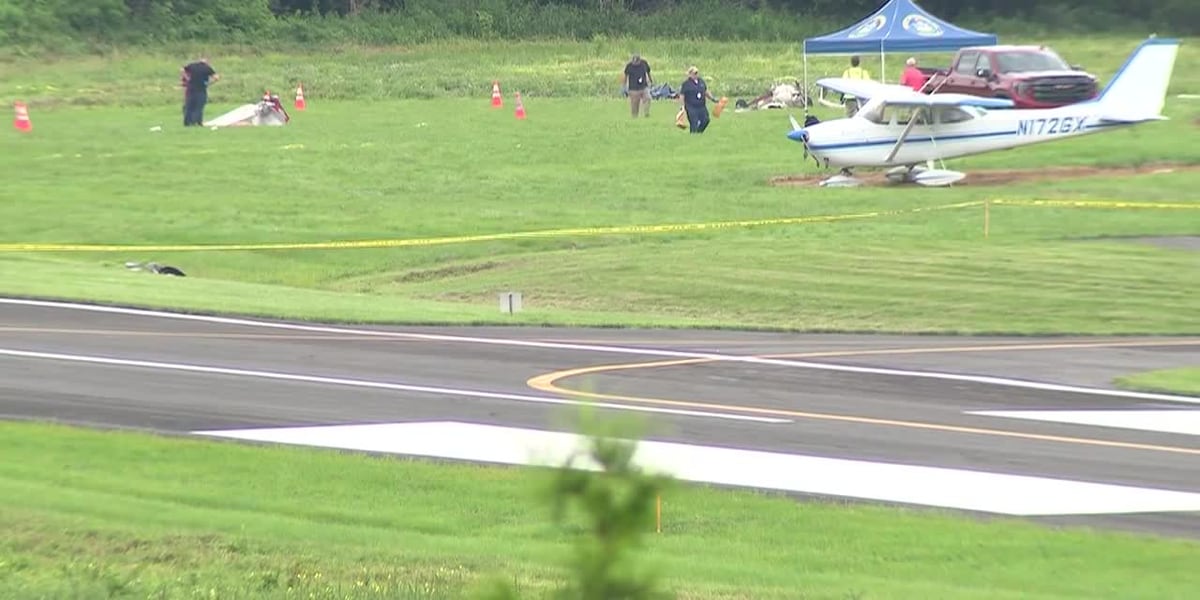
The NTSB's preliminary report on the August 19 Carlisle Airport collision rules out mechanical failure in either aircraft, but leaves the cause undetermined. The crash killed Paul Sokoloski, a 57-year-old Penn State Health doctor piloting a Cessna 150, and injured two Pennsylvania State Police troopers in the helicopter. WCTV reports that newly surfaced video captured the moment of impact.
Only eight seconds separated the helicopter clearing the runway from the mid-air collision. Investigators found that the Cessna made a distinctive wing-rocking sequence and multiple rapid pitch changes during approach, while the helicopter crew could not see the small plane. The final NTSB report is not expected for months to a year.
No Mechanical Problems Found in Either Aircraft
Both the Cessna 150 and the State Police helicopter showed no signs of mechanical failure before impact, WCTV reports. The crews communicated normally by radio, with the helicopter instructing the Cessna pilot to extend his downwind approach. This rules out equipment problems as the cause and points investigators toward pilot actions or situational awareness issues.
Preliminary findings show the Cessna exhibited unusual flight behavior—wing rocking and rapid pitch changes—as it approached runway 28. Yet no mechanical issues explain this movement. The investigation remains open as the NTSB continues analyzing radio communications and surveillance footage.
Eight-Second Window Before Collision Sequence
The helicopter had already landed and exited Carlisle Airport's runway when it hovered in a nearby field. Security video and radar data show the Cessna turning from northeast to left crosswind and downwind, about 2,500 feet from the runway. The aircraft then turned onto left base—but radar contact was lost shortly after. WCTV notes that only eight seconds passed from when the helicopter cleared the runway to impact.
The helicopter crew received a traffic collision avoidance system alert before spotting the Cessna, but could not see the smaller plane in time. Sokoloski acknowledged the instruction to extend his downwind, yet the two aircraft ended up in a collision course within seconds.
Pilot and Crew Members Identified
Paul Sokoloski, 57, of Hershey, Pennsylvania, died in the crash. The Penn State Health doctor was the sole occupant of the Cessna 150. Two State Police troopers were seriously injured: Corporal Bryce Corman and Trooper Jason Mills, who were conducting a training flight in the helicopter at the time of the collision.
The collision occurred around 6:52 p.m. on August 19, 2026, at Carlisle Airport in Pennsylvania. WCTV reported that newly released video showed the exact moment the two aircraft struck each other mid-air, providing critical evidence for the ongoing investigation.
Investigation Continues With Cause Still Unknown
The NTSB is still determining what led to the collision despite ruling out mechanical failure. Investigators are analyzing radio communications, surveillance video, flight paths, and crew actions during those critical eight seconds. The agency expects to release a final report in months to a year.
The preliminary findings highlight how quickly situations can turn dangerous at small airports where multiple aircraft operate in close proximity. With no mechanical problems and normal radio communications, human factors—such as visibility, attention, or communication clarity—remain under scrutiny as the investigation unfolds.
Sentiment
Mostly NegativeNEGATIVENEUTRALPOSITIVE
Publishers
13
Articles
85
Reach
98
Topics
A
AnonymousAuthor


