Lithuania Nuclear Ban Lift
Lithuania advances a constitutional amendment to lift its ban on nuclear weapons.
Anonymous
Key Points
1
The amendment would remove Article 137 of Lithuania’s Constitution, which currently bars both weapons of mass destruction and foreign military bases from the country’s territory.
2
Kremlin spokesman Dmitry Peskov was asked about the amendment alongside President Donald Trump’s proposal for an American military base in the Baltic region; he said moving U.S. military infrastructure closer to Russian borders would be viewed as an escalation.
3
The Baltic states are expanding military and civilian preparations for possible Russian attacks amid uncertainty about future U.S. support for NATO. One Lithuanian exercise involved riflemen practicing the recapture of a railway station in the eastern village of Bezdonys.
4
Russian Security Council Deputy Chairman Dmitry Medvedev threatened that Lithuania could “disappear from the map of the world” if nuclear weapons were deployed there, and claimed NATO would not defend it in the event of a Russian response.
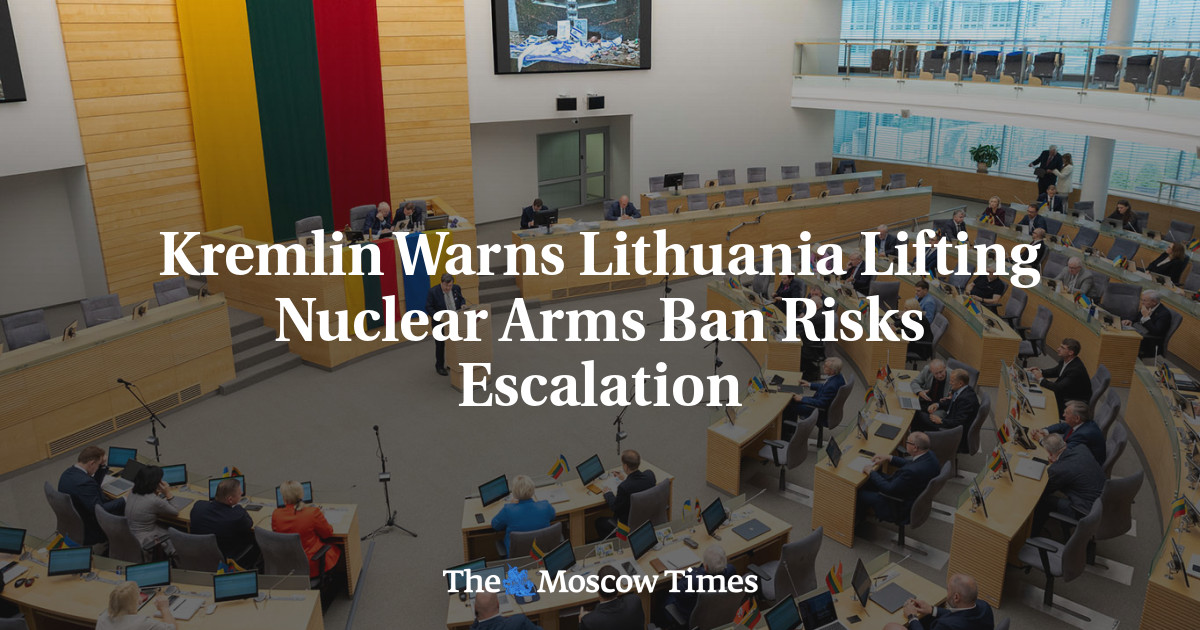
Lithuania's parliament advanced a constitutional amendment on Thursday that would lift the country's ban on nuclear weapons and foreign military bases, passing the first reading with 106 votes to 18. The move could allow NATO allies to station nuclear weapons on Lithuanian soil, strengthening deterrence against Russia. The final vote is scheduled for January 12 and needs at least 94 votes to pass. CNBC reported that the Kremlin immediately warned the decision risks escalation in the region.
Defense Minister Robertas Kaunas and Parliamentary Speaker Juozas Olekas said lifting Article 137 of the constitution would boost national resilience amid Russia's war in Ukraine. Russian officials, including Security Council Deputy Chairman Dmitry Medvedev, issued stark threats—Medvedev claimed Lithuania could "disappear from the map of the world" if it hosts nuclear weapons, and warned NATO would not defend the country against Russian retaliation, according to The Moscow Times.
Why Lithuania Is Pushing to Change Its Constitution
Lithuania adopted its nuclear weapons ban in 1992, just after the Soviet collapse. Article 137 forbids both weapons of mass destruction and foreign military bases. The change reflects Lithuania's vulnerability as a small NATO member bordering Russia. With Russia's Ukraine invasion ongoing and questions swirling about future U.S. support for NATO, Baltic states see nuclear deterrence as essential to survival.
Parliamentary Speaker Olekas framed the amendment as a defensive measure. CNBC noted that Defense Minister Kaunas argued removing the ban would strengthen Lithuania's security posture and make potential Russian aggression far costlier. Lithuanian officials view nuclear weapons as the ultimate deterrent against invasion.
Kremlin Vows Escalation If Weapons Are Deployed
Kremlin spokesman Dmitry Peskov issued a sharp warning, The Moscow Times reported. He said moving U.S. military infrastructure closer to Russian borders would be viewed as a major escalation. Peskov was specifically asked about the amendment alongside President Trump's proposal for an American military base in the Baltic region.
Dmitry Medvedev went much further, making explicit threats. He claimed that if nuclear weapons were deployed in Lithuania, the country could "disappear from the map of the world." The Moscow Times reported that Medvedev also asserted NATO would not come to Lithuania's aid if Russia responded militarily—a statement designed to sow doubt about the alliance's credibility.
Baltic States Prepare for Possible Russian Attack
Lithuania and its Baltic neighbors are ramping up military readiness. The country is conducting exercises that simulate Russian attacks—one involved riflemen practicing recapture of a railway station in the eastern village of Bezdonys. These drills signal Lithuania's intent to fight back if invaded, rather than surrender quickly.
The broader regional context is bleak. CNBC noted that Baltic states are expanding both military and civilian preparations for possible Russian aggression. Uncertainty about future U.S. commitment to NATO—fueled by Trump's recent skepticism about the alliance—has forced Lithuania and its neighbors to pursue independent deterrence options, including hosting nuclear weapons.
What Happens Next: The January 12 Vote
The amendment needs at least 94 votes to pass the final ballot scheduled for January 12. The first reading's 106-to-18 margin suggests it has strong backing. If approved, Lithuania would become the first post-Soviet state to explicitly allow NATO nuclear deployments on its territory—a historic shift that would directly challenge Moscow's sphere of influence.
Sentiment
Mostly NegativeNEGATIVENEUTRALPOSITIVE
Publishers
17
Articles
23
Reach
40
A
AnonymousAuthor


